Hire Dedicated Software Development Team: Your Comprehensive Guide

Key Takeaways
- Dedicated teams act like your remote in-house squad.
- Hire them through a clear vetting process (scope → checks → interviews → contract).
- Best for long-term, changing products; not ideal for tiny short projects.
- Results depend on onboarding, communication, and measurable delivery KPIs.
- Lock down IP ownership, security, and compliance in the agreement from day one.
Guess what? Tech giants like Google, Facebook, Alibaba, and WhatsApp hire dedicated development teams - for their long-term software development projects. But why? When you hire a dedicated software development team, you lighten the load on management and tap into specialized skills at the same time. It's considered the most cost-effective optimal partnership model out there.
So, in this article, I'll cover the concept of a dedicated development team, its ins and outs, and provide guidance on hiring a dedicated development team from the market. Plus, this comprehensive guide includes everything you need to know before hiring a dedicated software development team.
This is not just the end. There is more for you to explore! So, why wait? Get started right away!
What is A Dedicated Development Team?
Before you sign a contract, you must understand exactly what you are buying.
A Dedicated Development Team is a business model in software outsourcing where a client partners with a vendor (like Ontik Technology) to hire a team of software professionals who work exclusively on the client's projects.
How It Works in Practice
Unlike hiring freelancers who juggle five different clients, or a project-outsourcing firm that delivers a "black box" product, a dedicated team acts as a seamless extension of your existing workforce.
- Exclusivity: They work 40 hours a week only for you.
- Integration: They use your tools (Jira, Slack, GitHub, MS Teams).
- Culture: They attend your town halls, daily stand-ups, and retrospectives.
- Management: While the vendor handles payroll and HR, you (or your CTO/Product Manager) direct the technical workflow.
Think of it as having a remote branch office. If you are based in New York, and you hire a dedicated team through Ontik Technology in Bangladesh, it’s functionally the same as opening a satellite office, minus the headache of leasing office space, buying furniture, or navigating local labor laws.
How to Hire a Dedicated Team (Step-by-Step)
Hiring the right team is a process, not a transaction. Here is the framework we recommend at Ontik Technology.
Phase 1: Preparation
- Define the Scope: What are we building? (MVP, Version 2.0, Legacy Migration).
- Define the Stack: Be specific. "Javascript" is too vague. "React.js frontend with Node.js backend and GraphQL" is precise.
- Define the Culture: Do you need a team that blindly follows orders, or one that pushes back and offers better solutions? (Hint: You want the latter).
Phase 2: Research & Vetting
- Check the Portfolio: Have they built software in your industry? A team great at e-commerce might struggle with HIPAA-compliant healthcare apps.
- The "Vibe Check": During the sales call, are they asking about your business goals? Or just talking about their rates? A true partner wants to understand why you are building this.
- Client Reviews: Look at platforms like Clutch or GoodFirms, but also ask to speak to a current client.
Phase 3: The Interview (Crucial Step)
Don't just trust the vendor's resume. Interview the key players.
- Interview the Team Lead: This person is your anchor. Test their English proficiency, their architectural knowledge, and their leadership style.
- Technical Assessment: Give them a small, paid coding challenge. It reveals how they think, how they document code, and how they handle feedback.
Phase 4: The Contract
Ensure your Master Services Agreement (MSA) covers:
- IP Protection: Explicit clauses stating you own the code, designs, and data.
- Non-Solicitation: Rules about hiring their devs directly.
- Notice Period: How much notice to give before scaling down? (Standard is 30 days).
Services Provided by Professional Service Firms Globally in 2026 & Updated Projections
Key Market Trends for 2026-2030:
Total Market Context: The Global IT & Professional Services market is projected to exceed $1.6 trillion by 2030, driven fundamentally by the inability of internal teams to keep pace with technological change.
Major Growth Drivers (2026-2030):
- The "AI-First" Mandate: By 2026, AI consulting is no longer about "exploring" options but deploying production-grade agents. Generative AI implementation services alone are growing at 32.4% CAGR.
- Cybersecurity as a Service: With new regulations in the EU and North America, Managed Security Services (MSS) are growing at 13.7% annually. Companies are hiring dedicated security teams just to remain compliant.
- The Hybrid Cloud Reality: As enterprises juggle on-premise servers with AWS/Azure, they are turning to Dedicated DevOps Teams to manage the complexity.
- Sustainability & ESG: Sustainability consulting is set to grow 16% annually through 2030, as companies are required to audit and report their carbon footprint.
Regional Highlights:
- North America remains the largest buyer, accounting for ~35% of global demand, particularly in AI and Cloud services.
- Asia Pacific is the fastest-growing region (15.1% CAGR) for providing these services, solidifying its role as the world's "back office" for high-end engineering talent.
Dedicated Team vs. Other Engagement Models
Choosing the right engagement model is as critical as choosing the right technology. In 2026, the lines between outsourcing models can blur, but the operational differences remain distinct. To decide if a dedicated software development team is right for you, we must compare it against the other dominant market models: Staff Augmentation, Fixed Price, and Time & Material (T&M).
Dedicated Team vs. IT Staff Augmentation
While often used interchangeably, these are fundamentally different approaches to scaling.
- Staff Augmentation is a "resource-based" model. You are renting specific individuals (e.g., "I need one React developer for 3 months") to fill a temporary skill gap in your existing internal team. You retain 100% of the management burden.
- Dedicated Team is a "capability-based" model. You are hiring a cohesive unit (Developers + QA + PM) to take ownership of a product or module. The vendor (Ontik Technology) manages the HR, administration, and team retention, while you focus on the product roadmap.
- Verdict: Use Staff Augmentation for temporary patches. Use Dedicated Teams for long-term product development and capacity building.
Dedicated Team vs. Fixed Price Model
- Fixed Price relies on a rigid scope. You define exact requirements upfront, and the vendor quotes a single price. This works for small, well-defined MVPs but fails in Agile environments where requirements evolve. In 2026, agility is currency; rigid contracts often lead to "change order" wars and delayed launches.
- Dedicated Team is built for Agile. You pay a monthly retainer, and the scope can change daily based on user feedback or market shifts.
- Verdict: Use Fixed Price for small, static projects (<$50k). Use Dedicated Teams for dynamic, evolving platforms.
Engagement Model Comparison Matrix
The Structure of A Typical Dedicated Development Team
When it comes to getting things done in software development dedicated team projects, having a well-structured team is key. Whether you're looking to hire dedicated software development teams or establish a dedicated development team Philippines partnership, understanding team structure is crucial. Here's a typical structure of a dedicated tech team shared by our team at Ontik Technology:
- Project Manager/Scrum Master: The project manager oversees planning, scheduling, and task coordination, ensuring project management excellence.
- Software Developers: Write code and implement features.
- Quality Assurance Engineers (QA): Ensure software quality through rigorous testing.
- UI/UX Designers: Craft user-friendly interfaces.
- DevOps Engineers: Facilitate smooth deployment and operation of software.
- Product Owners: Relay stakeholder needs and priorities.
- Technical Team Leads: Guide technical decisions and maintain code quality.
- Support Personnel: Handle post-deployment issues.
- Documentation Specialists: Maintain essential project documentation.
- Additional Roles: Such as security specialists may be included based on your needs and project requirements.
Pros and Cons of Dedicated Developers Team Structure
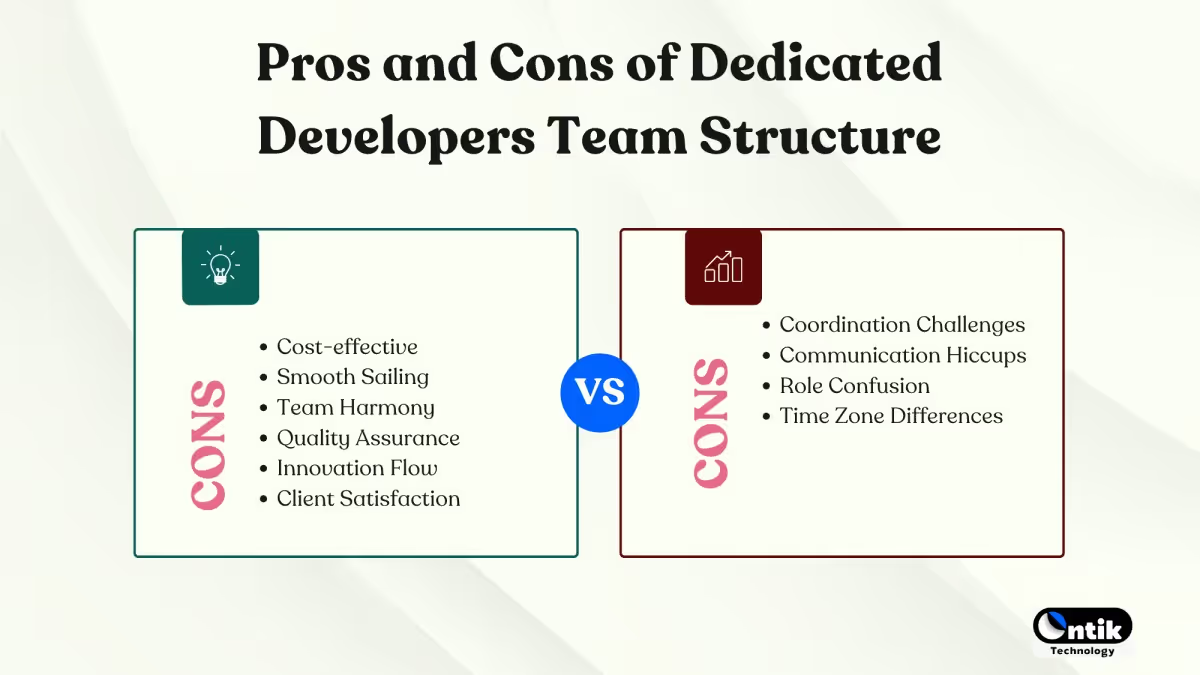
To make the right choice, you need to weigh the tangible benefits against the operational realities.
The Benefits: Why It Works
- Cost Efficiency: You pay a predictable monthly rate. Eliminate recruitment fees, insurance premiums, hardware costs, and severance risks.
- Instant Scalability: Need to ramp up for a launch? Add developers in weeks, not months. Need to scale down? Do it instantly without the legal headache of layoffs.
- Specialized Expertise: Access global talent pools for niche skills (like AI or Legacy Migration) that are scarce or overpriced in your local market.
- Faster Time-to-Market: With a team dedicated exclusively to your roadmap, you eliminate context-switching. This translates to faster sprints and quicker releases.
- Domain Knowledge Retention: Unlike freelancers who leave after a task, a dedicated team stays. They master your code and business logic, becoming faster and more autonomous over time.
- Strategic Focus: By offloading execution to a dedicated unit, your internal leadership can refocus on core business strategy and growth.
The Cons: Challenges to Manage
- Integration Effort: Success requires structured onboarding. If you treat them like outsiders, they will perform like outsiders.
- Communication Silos: Without clear protocols, "us vs. them" gaps can form. (We address this in the Management section).
- Time Zone Differences: A 12-hour gap can slow you down unless you establish "Golden Overlap" hours for synchronous meetings.
Required Skills For A Dedicated Software Team
Planning to hire dedicated software development team members? Whether you need dedicated software engineers or a dedicated app development team, here are the essential skills required for a successful team dedicated software development:
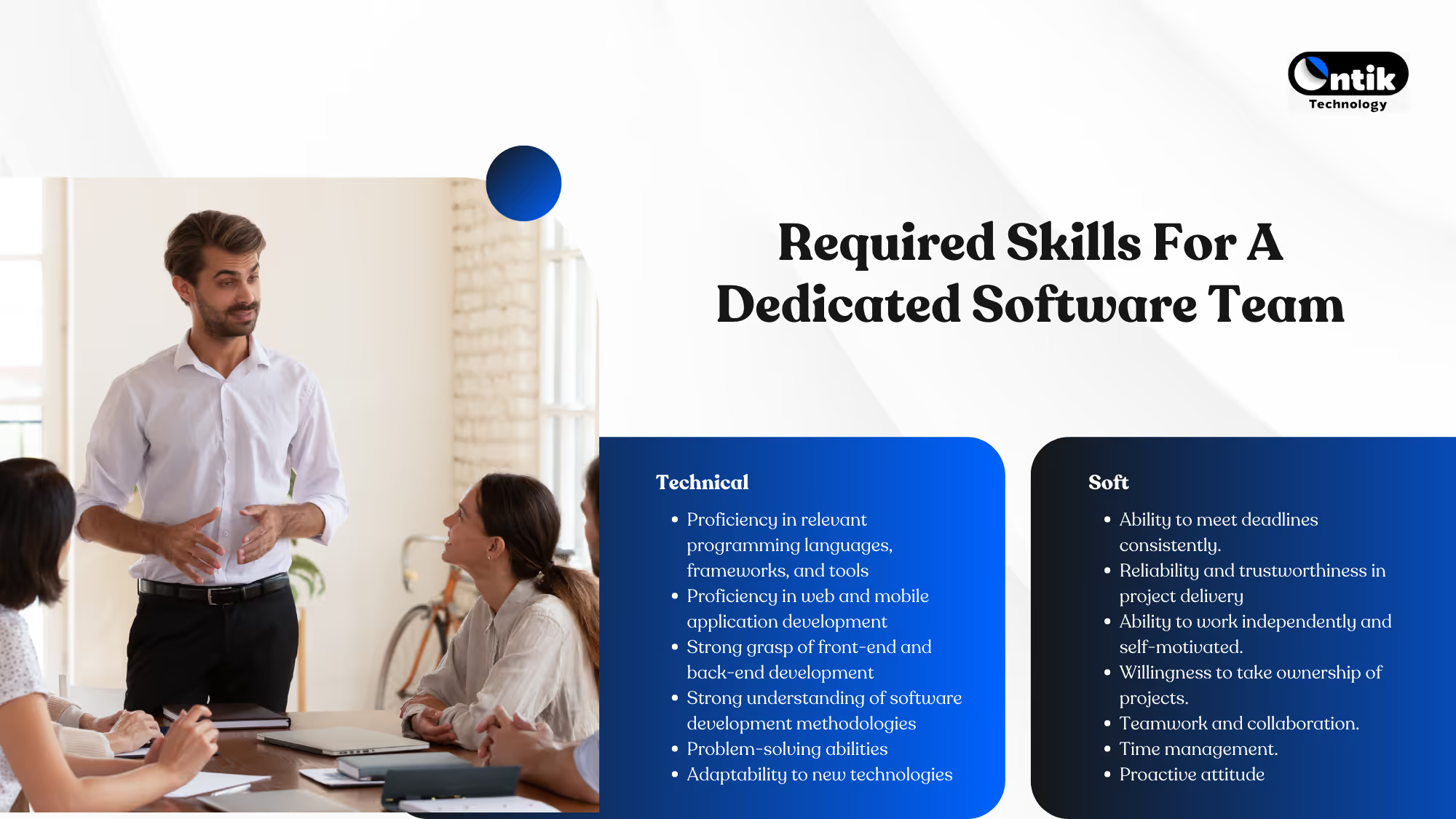
When you hire dedicated teams, make sure they're equipped with all the right skills! Look no further than Ontik Technology, boasting a top-notch dedicated software development teams roster that ticks off all these skill requirements with excellence.
Things to Know Before Hiring A Dedicated Team for Your Software Projects

When you hire software development team members or hire development teams, several factors determine success. If you're aiming for a successful development project, there are some key factors you definitely need to think about. Take a look at this list of essentials for a great collaboration when hiring dedicated development team members:
Skill Set: Ensure the team possesses the necessary skills for your project, including programming languages, frameworks, and relevant technologies. This ensures they can handle the technical requirements efficiently.
Experience: Look for a team with a proven track record in similar projects. Experience brings expertise and the ability to foresee potential challenges, ultimately leading to smoother project execution.
Communication: Effective communication is key. Ensure the team can clearly understand your requirements and provide regular updates on progress. This fosters collaboration and ensures alignment throughout the project lifecycle.
Flexibility: Projects can evolve. So it's crucial to have a team that can adapt to changes quickly without compromising quality or timelines.
Portfolio: Review their past projects to gauge the quality of their work. This way, you can see if they align with your expectations and standards. Click to go through our portfolio to check out our featured work.
Reviews/Testimonials: Check client testimonials or reviews. It will help you to get insights into their reputation and reliability.
Project Management: Ensure the team has strong project management capabilities to plan, execute, and deliver your development project effectively on time and within budget.
Why Hire A Dedicated Development Team?

Hiring a dedicated development team offers numerous benefits, especially for businesses aiming to create software solutions or digital products. Whether you need developers outsourcing dedicated team services or a self-managed dedicated software team, here are the top eight reasons why you should consider hiring a dedicated development team:
Expertise and Specialization
Dedicated development team services often comprise experts in various technologies and programming languages. They bring a wealth of experience and specialized skills from a global talent pool to the table, ensuring high-quality development work.
Flexibility and Scalability
Dedicated software development teams can be scaled up or down according to project requirements. This flexibility allows businesses to adapt quickly to changes in workload or project scope without the hassle of recruitment or layoffs.
Cost-Effectiveness
When you hire a dedicated software development team, it can be more cost-effective than maintaining an in-house team, especially for long-term or project-based work. Businesses can save on overhead costs such as salaries, benefits, office space, and equipment.
Faster Time-to-Market
Dedicated development teams are focused solely on your project, which often leads to faster development cycles and quicker time-to-market for your product or service. Their expertise and experience help streamline the development process and minimize delays.
Access to Latest Technologies
Technology is constantly evolving, and dedicated software teams stay updated with the latest tools, frameworks, and methodologies. This ensures that your project is developed using cutting-edge technologies, resulting in a competitive edge in the market.
Dedicated Communication and Collaboration
With a dedicated team, communication channels are streamlined, and collaboration is enhanced. Project managers can easily coordinate with developers, designers, and other team members, ensuring everyone is aligned toward common business goals.
Focus on Core Competencies
Outsourcing development tasks to a dedicated team for software development allows businesses to focus on their core competencies and strategic objectives. Instead of worrying about technical intricacies, businesses can concentrate on innovation, marketing, and growth strategies.
Risk Reduction
By partnering with a reputable dedicated development company, businesses can mitigate various risks associated with software development, such as project delays, cost overruns, and quality issues. Many dedicated team services offer service-level agreements (SLAs) and warranties to guarantee project success.
These benefits make it a compelling option for businesses looking to accelerate their software development initiatives and achieve their business objectives.
Operational Excellence: Managing Your Dedicated Team
Hiring the team is only the first step. The "Operational Vector", how you manage, integrate, and measure that team, determines your ROI. Successful distributed teams in 2026 run on clear protocols, not just good intentions.
The "Golden Overlap" Strategy
Time zone differences are often cited as a challenge, but they can be an asset if managed via the Golden Overlap. This is a designated 3-4 hour window where your in-house team and your dedicated remote team are both online simultaneously.
- Synchronous Time (The Overlap): Use this for Daily Stand-ups, Sprint Planning, and architectural reviews.
- Asynchronous Time (The Deep Work): Use the rest of the day for coding and documentation. This "follow-the-sun" model can effectively double your development velocity.
Onboarding Best Practices
Don't let your new team sit idle on Day 1.
- Technical Access: Provision access to Jira, GitHub/GitLab, Slack, and Cloud Environments (AWS/Azure) 48 hours before the start date.
- Knowledge Transfer: Create "Loom" videos or Confluence docs explaining your domain logic. Don't just explain what to build; explain why it matters to the business.
- The Buddy System: Pair a dedicated team lead with an internal engineering lead to foster cultural integration.
KPIs and Metrics: Measuring Success
Move beyond "hours worked." In 2026, high-performance engineering management relies on DORA metrics and Agile KPIs:
- Cycle Time: The time it takes for a ticket to move from "In Progress" to "Deployed."
- Sprint Velocity: Is the team delivering consistent Story Points sprint-over-sprint?
- Defect Leakage: Track how many bugs escape to production. A dedicated QA layer should keep this near zero.
- Code Churn: High churn (rewriting recent code) indicates unclear requirements or communication gaps.
Security, IP & Compliance
In an era of AI-generated code and increasing cyber threats, security cannot be an afterthought. When you hire a dedicated development team, you are extending your security perimeter.
Intellectual Property (IP) Protection
Your greatest asset is your code.
- "Work Made for Hire": Your contract with Ontik Technology explicitly states that all code, designs, algorithms, and documentation created during the engagement are "Work Made for Hire." This means you own the Intellectual Property (IP) from the moment it is created.
- Non-Disclosure Agreements (NDAs): We enforce strict NDAs at two levels: a corporate NDA between you and Ontik, and individual NDAs signed by every developer working on your project.
Data Security & Compliance
- Secure SDLC: Our teams follow a Secure Software Development Lifecycle. Security isn't just a firewall; it's baked into the code (e.g., OWASP Top 10 mitigation).
- Data Privacy (GDPR/CCPA): If you handle EU or US consumer data, we ensure our development environments use masked or synthetic data, keeping real PII (Personally Identifiable Information) secure.
- Zero Trust Access: We utilize "Least Privilege" access principles. Developers are granted access only to the specific repositories and environments required for their tasks, often protected by Multi-Factor Authentication (MFA).
2026 Global Outsourcing Rates Guide
Forecasting costs for 2026 requires understanding the global economic shift. As inflation stabilizes but demand for specialized AI and Cloud talent rises, rates have adjusted. Below is the projected Total Cost of Ownership (TCO) landscape for hiring dedicated developers in 2026.
The Cost Calculation Formula
To budget accurately, use this formula:
Monthly Cost=(Hourly Rate×160 Hours)+Infrastructure/Tooling Costs
Global Hourly Rate Estimates (2026)
How to Hire A Dedicated Development Team
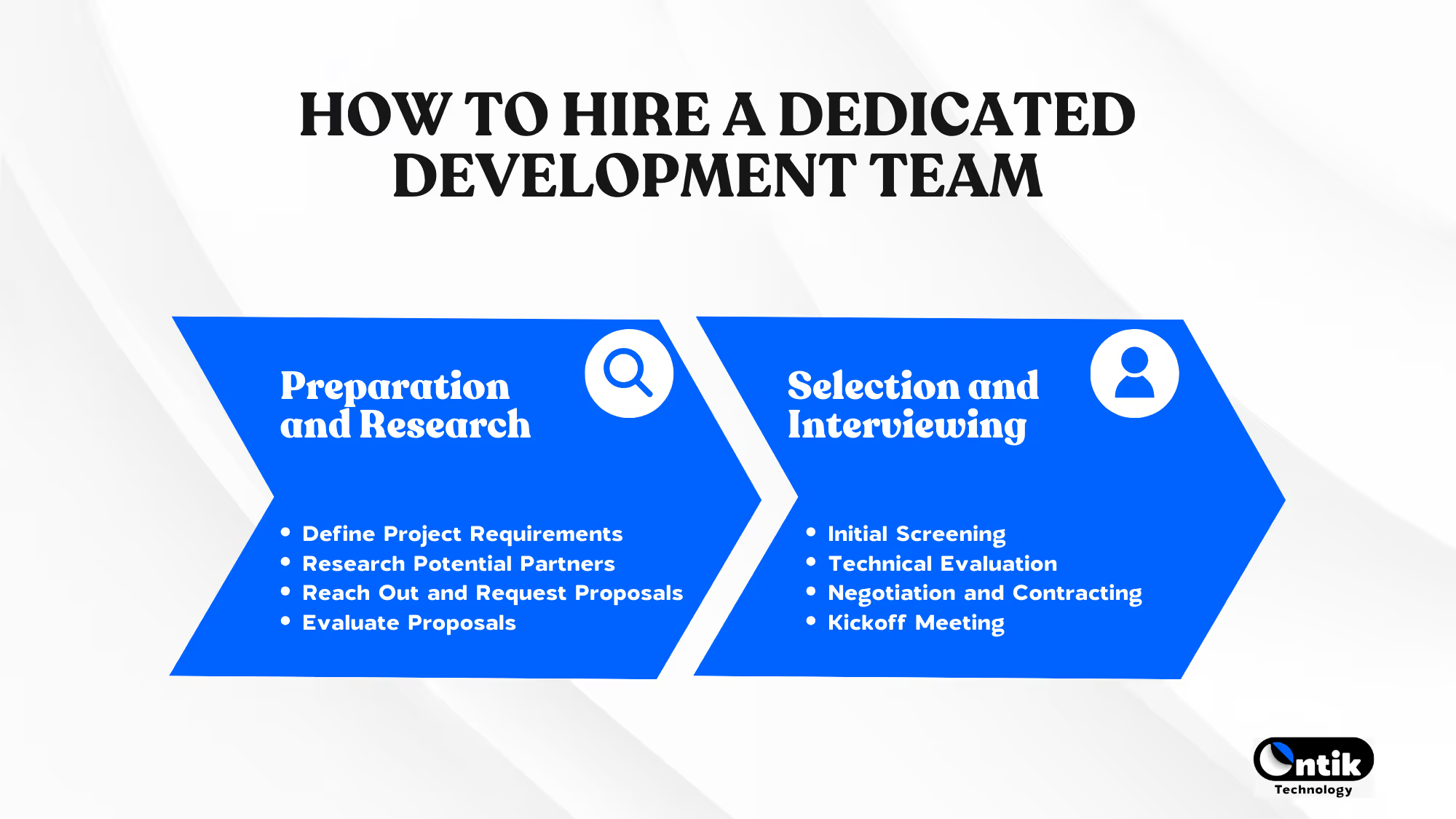
Hiring a dedicated software development team involves several stages, each crucial for ensuring you find the right team for your project. Here's a breakdown of the first and second stages of hiring a dedicated software development team:
First Stage: Preparation and Research
Define Project Requirements: Clearly outline your project requirements, including objectives, scope, timeline, budget, and technology stack. Understanding your needs will help you communicate effectively with potential development teams.
Research Potential Partners: Conduct thorough research to identify potential software development firms or freelancers. Look for companies with relevant experience, a strong portfolio, positive client reviews, and expertise in your technology stack.
Reach Out and Request Proposals: Contact the shortlisted candidates and request detailed proposals outlining their approach, methodology, team structure, timeline, cost estimates, and any other relevant information. Provide them with a clear brief to ensure accurate proposals.
Evaluate Proposals: Review and evaluate the proposals received from each candidate. Pay attention to their understanding of your project, proposed solutions, past work examples, and overall fit with your requirements.
Second Stage: Selection and Interviewing
Initial Screening: Conduct initial screenings to assess each candidate's suitability for your project. This may involve reviewing their portfolio, checking references, and evaluating their communication skills and responsiveness.
Technical Evaluation: Assess the technical proficiency of the development teams through coding tests, technical interviews, or reviewing sample code. Ensure they have the expertise required to handle your project's specific challenges.
Negotiation and Contracting: Once you've selected a preferred development team, negotiate terms, including pricing, payment schedule, project milestones, intellectual property rights, confidentiality agreements, and service-level agreements (SLAs). Ensure all terms are documented in a comprehensive contract.
Kickoff Meeting: Schedule a kickoff meeting with the selected development team to discuss project details, roles and responsibilities, communication protocols, and project management tools. Establish a clear line of communication and collaboration to ensure project success.
Common Hiring Models For Dedicated Development Teams

The dedicated development team model offers businesses flexibility and scalability when it comes to hiring a dedicated remote development teams. Here are different dedicated team services and models commonly used:
Full-Time Equivalent (FTE) Model
In this model, the client hires a dedicated team of full-time developers who work exclusively on their projects. The team operates as an extension of the client's in-house team, providing continuous support and expertise. The client typically pays a monthly fee for each full-time equivalent (FTE) developer.
Fixed Capacity Model
Under this model, the client hires a dedicated team with a fixed capacity, meaning a predetermined number of developers or team members. The client pays a fixed monthly fee based on the agreed-upon team size, regardless of the actual workload or project requirements.
Specialized Team Model
This model involves hiring a dedicated team with specialized expertise in specific technologies, domains, or industries. The team members possess advanced skills and knowledge relevant to the client's project requirements, ensuring high-quality delivery and optimal outcomes.
Benefits of Hiring A Dedicated Development Team
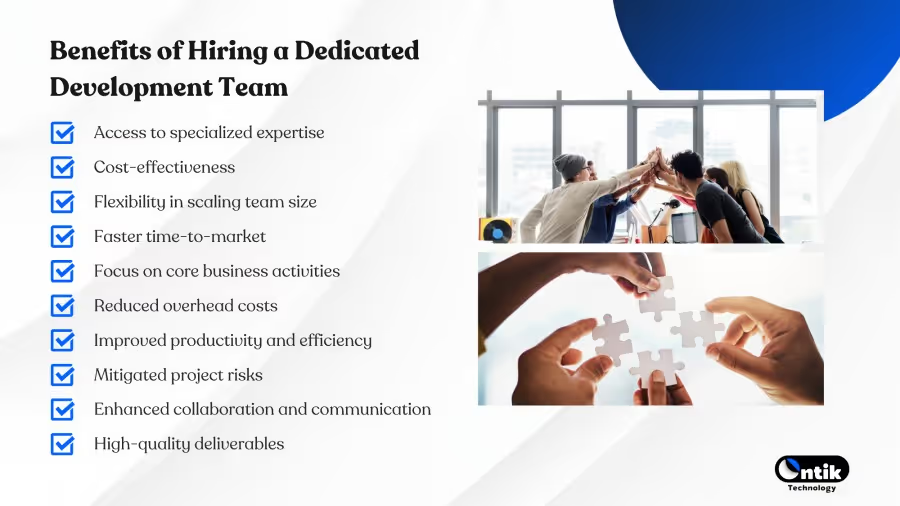
Looking to hire a dedicated development team? You'll tap into top global talent with no extra expenses. Check out the awesome perks you'll get!
- Access to specialized expertise
- Cost-effectiveness
- Flexibility in scaling team size
- Faster time-to-market
- Focus on core business activities
- Reduced overhead costs
- Improved productivity and efficiency
- Mitigated project risks
- Enhanced collaboration and communication
- High-quality deliverables
Don't hesitate any longer! Ontik Technology boasts a team of experts ready to bring your software dreams to life. Contact us today!
Engagement Model Options Available for Hiring Remote Development Teams
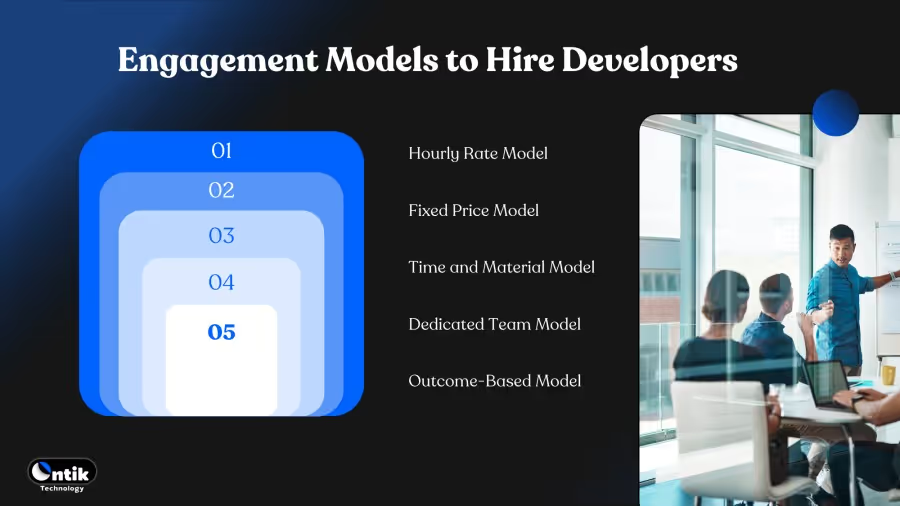
Wondering - what are the different dedicated team models that you can hire? When you hire development team members, here are some common engagement models available:
Hourly Rate Model
In this model, the client pays the remote development team based on the number of hours worked. It offers flexibility in terms of project scope and can be suitable for short-term or dynamic projects. However, it might lack predictability in terms of costs and timelines if the project scope changes frequently.
Fixed Price Model
Under this model, the client and the remote development team agree upon a fixed price for the entire project. It provides cost predictability and clear project deliverables. However, it may lead to scope creep and additional costs if the project requirements change.
Time and Material Model
This model combines elements of both hourly rate and fixed price models. The client pays for the actual time and resources spent on the project but with an agreed-upon rate. It offers flexibility in project scope and allows for changes during development. However, it requires active project management to control costs and ensure timely delivery.
Dedicated Team Model
In the dedicated development team model, the client hires a dedicated remote development team or developers who work exclusively on their project. The client has full control over the team, project management, and priorities. However, it requires ongoing management efforts and may not be cost-effective for small-scale projects.
Outcome-Based Model
This model focuses on delivering specific outcomes or results rather than the number of hours worked. The payment is based on achieving predefined milestones or goals. It aligns the interests of both parties towards project success. However, defining clear outcomes and milestones can be challenging, leading to potential disputes.
Dedicated Development Team Vs Fixed Price Model
If you are struggling to choose between a fixed-price model or hiring a dedicated development team, here is a quick comparison table for you:
Dedicated Team Vs Time & Material Model
When it comes to deciding between the Time & Material approach and hiring a dedicated software development team, it's important to weigh the options. Let's break it down with a comparison table:
When to Hire (and When NOT to) a Dedicated Team

Deciding between a dedicated team, freelancers, or in-house hiring is a strategic choice. This model is a powerful accelerator for many businesses, but it isn't a one-size-fits-all solution. Here is a framework to help you determine if a dedicated development team is the right move for your 2026 roadmap.
The Green Flags: When You Should Hire
If your scenario matches these criteria, a dedicated team is likely your highest-ROI option:
- Long-Term & Ongoing Projects: If your roadmap spans several months or years, you need continuity. A dedicated team retains knowledge, meaning you don't waste time retraining new freelancers for every sprint.
- Specialized Skill Requirements: When your project demands niche expertise,like GenAI integration, legacy migration, or specific frameworks,hiring locally can take months. A dedicated partner can deploy these specialized skills immediately.
- Rapid Scalability Needs: Does your workload fluctuate? A dedicated team allows you to scale up for a launch and scale down during maintenance without the legal headaches and morale costs of hiring and firing internal staff.
- Focus on Core Competencies: If software development isn't your primary business (or if you need to focus internal resources on R&D), outsourcing execution to a dedicated engineering unit frees your leadership to focus on innovation and customer growth.
- Speed to Market: Dedicated teams are pre-vetted and experienced in Agile methodologies. They can adapt to changing requirements instantly, accelerating your deployment timeline.
The Red Flags: When You Should NOT Hire
There are specific scenarios where this model might be excessive or risky:
- Short-Term / Tiny Projects: If you have a clearly defined task that will take less than 4-6 weeks (e.g., a simple landing page or a minor bug fix), the setup time for a dedicated team isn't worth it. In this case, hiring a freelancer or using a Fixed Price model is more cost-effective.
- Tight Budget Constraints: If you are bootstrapping with extremely limited runway, the recurring monthly cost of a full team might be too high.
- Unvalidated MVPs: If you are testing a raw idea and aren't sure if it will survive the next month, committing to a full team is risky.
- Pro Tip: For startups, we offer a specialized MVP Partnership designed to launch your product efficiently without the full enterprise overhead.
- Highly Sensitive IP Restrictions: While modern partners use robust security (NDAs, VPNs), if you work in highly classified sectors (like Defense or National Intelligence) that legally require data to remain on-premise, offshoring may not be compliant.
Ultimately, hire a dedicated team when you need capability, continuity, and speed. Avoid it when you simply need a quick task completed.
Still unsure which model fits your roadmap? We offer flexible options tailored to both long-term scaling and short-term execution. Contact our team for a friendly consultation, and let’s map out the best path for your project. Click to explore all the possibilities./
When Should You Not Hire A Dedicated Development Team?

Deciding not to hire a dedicated development team may be appropriate in certain situations. Here are some scenarios where you shouldn’t hire a dedicated development team.
Short-term projects:
For projects with finite timelines and clear deliverables that don't necessitate ongoing support, hiring a dedicated team may be excessive. In such cases, it might be more cost-effective to engage freelancers or contract workers.
Limited budget constraints:
If your budget is tight and you're unable to commit to the long-term expenses associated with a dedicated team, it may be more sensible to explore alternative arrangements, such as outsourcing specific tasks or relying on in-house resources.
Uncertain project requirements:
When project requirements are still evolving or subject to frequent changes, investing in a dedicated team may pose risks. Flexibility becomes crucial in such dynamic environments, making it more suitable to work with contractors or adapt existing resources.
Sensitive data or intellectual property concerns:
If your project involves handling sensitive data or proprietary information, entrusting it to a dedicated team, especially one located offshore, may raise security and confidentiality concerns. In such cases, keeping the work in-house or working with trusted partners may be the ideal option.
MVP Development
When launching an MVP, the goal is to test the waters with minimal investment. Choosing a dedicated development team might not be financially viable, particularly for startups or those with limited budgets. But worry not! You can opt-in for our MVP Partnership to launch your product the best way.
We offer a range of options to help you complete your project efficiently by collaborating with remote developers. Whether your project is short-term or long-term, we've got you covered. Click to explore all the possibilities.
How To Determine The Cost Of Hiring A Dedicated Development Team
To hire a dedicated software development team, the first step is to define your project requirements. Then, you set your budget and location preferences. After that, source potential vendors through directories, professional networks, and referrals. Screen and interview candidates to assess their skills and cultural fit. Lastly, finalize a contract and formally onboard the team.
Here's the easiest step-by-step guide to help you calculate the expenses (of hiring a dedicated team for software development:
- Identify Required Skill Sets:
Determine the specific skill sets needed for your project such as programming languages, frameworks, and expertise in certain domains.
- Estimate Project Duration:
Break down your project into phases or milestones and estimate the duration required for each phase.
- Calculate Man-Hours:
Estimate the number of man-hours required for each phase of the project based on the complexity of tasks and the expertise needed.
- Determine Hourly Rates:
Research the average hourly rates for developers with the required skill sets in the location where you plan to hire your team. Rates may vary depending on factors like experience level and geographic location.
- Factor in Additional Costs:
Consider additional costs such as overhead expenses, project management fees, software licenses, and infrastructure costs.
- Formula for Cost Calculation:
Total Cost = (Total Man-Hours * Hourly Rate) + Additional Costs
Here:
- Total Man-Hours = Sum of man-hours estimated for each phase
- Hourly Rate = Average hourly rate for developers
- Additional Costs = Sum of all additional costs associated with the project
- Negotiate and Finalize:
Negotiate the terms and costs with the selected team or company and finalize the contract.
By following this strategy and using the provided formula, you can accurately determine the cost of hiring a dedicated development team for your project. Keep in mind that while cost is important, it's also essential to consider factors like the team's expertise, experience, and reliability to ensure successful project delivery.
Have a Look at the Global Software Outsourcing Rates for 2026
In 2025, the cost of outsourcing software development can differ a lot depending on where you look, how skilled the developers are, and how complicated your project is. Here's a quick overview of typical rates across different countries:
When deciding where to outsource, it all comes down to your budget, what your project needs, and how much things like fitting in with the culture or being in the same time zone matter to you. Clients need to think about these things carefully when picking an outsourcing partner. That way, you can make sure the collaboration goes smoothly and doesn't end up costing more than expected.
Performance Metrics & KPIs for dedicated software development team
The efficiency and effectiveness of a dedicated software development team, can be measured by tracking a balanced set of Key Performance Indicators (KPIs) and metrics. These reflect various aspects of their work:
1. Velocity and throughput
Velocity: Your scale calculates the amount of work a team can complete within a specific time period (e.g., a sprint or iteration), according to Appfire. Helps in forecasting and planning future work.
Throughput: Represents the number of tasks, user stories, features, or bug fixes. And these need to be completed over a specified period. Here you will find a more detailed view of the team's output compared to its velocity.
2. Cycle and lead time
Cycle Time: A metric of the duration a task takes from the moment work begins until its completion. Helps to identify bottlenecks and streamline workflows.
Lead Time: This refers to the total time elapsed from the inception of a project or feature request to its delivery in production. Planning and preparation phases also fall under this system, which you will not understand in the cycle time system.
3. Code quality and testing
Code Coverage: Here, you will find the percentage of the source code executed by automated tests. Higher coverage indicates a more thoroughly tested codebase. This also means a reduced risk of bugs.
Defect Detection Rate (DDR): Measures the effectiveness of testing efforts. And to do that, they track the percentage of defects caught before software's release versus those found after.
Code Churn: It is about the percentage of code that undergoes frequent changes (rewrites, updates, deletions) within a time period. Here, changes are expected. Although excessive churn may indicate areas needing improvement in design or understanding.
4. Stability and reliability
Deployment Frequency: Makes you understand how often a team successfully releases code changes to production. Frequent deployments would suggest agile development and continuous delivery.
Mean Time to Recovery (MTTR): Highlights the average time it takes to restore a system after an incident or outage. If the MTTR is shorter, then incident management and problem resolution are shorter and quicker.
Change Failure Rate (CFR): Shows you the percentage of deployments or changes that result in failures or defects in production. Lower CFR emphasizes strong testing and deployment strategies.
Uptime/Availability: The percentage of time a system or service is operational and accessible. This is a crucial indicator of system reliability.
5. Team dynamics and satisfaction
Developer Satisfaction Surveys: Systematic, regular surveys gauge various factors. Like developer happiness, engagement, and satisfaction with their work, tools, and overall environment.
Employee Retention Rate: Track how long developers stay with the team. Provides insights into factors affecting job satisfaction and workplace culture.
Onboarding Efficiency: It reveals the time taken for a new team member to become productive. Reflects the effectiveness of the onboarding process, notes AnalyticsVerse.
Collaboration Metrics: Measures like pull request frequency, review times, and merge times. Reflect on how efficiently the team collaborates on code development and review.
6. Business impact
Customer Satisfaction Score (CSAT) and Net Promoter Score (NPS): Gather feedback from customers about their satisfaction with the product. Also, find out if they would recommend it. A better way to know how well the software aligns with user needs and expectations.
Feature Adoption Rate: The percentage of users adopting new features or product enhancements. Shows the value delivered by the development team.
Important considerations
Measure outcomes, not just output: Focus beyond the quantity of code or tasks completed. Understand the value you are receiving.
Measure teams, not individuals: Software is a collaborative effort. So team-level metrics provide a more accurate picture of performance.
Balance metrics: Avoid over-optimizing around a single metric. It may distort behavior.
Context matters: Choose metrics wisely. Align them with your team's specific goals, workflow, and project context.
Continuous improvement: Use metrics to identify areas for improvement. Then drive iterative changes to your processes.
Adopt a thoughtful and comprehensive approach to track these performance metrics and KPIs. So that dedicated software development teams can gain valuable insights into their strengths and weaknesses. Thus, optimizing their processes and delivering high-quality software more efficiently.
Hire a Dedicated Software Development Team With Ontik Technology
Say goodbye to recruitment headaches! With Ontik Technology, you'll have access to a handpicked team of seasoned professionals meticulously selected to match your project's requirements. From developers to designers, we've got you covered. Forget about overhead costs associated with in-house teams. With Ontik's Dedicated Development Team, you get the expertise you need at a fraction of the price, maximizing your ROI and boosting your company’s success.
Interested in discussing the opportunities with Ontik Technology's Dedicated Development Team? Let’s have a meeting today!
Conclusion
In a nutshell, a dedicated software development team is your personalized squad of experts who are committed to bringing your software projects to life. Instead of juggling freelancers or relying solely on in-house talent, you enlist this specialized team to tackle your project head-on. Whether you’re a tech giant or a startup, leveraging the expertise of a dedicated team can streamline your project, enhance efficiency, and drive success. So, ready to hire your own dedicated software development team? Reach out to Ontik Technology's expert team right away.