AI Governance Policy for Bangladeshi Companies | Ontik Technology
On 28 June 2026, Bangladesh Bank issued an office order telling its own officials not to enter confidential or sensitive banking information into AI tools such as ChatGPT, Gemini, Claude, Grok and DeepSeek. Using AI for official work, from drafting office notes to analysing data, now needs prior approval from the appropriate authority (The Business Standard).
When the central bank writes AI rules for its own staff, every other board in Dhaka should ask a simple question. What are our people pasting into these tools today, and who decided that was acceptable?
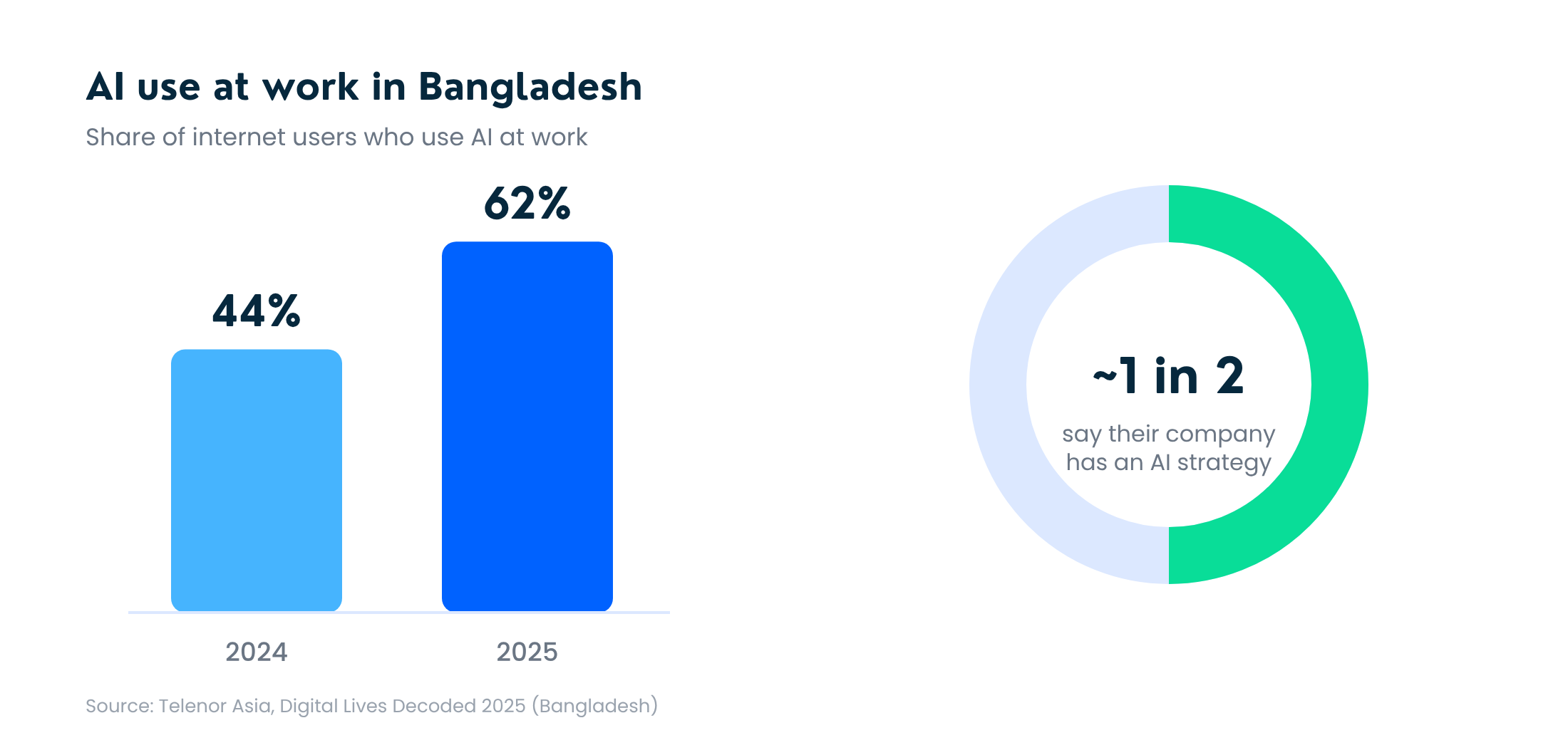
In most companies, nobody did. Telenor Asia’s 2025 survey found that AI use at work among Bangladeshi internet users rose from 44% to 62% in a single year, yet only about half of those users say their organisation has a formal AI strategy. Most companies are at the stage where AI sits on the side of the work: a few tools, used here and there, with no rules about what goes into them. The tools arrived before the rules.
This guide is written for the three people who end up owning the problem: the head of Legal, the head of HR and the CTO. It gives you a data rule staff can apply in five seconds, the ten clauses your policy needs, a clear split of ownership, and a 30-day plan to have it running well before Bangladesh's data protection penalties take effect.
Why Banning AI Tools Does Not Work
The instinctive response is a blanket ban. It fails for a predictable reason: the work AI speeds up does not disappear, so staff move it to their phones and personal accounts, where you see nothing.
The global evidence points the same way:
- Personal accounts are the main channel. LayerX's 2025 enterprise report found that 77% of employees paste data into generative AI tools, and 82% of that pasting happens through unmanaged personal accounts (Cloud Security Alliance).
- Unapproved use is the norm. UpGuard's State of Shadow AI report found that 80% of employees use AI tools their employer has not approved (TechIntelPro).
- The breaches are already happening. In IBM's 2025 Cost of a Data Breach Report, one in five organisations reported a breach involving shadow AI, and high levels of shadow AI added USD 670,000 to the average breach cost. 63% of breached organisations had no AI governance policy or were still writing one (IBM).
A ban without an approved alternative produces the worst of both worlds: the same usage, on weaker accounts, with no logs. The goal is not to stop AI use. It is to move that use onto accounts you control, and to keep certain data out of it entirely.
What Bangladeshi Law Now Expects
Bangladesh no longer lacks a data protection statute. The Personal Data Protection Ordinance of November 2025 was amended in February 2026 and then replaced by the Personal Data Protection Act, 2026 (Act No. 63 of 2026), dated 10 April 2026 (Securiti). Four parts of it bear directly on how staff use AI.
- It covers employee data, not only customer data. Payroll, attendance and HR records fall within the Act (MiHCM). An appraisal summary pasted into a chatbot is personal data processing.
- Your vendor's processing counts as yours. Processing by a processor is treated as the controller's own, and the controller remains liable. A public AI tool used with company data is, in practice, an unvetted processor.
- Cross-border transfers carry conditions. Large-volume transfers of sensitive identifiers (national ID, passport and taxpayer numbers, biometric data, genetic data and criminal records) require notification to the Authority. Every major AI chatbot processes prompts on servers outside Bangladesh.
- Automated processing needs disclosure. Organisations may not process personal data by automated means without informing the person, and people can withdraw consent to automated decisions about them. Screening CVs with AI sits squarely inside this rule.
The penalty sections are not in force yet. They take effect by gazette notification once 18 months have passed since the original law was issued, which points to around May 2027 at the earliest. Fines then run up to Tk 25 lakh for failing to protect data or honour data subject rights, and up to Tk 50 lakh for a significant data fiduciary.
Read that window correctly. It is not a grace period for doing nothing. It is the time in which a company can build a record showing it had controls in place before the first complaint arrived.
Regulated sectors carry an extra layer. Bangladesh Bank's Cybersecurity Framework, Version 1.0 (2026) covers scheduled banks, finance companies, mobile financial service providers and payment operators, with implementation due by 31 December 2026, and the central bank has said an AI-specific cybersecurity policy is on the way (Daily Sun). The National AI Policy 2026 to 2030 is still being finalised, so do not wait for it. The data protection rules already apply.
This section is general information, not legal advice. Confirm how the Act applies to your organisation with counsel.
The Account Matters More Than the Brand
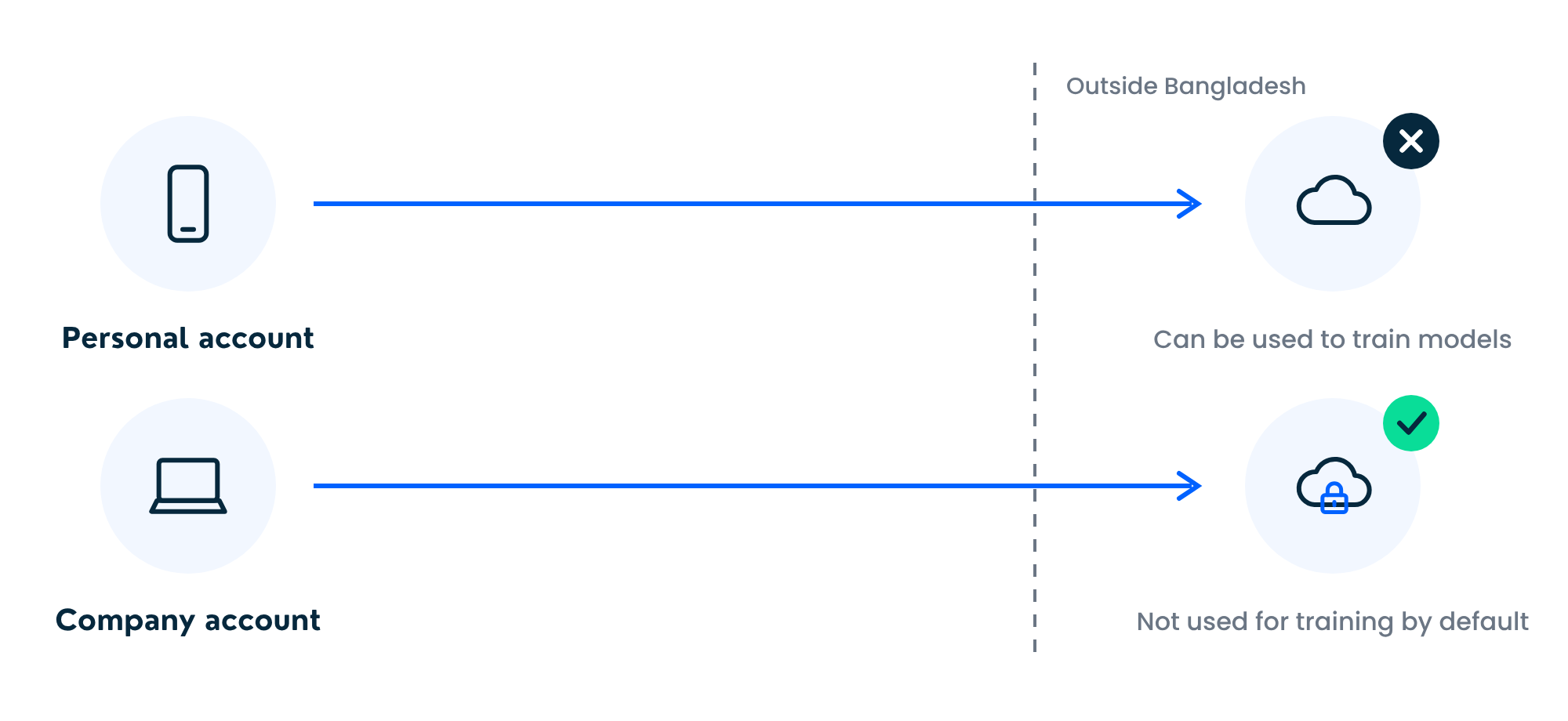
Staff usually frame the risk as "Is ChatGPT safe?" The better question is which account they are using. The same model behaves very differently under a consumer plan and under a business contract.
- ChatGPT: on Free, Plus and Pro personal workspaces, data sharing for model training is on by default, although users can switch it off. On ChatGPT Business, Enterprise, Edu and the API, OpenAI does not use inputs or outputs for training by default (OpenAI).
- Claude: since September 2025, users on Claude Free, Pro and Max choose whether their chats are used to train future models, and data from those who allow it can be retained for up to five years. Commercial plans and the API are not covered by this change (Anthropic).
- Gemini: on the consumer Gemini Apps, human reviewers, including trained reviewers from Google's service providers, review some conversations, and Google itself asks users not to enter confidential information (Google).
Two practical conclusions follow. A personal Plus subscription paid with a company card is still a consumer account. And a business plan solves the training question but not the border question: the data still leaves Bangladesh, so restricted data stays out regardless of plan.
Sort every tool into one of three tiers:
- Approved: company-managed accounts under a business or enterprise agreement, with single sign-on, no training by default, admin controls and audit logs. Used for internal information and, after redaction, confidential information.
- Tolerated: consumer accounts with model training switched off, used for public information only.
- Blocked: tools with no published data policy, AI browser extensions that read every page a user opens, and any app that cannot say where it stores data.
What Staff Can and Cannot Share: The Four-Tier Rule
Build your classification on the four categories Bangladesh's data protection framework introduced: public, internal, confidential and restricted. Staff learn one scheme, and Legal can map the policy to the law without translating between two vocabularies.
Public: share freely
- What it covers: published website and brochure copy, press releases, public laws and regulations, job adverts once posted, and general questions with no company detail.
- Where it can go: any Approved or Tolerated tool.
Internal: company accounts only
- What it covers: internal process documents, meeting notes with names removed, draft marketing plans, anonymised project timelines and internal training material.
- Where it can go: Approved tools only. Never a personal account.
Confidential: approved tools, redacted, registered use cases
- What it covers: customer and supplier lists, employee records, contracts and negotiating positions, unreleased financials and pricing, proprietary source code and product roadmaps.
- Where it can go: Approved tools only, for use cases listed on the register, with names, account numbers and identifiers replaced by placeholders first ("Customer A", "Employee 14").
Restricted: never in an external AI tool
- What it covers: NID, passport and TIN numbers; biometric and health data; bank account and card numbers; passwords, API keys and access tokens; criminal records; board papers, M&A and price-sensitive information; regulator correspondence; and configurations of critical systems.
- Where it can go: nowhere outside the company, business plans included. If a use case genuinely needs this data, it needs a private deployment approved jointly by the CTO and Legal.
What the rule looks like by department
- HR: can draft a job description or a leave policy from scratch. Cannot paste CVs, appraisal notes, salary sheets, medical leave records or disciplinary files.
- Finance: can ask how to model a cash-flow scenario using dummy figures. Cannot upload management accounts, bank statements or unreleased results.
- Sales and customer service: can draft a reply template. Cannot paste a complaint with the customer's name, phone number and order history attached.
- Engineering: can ask about a public library or an error message. Cannot put proprietary code into a personal account, or credentials, environment files or production data into any tool.
- Legal: can summarise a published statute. Cannot enter privileged advice, live dispute details or a counterparty's draft contract.
The Five-Second Test for Staff
A classification only works if a sales executive in Motijheel can apply it without opening a PDF. Reduce it to three questions and print them on the one-page staff version:
- Would we be comfortable publishing this on our website? If yes, go ahead.
- Am I using a company-approved account? If not, stop here for anything that is not public.
- Could anything here identify a person, a customer or a deal? If yes, remove it first, or do not use AI for this task.
When staff are unsure, they ask the named AI owner. That answer has to come within one working day. If it takes a week, people stop asking and start guessing.
Who Owns What: Legal, HR and the CTO
AI policies fail when ownership is shared by everyone and held by no one. Split it explicitly, and name one accountable executive who signs off every change.
- Legal owns the rules: the policy text, its mapping to the Act and any sector rules, vendor data processing terms, cross-border transfer review, and approval of new use cases that touch confidential data.
- HR owns the people: acceptable use clauses in contracts and the handbook, onboarding training, annual attestation, a proportionate disciplinary ladder, and a Bangla version for staff who work in Bangla.
- The CTO owns the controls: the approved tools register, single sign-on, blocking of unapproved apps and extensions, data loss prevention rules, logging, and the ability to switch a tool off within the hour. If these controls do not exist yet, a cybersecurity review is the place to start.
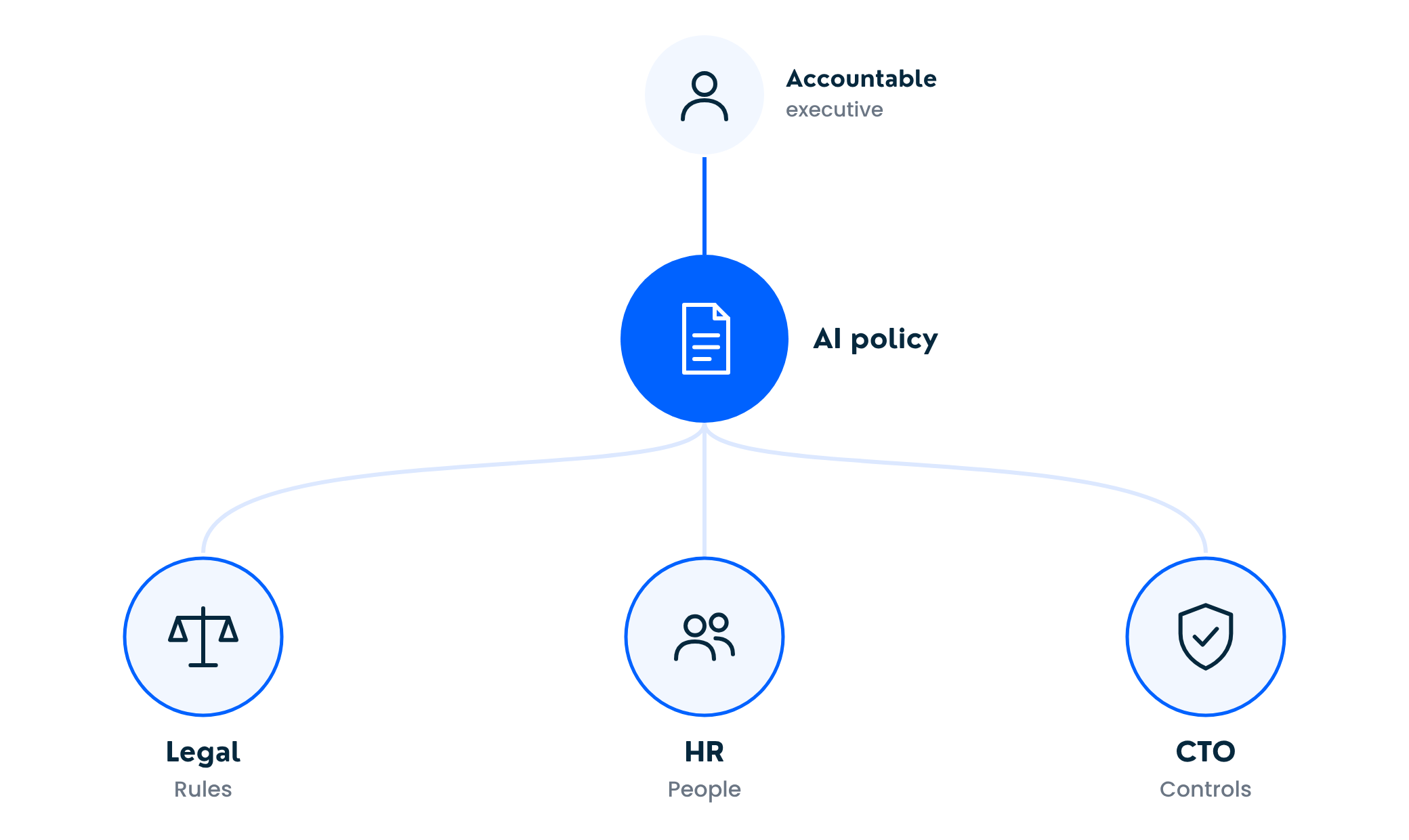
In a smaller company one person may hold two of these roles. That is fine. A role that nobody holds is not.
Ten Clauses Every AI Governance Policy Needs
The full policy can run to several pages, but these ten clauses carry the weight. The sample wording is a starting point for your counsel, not final text.
- Scope. "This policy applies to all employees, contractors and interns, on company and personal devices, whenever company information is involved."
- Approved tools register. "Only tools listed in the AI Tools Register may be used with non-public information. The register is maintained by the CTO and reviewed every quarter."
- Classification before input. "Staff must classify information as Public, Internal, Confidential or Restricted before entering it into any AI tool."
- Prohibited inputs. "Restricted information must never be entered into an external AI tool, including tools provided under a business plan."
- Human review of output. "AI output is a draft. The person who uses it is accountable for its accuracy, as if they had written it themselves."
- Decisions about people. "AI must not make or materially determine decisions on hiring, pay, promotion, credit or termination without human review and notice to the person concerned."
- Client work. "Client information may be used with AI only where the client contract allows it, and AI-assisted deliverables must be disclosed where the contract or a regulator requires it."
- Incident reporting. "Anyone who enters Confidential or Restricted information into an unapproved tool must report it to the AI owner within 24 hours. Prompt self-reporting will be treated as a mitigating factor."
- Training and attestation. "All staff complete AI use training at onboarding and every year, and confirm in writing that they have read this policy."
- Review cycle. "This policy is reviewed every six months, and whenever a vendor changes its data terms or a relevant law or regulation is issued."
Clause 8 does more work than the other nine. A policy that punishes every mistake teaches staff to hide them. A policy that rewards early reporting gives you the 24 hours you need to request deletion, rotate a leaked key or brief a client.
A 30-Day Rollout Plan
- Week 1, discover: run an anonymous survey on which AI tools staff use and for what, pull network or proxy logs for AI domains, and announce an amnesty for past use.
- Week 2, decide: choose the Approved tools and buy business seats, confirm the four tiers, and name the three owners and the accountable executive.
- Week 3, write: draft the full policy for Legal and a one-page staff version in English and Bangla, then get the executive sign-off.
- Week 4, launch: run 30-minute training by department, collect signed attestations, switch on single sign-on and blocking for the Blocked tier, and publish the channel for questions and new use-case requests.
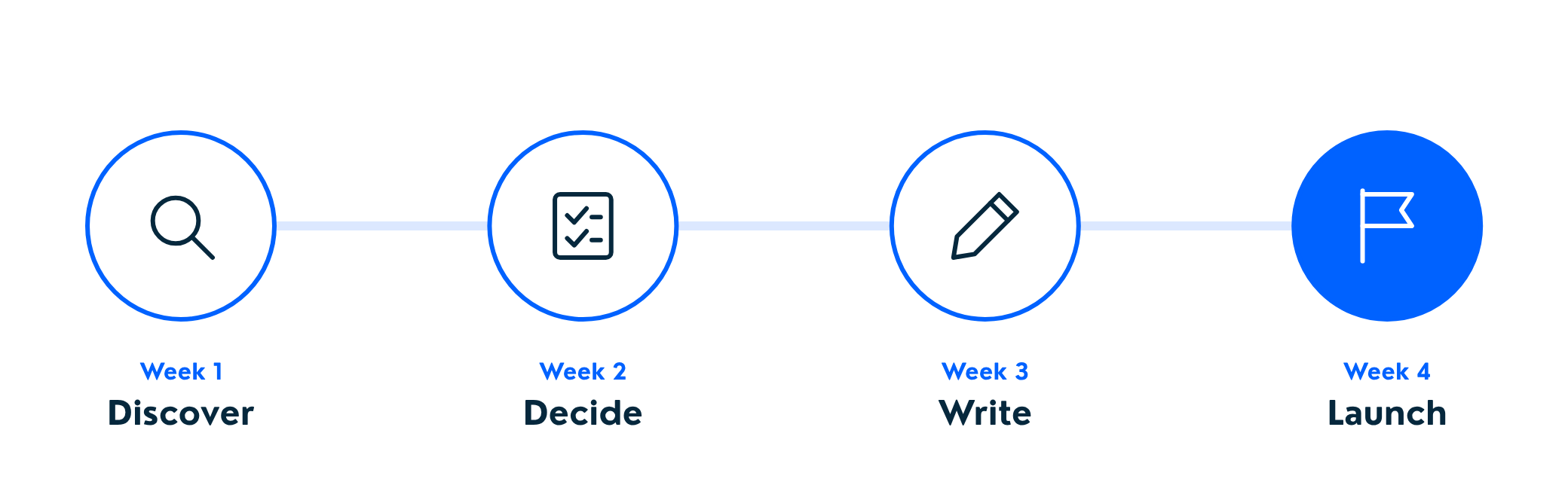
Thirty days is realistic for a company of a few hundred people. Larger groups should run the same sequence business unit by business unit.
Governance is the second of five steps in becoming an AI-native company. It comes after an audit and before automation, because every later step scales whatever usage is already in place, controlled or not. Our guide to AI integration strategy covers the full cycle, and the AI implementation guide covers what comes after.
What a Governance Audit Should Hand You
If you bring in outside help, judge the engagement by what it leaves behind, not by the workshops. A credible AI governance audit should produce six things:
- An AI use inventory: which tools staff use today, on which accounts, and for which tasks.
- A risk register: each risk rated by likelihood and impact, with a named mitigation and owner.
- Regulatory readiness findings: gaps against the Personal Data Protection Act, 2026 and any sector rules that apply to you.
- An approved tools register: each tool's tier, data terms and admin controls, ready for the CTO to enforce.
- A draft policy and one-page staff version: mapped to your four data tiers, in English and Bangla.
- A dated roadmap: what to fix in the first 90 days and what follows over 12 months.
If an audit ends with a slide deck and none of these, you have paid for an opinion, not a baseline.
Where AI Policies Go Wrong
- Copying a foreign template. A policy built around the EU's GDPR, with no reference to the Personal Data Protection Act, will not answer the questions a Bangladeshi regulator asks.
- Banning without an alternative. Usage moves to personal phones, and your visibility drops to zero.
- Writing it only in English. If supervisors and field staff work in Bangla, the one-page version must be in Bangla too.
- "Approved tools" with no list. Without a named register, every tool is approved by default.
- Writing it once. Vendor terms move. Anthropic changed its consumer terms in 2025, and Google has revised the Gemini Apps privacy notice several times since. A policy that is not reviewed every six months is describing tools that no longer exist.
FAQ
Is it illegal for staff in Bangladesh to use ChatGPT at work?
No law bans it. The Personal Data Protection Act, 2026 governs what personal data goes into it, how that data crosses borders and who is liable. Sector regulators can go further, as Bangladesh Bank did for its own staff.
Does a business plan such as ChatGPT Business or Claude for Work make confidential data safe to use?
It removes default model training and gives you admin control and logs. It does not keep data inside Bangladesh. Restricted data stays out, and confidential data should still be redacted.
Do we need a Chief Data Officer?
The Act requires significant data fiduciaries, to be identified by regulation, to appoint one, and that section is not yet in force. Any company that handles large volumes of personal data should assign the responsibility now.
When do fines under the Personal Data Protection Act start?
The penalty sections take effect by gazette notification after the 18-month window from the original law, which means around May 2027 at the earliest.
Can HR use AI to screen CVs?
Only through an approved tool, with human review of every decision and notice to candidates. The Act requires people to be informed about automated processing of their data.
How often should an AI governance policy be reviewed?
Every six months, and whenever a vendor changes its data terms or a new law or regulation is issued.