Offshore Staff Augmentation Strategic Guide for Startups

Key Takeaways
1. Offshore staff augmentation reduces hiring costs by 40–60%Startups save significantly by accessing global talent instead of local high-cost hiring.
2. Offshore teams help scale faster and cut time-to-hire to 2–4 weeksGlobal hiring enables rapid team expansion compared to traditional 6–12 week local hiring.
3. Multiple flexible models fit different startup needsFrom dedicated teams to BOT and hybrid models, offshore staffing adapts to any project scale.
4. Success depends on clear onboarding, KPIs, and communicationStrong processes, SLAs, and alignment reduce integration challenges and improve delivery.
5. Bangladesh offers top talent at the best cost-performance ratioHigh English proficiency, skilled developers, and competitive rates make it a leading choice.
Since 2016, Ontik Technology has been connecting companies with offshore talent, including software developers, data scientists, UI/UX designers, and more. Our offshore staff augmentation services allow startups to find the right talent for specific projects without being restricted by local labor markets.
So, let's tap into the details of offshore staff augmentation with insights from our team of experts. Get ready to learn everything you need to know about why offshore staffing is a good strategy for your business.
What is Offshore Staff Augmentation?
Offshore staff augmentation is a strategy where a company hires additional employees from another country to supplement its existing team. These offshore workers are usually hired through a third-party service provider or offshore staffing agency. They typically work remotely. Often, these workers or specialists are hired from countries where the cost of labor is lower. Plus, Companies can tap into a broader talent pool. They can also find skills and expertise that may be lacking or expensive locally.
By hiring employees from different time zones, tasks can be split among workers around the world to make your company operate around the clock. This eliminates the need for overtime or night shifts, making it a win-win situation for everyone involved.
Real Cost Comparison: The Financial Case for Offshore Staffing
One of the primary benefits of offshore staff augmentation is significant cost reduction. Here's how offshore pricing compares to US market rates:
Salary Comparison:
- Senior Software Developer: $122,000 (US) vs $45,000-60,000 (Offshore)
- DevOps Engineer: $125,000 (US) vs $50,000-65,000 (Offshore)
- UI/UX Designer: $95,000 (US) vs $30,000-40,000 (Offshore)
- QA Engineer: $85,000 (US) vs $25,000-35,000 (Offshore)
Average Cost Savings: 40-60% on total development costs
Time-to-Hire: 2-4 weeks (offshore) vs 6-12 weeks (local)
This makes offshore staff augmentation not just about lower salaries, but about faster team scaling and operational efficiency for startups.
Pros and Cons of Offshore Staff Augmentation
Offshore staff augmentation can save money and provide access to a wide range of skilled workers. However, it also comes with challenges that need careful management. So, let's weigh the benefits and drawbacks to see if this approach fits your business goals.
Advantages:
Cost Savings
Offshore workers often come from countries with lower living costs, which means lower salaries compared to local staff. This helps startups save on office space, equipment, and other overhead expenses. When you hire offshore staff through reliable providers, you achieve significant operational cost reductions while maintaining quality. This is particularly valuable for fintech, SaaS, and enterprise software projects where budget optimization is critical.
Access to a Larger Talent Pool
It's easy to find experts in specific technologies or industries that might be scarce locally. Whether you need cybersecurity specialists, healthcare tech developers, or UI/UX designers, global talent pools offer specialized expertise. Bringing in talent from different cultural and educational backgrounds can lead to innovative solutions. But with a trustworthy partner, you get access to top talents including software engineers, mobile developers, and DevOps specialists.
Scalability and Flexibility
With offshore staff augmentation, you can scale your team up or down based on project requirements without long-term commitments. There is so much flexibility in staffing. You can adjust the size and skills of your team as needed for different projects. This is especially beneficial for project-based work or agile teams that need to pivot quickly.
24/7 Uptime
If your business needs to run round-the-clock work, offshore teams are the best option. With teams in different time zones, work can continue even after your local office hours, speeding up project timelines and improving time-to-market. This is particularly advantageous for DevOps, IT support, and continuous development workflows.
Focus on Core Activities
Another big advantage is freeing up your local staff. They can focus on core business activities and strategic initiatives by offshoring routine and non-core tasks. This approach allows your leadership team to concentrate on growth and innovation. Learn more about our comprehensive team augmentation services.
Disadvantages:
Communication Challenges
There are chances of misunderstandings if there's a language gap. Additionally, coordinating meetings and communication can be difficult across different time zones, requiring effective asynchronous communication strategies. However, when you choose the right partner with strong English proficiency, these challenges become manageable.
Quality Control Issues
Differences in work standards and practices can affect the quality of output. Generally, it's harder to monitor and control the work process compared to an in-house team. That's why it's essential to establish clear KPIs such as code quality scores, sprint velocity, bug resolution time, and retention rates. Measuring these performance metrics ensures consistent results.
Cultural Differences
Different work ethics, practices, and holidays can lead to misalignments and conflicts. Offshore teams might struggle to integrate seamlessly with the in-house team. But of course, you can select countries that have flexible or similar cultural practices, and invest in cultural training to bridge gaps.
Security Concerns
Handling sensitive data offshore can pose security risks if not managed properly. There is an increased risk of intellectual property theft or misuse. At Ontik Technology, we implement enterprise-grade security measures:
- ISO 27001 and SOC 2 compliance for industry-standard security protocols
- GDPR and HIPAA adherence ensuring data protection and regulatory compliance
- Signed NDAs and IP protection agreements for all projects, safeguarding your intellectual property rights
- Data encryption and secure VPN access for all communications
- Regular security audits to maintain compliance standards
These protocols are especially crucial for fintech, healthcare, and enterprise applications where data sensitivity is paramount.
Legal and Compliance Risks
Navigating different legal and regulatory frameworks can be complex and risky. On that note, Ontik Technology follows international regulations and establishes clear Service Level Agreements (SLAs) to avoid potential complications and complexity.
In summary, the benefits outweigh the drawbacks. However, you should carefully consider all the factors to determine if offshore staff augmentation is right for your company.
Offshore Staff Augmentation Working Models
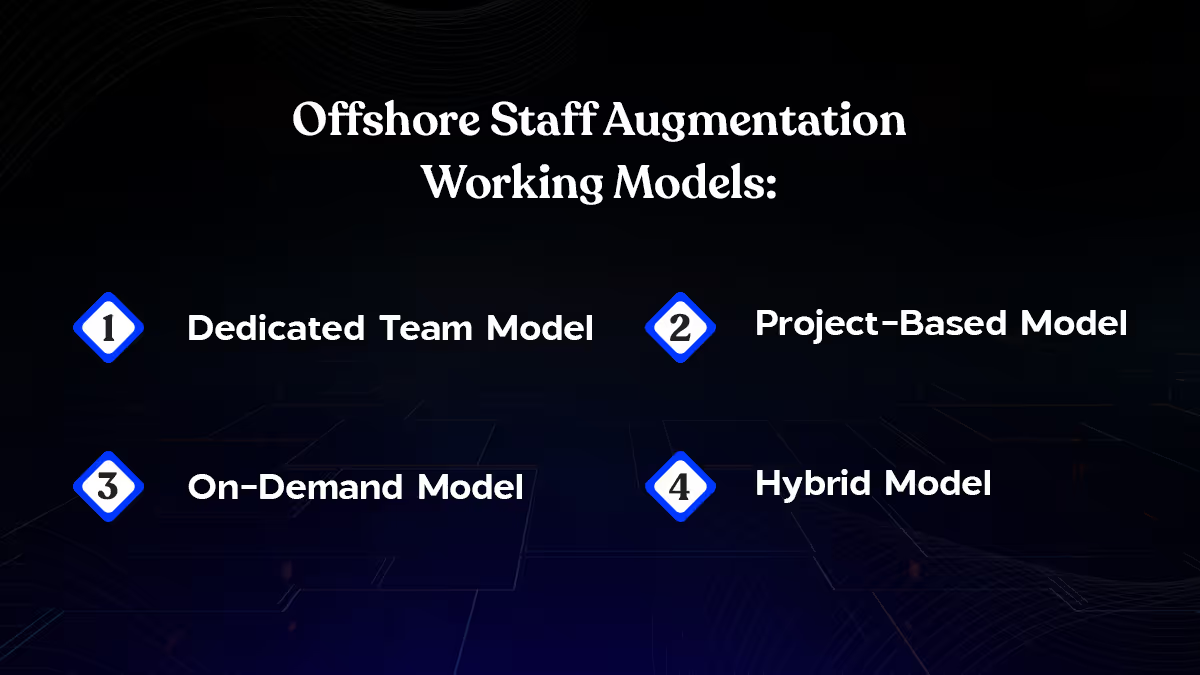
If you have decided to pursue an offshore staff augmentation strategy, you need to choose the right model for your needs. Let's learn about them so you can determine which option is ideal for you.
1. Dedicated Team Model
A dedicated team model means hiring a team of professionals who work only for your startup. They become an extended part of your in-house team, working full-time on your product.
Benefits:
- Consistency: The team is focused solely on your projects
- Control: You have more control over the workflow and can directly manage the team
- Long-term Relationship: This model is ideal for long-term projects as the team grows with your business
Ideal For:
- Businesses with ongoing projects requiring continuous support
- Companies looking to build a long-term offshore team
- Fintech and SaaS startups needing stable resources
2. Project-Based Model
In a project-based model, you hire offshore professionals to work on specific projects with a defined scope and timeline. Once the project is completed, the engagement ends.
Benefits:
- Flexibility: You can quickly scale up or down based on project needs
- Cost-Effective: You only pay for the duration of the project
- Expertise: You can hire experts specifically for the project at hand
Ideal For:
- One-time or short-term projects
- Projects with clearly defined goals and timelines
3. On-Demand Model
The on-demand model allows you to hire offshore professionals on an as-needed basis. This can be for a few hours, days, or weeks, depending on your requirements.
Benefits:
- Immediate Access: Quickly get skilled professionals when needed
- Cost Savings: Pay only for the time and services you use
- Adaptability: Ideal for handling unexpected workloads or urgent tasks
Ideal For:
- Sudden spikes in workload
- Short-term tasks or urgent projects
4. Hybrid Model
A hybrid model combines elements of the dedicated and project-based models. You have a core team working long-term, and you bring in additional offshore resources for specific projects as needed.
Benefits:
- Stability and Flexibility: Maintain a stable core team while adding flexibility for special projects
- Efficient Resource Use: Optimize resource allocation based on project demands
- Scalability: Easily scale resources up or down without long-term commitments
Ideal For:
- Businesses with fluctuating project needs
- Companies wanting a balance between a dedicated team and project-specific hires
5. Managed Team Model
In this model, the offshore provider handles all management responsibilities, including performance reviews, training, and day-to-day oversight.
Benefits:
- Minimal Management Overhead: Provider handles all HR, payroll, and administrative tasks
- Quick Setup: Experienced management structures already in place
- Focus on Strategy: Your team focuses on strategic direction, not daily management
Ideal For:
- Companies without bandwidth to manage offshore teams
- Businesses seeking fully managed solutions
6. Build-Operate-Transfer (BOT) Model
The partner builds and operates an offshore team on your behalf, then transfers ownership and control to you after a set period (typically 12-24 months).
Benefits:
- Test Before Commit: Evaluate offshore capability before full commitment
- Smooth Transition: Gradual shift from partner-managed to self-managed
- Reduced Initial Risk: Lower upfront investment and risk
Ideal For:
- Companies planning long-term offshore expansion
- Businesses wanting to establish their own offshore entity
Still confused? Contact Ontik Technology's expert team. They will help you choose the right offshore staff augmentation model for your business based on your specific needs and industry requirements. Explore our detailed process for building successful offshore teams.
To know more about read this blog: Steps to Successfully Outsource a Software Development Project
Best Practices for Offshore Staff Augmentation Success
To maximize the effectiveness of your offshore team, follow these proven best practices:
Clear Expectations & Onboarding: Set detailed job descriptions, project goals, and success metrics from day one. Provide comprehensive onboarding that includes company culture, tools, and workflows. Thorough onboarding reduces integration time by 40-50%.
Seamless Integration: Treat offshore staff as integral team members, not external contractors. Include them in daily standups, sprint planning, and retrospectives using Agile or Scrum methodologies. Assign mentors for knowledge transfer.
Use Modern Collaboration Tools: Integrate with industry-standard platforms like Jira, Asana, or Trello for project management, Slack or Microsoft Teams for communication, and GitHub or GitLab for code collaboration. Learn more about staff augmentation best practices for effective team management.
Performance Metrics & KPIs: Define measurable KPIs such as code quality scores, sprint velocity, bug resolution time, customer satisfaction ratings, and team retention rates (aim for 90%+ to ensure stability). Regular tracking ensures accountability.
Establish Service Level Agreements (SLAs): Define clear SLAs that outline response times, availability commitments, deliverable timelines, quality standards, and security requirements.
Regular Communication: Schedule overlapping work hours for real-time collaboration (typically 2-4 hours daily). Use asynchronous communication tools for documentation. Maintain daily standups, weekly 1-on-1s, and monthly team reviews.
Cultural Alignment: Invest in cultural training for both in-house and offshore teams. Celebrate achievements together and build team cohesion through virtual team-building activities.
Common Challenges & How to Overcome Them
Hidden Costs: Beyond salaries, watch for recruitment fees, platform charges, training costs, and tool licenses. Request transparent pricing upfront from reliable providers. Budget an additional 10-15% for unexpected expenses.
Integration Friction: Offshore teams may struggle to align with in-house workflows. Create detailed process documentation covering coding standards and workflows. Assign integration champions from your in-house team. Ensure offshore members participate in all team ceremonies.
Legal & Regulatory Complexity: Different countries have varying labor laws, IP regulations, and data protection requirements (GDPR, HIPAA). Work with partners that understand international compliance (like Ontik Technology). Ensure your partner handles local compliance requirements.
Knowledge Transfer Gaps: Critical project knowledge may not transfer effectively to offshore teams. Document everything, record training sessions, and establish mentorship programs. Build a comprehensive knowledge base using tools like Confluence or Notion.
Offshore Staff Augmentation Vs Outsourcing
What is the difference between staffing and outsourcing? Many people confuse staff augmentation with outsourcing. But it's clearly not the same. Here is a comparison:
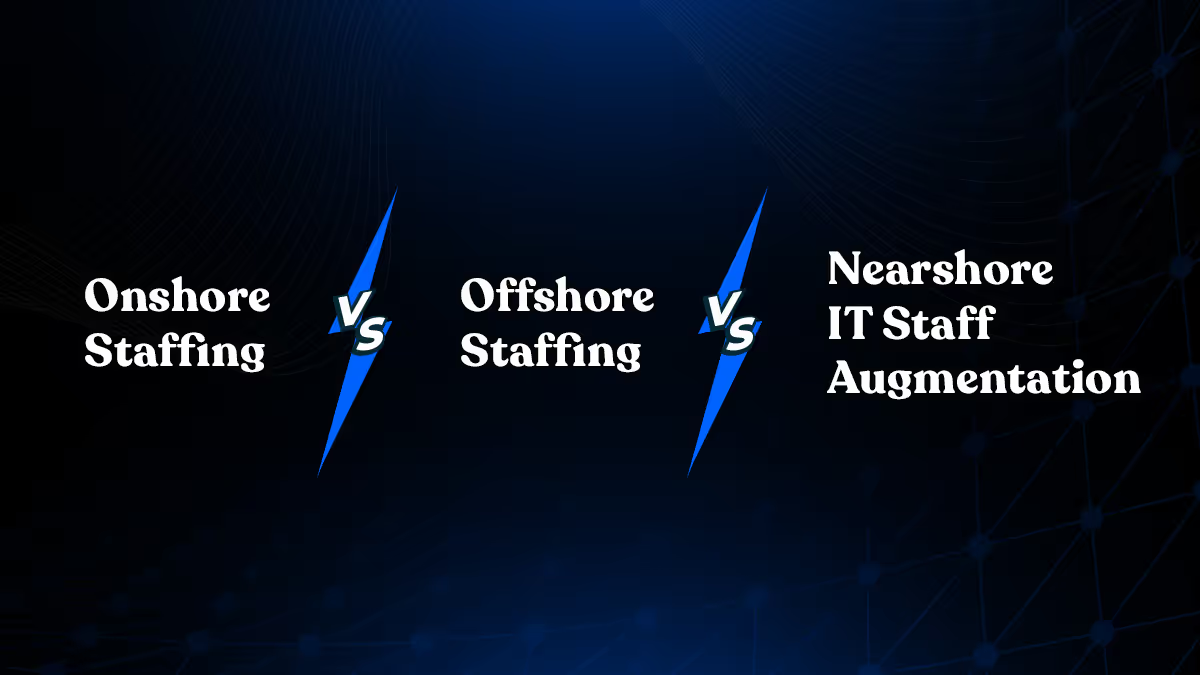
Offshore VS Onshore VS Nearshore IT Staff Augmentation
Regional Considerations:
- Asia (Bangladesh, India, Philippines): Largest talent pools, highest cost savings (50-70%), significant time zone differences. Bangladesh offers particular value with English proficiency ranked in top 20 globally by EF EPI.
- Eastern Europe (Poland, Ukraine, Romania): Strong technical skills, moderate cost savings (30-50%), better time zone overlap with Europe. Popular for fintech and cybersecurity projects.
- Latin America (Mexico, Brazil, Argentina): Excellent time zone alignment with US, moderate cost savings (40-60%), growing tech hubs. Ideal for UI/UX design and agile development.
For US-based startups seeking the optimal balance of cost-effectiveness, English proficiency, scalable talent pools, and quality, Bangladesh emerges as an excellent choice.
While onshore and nearshore options have their merits, offshore augmentation provides a comprehensive solution for startups. It aligns well with the dynamic needs of modern enterprises.
When considering IT staffing, businesses often face the decision of choosing between offshore, onshore, and nearshore options. Each approach has its unique advantages and challenges. So, to help you choose the finest options, I have shared a short comparison table. Check it out!
While onshore and nearshore options have their merits, offshore augmentation provides a comprehensive solution for a startup. It aligns well with the dynamic needs of modern enterprises.
This makes offshore IT staffing services a compelling choice for those looking to maximize their resources and project potential.
To know more about read this blog: Types of Staff Augmentation
Best Strategies for Offshore Staff Augmentation
For successful offshore staff augmentation, employing effective strategies is crucial. To make offshore staff augmentation work well for your startups, follow these strategies:
- Clearly define your project needs and goals
- Choose reliable offshore IT staffing firms
- Ensure effective communication channels
- Provide thorough onboarding and training
- Establish clear performance metrics and feedback systems
- Focus on building a collaborative team culture
- Monitor progress regularly and address issues promptly
Implementing these strategies will help you maximize the benefits of global offshore staffing and achieve your business goals efficiently.
Why Choose Offshore Staff Augmentation?
Startup companies often turn to staff augmentation for several strategic reasons:
Cost Efficiency: Hiring full-time employees involves various costs such as salaries, benefits, training, and overhead. Offshore staff augmentation allows companies to reduce these expenses by 40-60% by only paying for the resources they need. This is particularly valuable for early-stage startups where runway extension is critical.
Specialized Skills: Sometimes, companies require specific skills for a short-term project that their existing team lacks. Staff augmentation enables them to access a diverse pool of talent with the expertise they need. Of course, it's tough for a startup company to invest in extensive training or hiring processes.
Speed to Market: In fast-paced industries, getting a product or service to market quickly can be crucial for staying competitive. Staff augmentation provides companies with the extra manpower they need to expedite project timelines and meet deadlines.
Flexibility: Staff augmentation allows companies to quickly scale their workforce up or down according to project demands. They can easily add or remove resources without the long-term commitments of hiring full-time employees.
Risk Reduction: By augmenting their workforce with external talent, companies can reduce the risk associated with full-time hires. They have the flexibility to terminate contracts once the project is completed without the complexities of layoffs or severance packages.
Focus on Core Competencies: Outsourcing non-core functions allows companies to concentrate on their core competencies. Staff augmentation enables them to delegate certain tasks to external professionals while maintaining focus on strategic initiatives.
Ready to leverage your team augmentation? Contact Ontik Technology, your reliable offshore IT staffing agency, or explore how to hire remote developers for your next project.
How to Build Your Offshore Team: Step-by-Step Guide
Offshore staff augmentation involves hiring skilled professionals from other countries to work remotely for your organization. Here's a step-by-step guide:
1. Define Your Requirements: Begin by identifying the specific job roles and skill sets essential for your company. Determine whether you require full-time, part-time, or project-based assistance. This clarity will streamline the selection process.
2. Research Countries and Markets: Research countries renowned for offering skilled professionals at competitive rates, such as Bangladesh, India, or the Philippines. Assess factors like language proficiency, cultural compatibility, and time zone differences to ensure smooth collaboration.
3. Find the Right Partner: Partner with reputable offshore staff augmentation companies. Prioritize firms with a proven track record, impressive portfolio, and positive client testimonials. A trustworthy partner will streamline the recruitment process, mitigate risks, and facilitate seamless communication. Consider reading about the benefits of IT staff augmentation to make informed decisions.
4. Screen and Select Candidates: Look at resumes, interview candidates, and verify they have the skills and experience you need. Make sure they speak the language well and can work in your time zone. Use tools like video calls and messaging apps for effective communication.
5. Set Clear Expectations: Make sure your team understands project requirements and expectations. Provide all the information they need to succeed. Ensure proper security protocols are in place to protect your data.
6. Finalize Contracts & Onboard: Once you agree on everything, finalize the paperwork including project outline, deliverables, timelines, and financial terms. Once contracts are signed, begin onboarding. Ensure offshore teams are equipped with necessary tools and trained to align with your project goals.
7. Foster a Collaborative Environment: Make your workers feel welcome and appreciated. Communicate regularly, recognize good work, and organize team activities. Listen to feedback and be ready to adjust if things aren't working well.
The Potential Risks of Staff Augmentation and Resolving the Risks
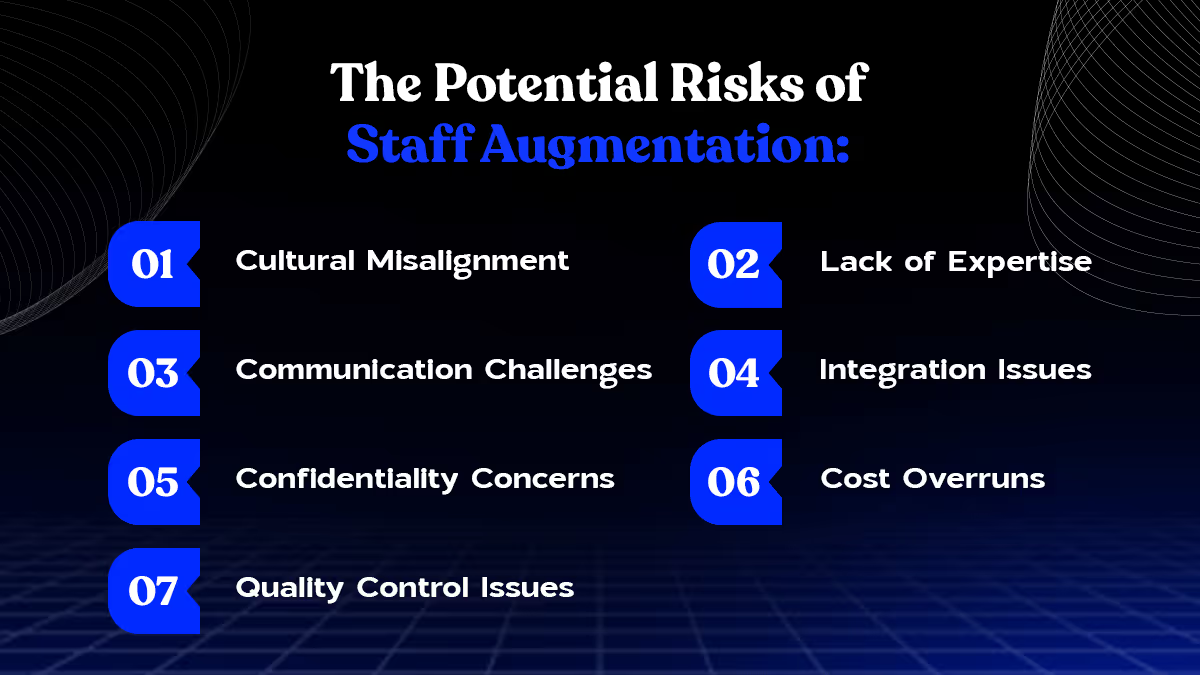
When you add extra workers to your team, it can help, but there are also risks involved. It's important to understand and fix these risks for things to go smoothly. Here are the top risks and their resolutions to navigate this strategy effectively.
Cultural Misalignment:
When hired staff have different work habits or values compared to your team.
Resolution: Prioritize cultural fit during the hiring process. Encourage open communication and team-building activities.
Lack of Expertise:
Augmented staff may lack the necessary skills or experience for specific tasks.
Resolution: Provide adequate training and mentorship. Clearly outline job expectations and provide resources for skill development.
Communication Challenges:
Differences in communication styles and language barriers can hinder collaboration.
Resolution: Establish clear communication channels and protocols. Encourage regular check-ins and provide language support if needed.
Integration Issues:
Difficulty integrating augmented staff into existing workflows and processes.
Resolution: Provide thorough onboarding and orientation sessions. Assign a mentor or buddy to help new hires navigate their roles.
Confidentiality Concerns:
Augmented staff may not be as invested in maintaining confidentiality as full-time employees.
Resolution: Implement confidentiality agreements and security protocols. Educate all staff on the importance of data protection.
Cost Overruns:
Unexpected expenses related to hiring, training, or retaining augmented staff.
Resolution: Conduct a thorough cost-benefit analysis before engaging in staff augmentation. Monitor expenses closely and adjust budgets as needed.
Quality Control Issues:
Variability in the quality of work delivered by augmented staff.
Resolution: Implement quality assurance processes and regular performance reviews. Provide feedback and coaching to improve outcomes.
Why Do Startups Leverage Staff Augmentation
A startup company often turns to staff augmentation for several reasons:
- Flexibility: Staff augmentation allows companies to quickly scale their workforce up or down according to project demands. They can easily add or remove resources without the long-term commitments of hiring full-time employees.
- Specialized Skills: Sometimes, companies require specific skills for a short-term project that their existing team lacks. Staff augmentation enables them to access a diverse pool of talent with the expertise they need. Of course, it’s tough for a startup company to invest in extensive training or hiring processes.
- Cost Efficiency: Hiring full-time employees involves various costs such as salaries, benefits, training, and overhead. This is hard for a startup. But, offshore cheap staff augmentation allows companies to reduce these expenses by only paying for the resources they need.
- Speed to Market: In fast-paced industries, getting a product or service to market quickly can be crucial for staying competitive. Staff augmentation provides companies with the extra manpower they need to expedite project timelines and meet deadlines.
- Risk Reduction: It’s not wise to take much risk as a startup company. By augmenting their workforce with external talent, companies can reduce the risk associated with full-time hires. They have the flexibility to terminate contracts once the project is completed. There are no complexities of layoffs or severance packages. So, it’s a win-win situation.
- Focus on Core Competencies: Outsourcing non-core functions allows companies to concentrate on their core competencies. Staff augmentation enables them to delegate certain tasks to external professionals while maintaining focus on strategic initiatives.
Ready to leverage your team augmentation? Contact with Ontik Technology, your reliable offshore IT staffing agency.
How to Do Offshore Staff Augmentation
Offshore staff augmentation involves hiring skilled professionals from other countries to work remotely for your organization. Here's a step-by-step guide:
- Know What You Need: Begin by identifying the specific job roles and skill sets essential for your company. Determine whether you require full-time, part-time, or project-based assistance. This clarity will streamline the selection process.
- Check Out Different Countries: Research countries renowned for offering skilled professionals at competitive rates, such as Bangladesh, India, or the Philippines. Assess factors like language proficiency, cultural compatibility, and time zone differences to ensure smooth collaboration.
- Find Good Offshore Staffing Agencies: Partner with reputable offshore staff augmentation companies. Prioritize firms with a proven track record, impressive portfolio, and positive client testimonials. A trustworthy offshore staff augmentation company will streamline the recruitment process, mitigate risks, and facilitate seamless communication.
- Screening and Selection: Look at resumes, talk to candidates, and see if they have the skills and experience you need. Make sure they speak the language well and can work in your particular time zone. Use tools like video calls and messaging apps to talk to your workers easily.
- Give Clear Instructions: Make sure your workers understand what they need to do and what you expect from them. Give them all the information they need to do their job well. Make sure your workers follow rules to keep your information safe and don’t share it with anyone they shouldn’t.
- Finalize Contracts & Onboard Offshore Teams: Once you agree on everything, it's time to finish the paperwork. This includes details about the project outline, deliverables, timelines, and financial terms. Once contracts are signed, the onboarding process begins. Ensure offshore teams are equipped with necessary tools and trained to align with your project goals.
- Make a Good Atmosphere: Make your workers feel welcome and appreciated. Talk to them often, praise them when they do good work, and do things together as a team. Listen to feedback and be ready to change things if they’re not working well.
How Does Offshore Augmentation Work?
Offshore staff augmentation is like expanding your team with extra hands, but those hands are located in another country. You basically partner with a company that offers offshore staff augmentation services. In this way, you can easily find and hire remote developers and skilled professionals from abroad to work on your projects remotely. They become an extension of your team, helping you meet deadlines, tackle big projects, or fill skill gaps. It's like having a virtual office where talent from different parts of the world collaborate to get the job done.
How to Select Offshore Staffing Partners
Choosing offshore staffing partners can seem overwhelming, but it's all about finding the right fit for your needs. Here's a simplified guide:
Research Potential Partners: Look for offshore staffing companies that specialize in your industry or have a good track record in the types of roles you're hiring for. Check their websites, reviews, and testimonials to gauge their reputation. Learn more about selecting the right partner by reading staff augmentation vs consulting to understand different engagement models.
Assess Expertise and Experience: Consider the expertise and experience of the staffing partners. Do they have a proven track record of sourcing qualified candidates for similar roles? Ask for case studies with measurable outcomes, client retention rates (aim for 90%+), technical screening processes, and specific expertise in your tech stack (React, Python, AI/ML, cloud infrastructure).
Evaluate Communication and Cultural Fit: Effective communication is key when working with offshore teams. Ensure that the staffing partners have strong English proficiency and cultural alignment with your company's values and communication style.
Understand Cost Structures: Compare the cost structures of different staffing partners, including fees, salaries, and any additional expenses. Ensure that you understand what's included in the pricing and whether there are any hidden costs.
Ask for References and Case Studies: Request references from past clients and ask for case studies that demonstrate the staffing partner's success in similar projects. This will give you confidence in their ability to deliver results.
Start with a Trial Period: Consider starting with a trial period or a smaller project to assess the performance and compatibility of the staffing partner before committing to a long-term engagement.
By following these steps, you can select offshore staffing partners with confidence.
Why Bangladesh the Most Suitable Place for Offshore Staff Augmentation
Bangladesh is a prime destination for offshore staff augmentation due to several factors. Firstly, it offers a vast pool of highly skilled and cost-effective talent, particularly in IT and software development fields. Additionally, the country boasts a favorable business environment with competitive labor costs and government incentives.
Its strategic location provides convenient time zone compatibility with Western clients. Moreover, Bangladesh's growing English proficiency (ranked in top 20 globally by EF EPI) further increases its appeal for offshore staffing. Overall, these attributes make Bangladesh an ideal choice for companies seeking efficient and reliable offshore augmentation solutions. Discover why hiring Asian developers offers exceptional value for global companies.
Additionally, the country boasts a favorable business environment with competitive labor costs and government incentives. Its strategic location provides convenient time zone compatibility with Western clients. Moreover, Bangladesh's growing English proficiency further increases its appeal for offshore staffing. Overall, these attributes make Bangladesh an ideal choice for companies seeking efficient and reliable offshore augmentation solutions.
Why Ontik Technology is the Best Choice for Offshore Staff Augmentation
When considering offshore staff augmentation, Ontik Technology stands out as a premier choice- especially for software offshore staffing, not only for its technical prowess but also for its commitment to personalized, cordial service.
Proven Results & Client Success
Since 2016, Ontik Technology has been delivering exceptional offshore staff augmentation services with measurable results that demonstrate our expertise and reliability.
Our Track Record:
8+ Years of Experience: We've successfully placed over 500+ skilled professionals across diverse industries including fintech, SaaS, healthcare technology, and enterprise software development.
92% Client Retention Rate: Our high retention rate reflects the quality of our service and the satisfaction of our long-term partners. Most clients return for additional projects and team expansions.
2-Week Average Team Ramp-Up: Unlike traditional hiring that takes 6-12 weeks, our streamlined process gets qualified professionals working on your projects within 2 weeks, significantly reducing time-to-productivity.
Enterprise-Grade Security: We maintain ISO 27001 and SOC 2 certifications, ensuring your data and intellectual property remain protected. Our teams are trained in GDPR and HIPAA compliance for sensitive projects.
95% Project Success Rate: Our teams consistently deliver projects on time and within budget, with high client satisfaction scores across technical quality, communication, and collaboration.
These proven results make Ontik Technology one of the best offshore staff augmentation companies for startups and enterprises seeking reliable offshore technology solutions.
Conclusion
Offshore staff augmentation is an effective strategy for any startup company looking to enhance its workforce with skilled professionals. It offers cost savings, access to a global talent pool, and increased flexibility.
While there are challenges such as communication barriers and quality control issues, these can be managed with careful planning and the right partner. Ontik Technology, with its expertise and commitment, is one of the best offshore staffing solutions for startups seeking reliable offshore development teams.
Frequently Asked Questions About Offshore Staff Augmentation
Is offshore staff augmentation suitable for early-stage startups?
Yes, absolutely. Offshore staff augmentation is ideal for early-stage startups needing to scale quickly without heavy upfront costs. It provides flexibility, specialized expertise, and significant cost savings (40-60%), allowing you to extend runway.
How long does it take to build an offshore team?
Building an offshore team typically takes 2-4 weeks from initial requirements to onboarding. This includes screening, interviews, selection, and setup. With reliable providers like Ontik Technology, the process is streamlined and efficient.
How do you manage offshore developers effectively?
Manage offshore developers through clear communication using tools like Slack and Jira, regular standups, defined KPIs, overlapping work hours (2-4 hours daily), comprehensive documentation, and treating them as integral team members, not external contractors.
What is the difference between offshore staff augmentation and outsourcing?
Offshore staff augmentation integrates remote professionals into your existing team under your direct management. Outsourcing delegates entire projects to external companies who manage the work independently. Augmentation offers more control; outsourcing offers less management overhead.