
Hire Software Developers in Australia: A Complete Guide (Roles, Costs, Process, Compliance)
key takeaways
- Match business goals to the right roles: full-stack for MVP, backend for scale, DevOps/SRE for reliability, QA for quality, security for risk control.
- Know Australia pay ranges: salary + 11% super + leave; contractors run ~$600–$1,200/day and agencies add ~20–40% margins.
- Choose the best hiring model: permanent vs contract vs fixed-term, plus agency, RPO, or EOR based on speed, cost, and control.
- Win the market with a fast interview loop: scorecards, job-relevant assessments, and move from application to offer in ~2–3 weeks.
- Stay compliant: correct contractor classification (ABN/SOW), IP + NDA clauses, security onboarding, and a 30-60-90 plan to reduce churn.
Hiring developers in Australia can feel overwhelming. You need the right talent fast, but developer recruitment Australia markets are competitive and costs vary wildly.
This guide walks you through the entire process for hiring developers in Australia. You will learn which software developer roles to hire, how much they cost, where to find talent, and how to stay compliant. We cover everything from writing job descriptions to onboarding your first hire.
Whether you are a CTO scaling a startup, an HR leader building your first tech team, or a founder launching an MVP, this guide gives you a practical roadmap. At Ontik Technology, we help companies hire software engineers Australia-wide quickly and efficiently.
Let's get started.
How to Decide What Type of Developer to Hire in Australia
Selecting the right developer hiring strategy in Australia starts with project needs. Different goals require specific roles and seniority.
First, define your objective: Are you building an MVP, scaling a platform, or prioritizing reliability?
Your objective dictates the hiring strategy. For an MVP, hire generalist full-stack developers for speed. Scaling requires senior backend engineers skilled in distributed systems. Reliability issues demand DevOps or Site Reliability Engineers (SREs).
The hiring model (contractor for short-term flexibility, permanent for long-term ownership) must align with your budget, timeline, delivery risk, and time-to-market goals.
Matching Business Outcomes to Developer Roles
Here is a simple outcomes-based hiring framework. Match your business outcome to the right team composition and role.
Common scenarios and recommended roles:
- Speed to market: Hire full-stack developers who can handle both frontend and backend tasks
- System reliability: Bring in DevOps engineers or SREs to improve uptime and monitoring
- Product quality: Add QA automation engineers to catch bugs before production
- Data insights: Hire data engineers to build pipelines and analytics infrastructure
- Security concerns: Get security engineers to audit code and harden systems
- Mobile presence: Recruit iOS or Android developers for native mobile app development
- API development: Backend engineers with API design experience handle integrations
- User experience: Frontend developers plus UI/UX designers create polished interfaces
- Cloud migration: DevOps engineers manage infrastructure as code and deployments
- Technical leadership: Staff engineers or tech leads guide architecture decisions
This mapping helps you avoid hiring the wrong role. A full-stack developer cannot replace a dedicated DevOps engineer when uptime is critical.
Software Developer Roles in Australia Explained
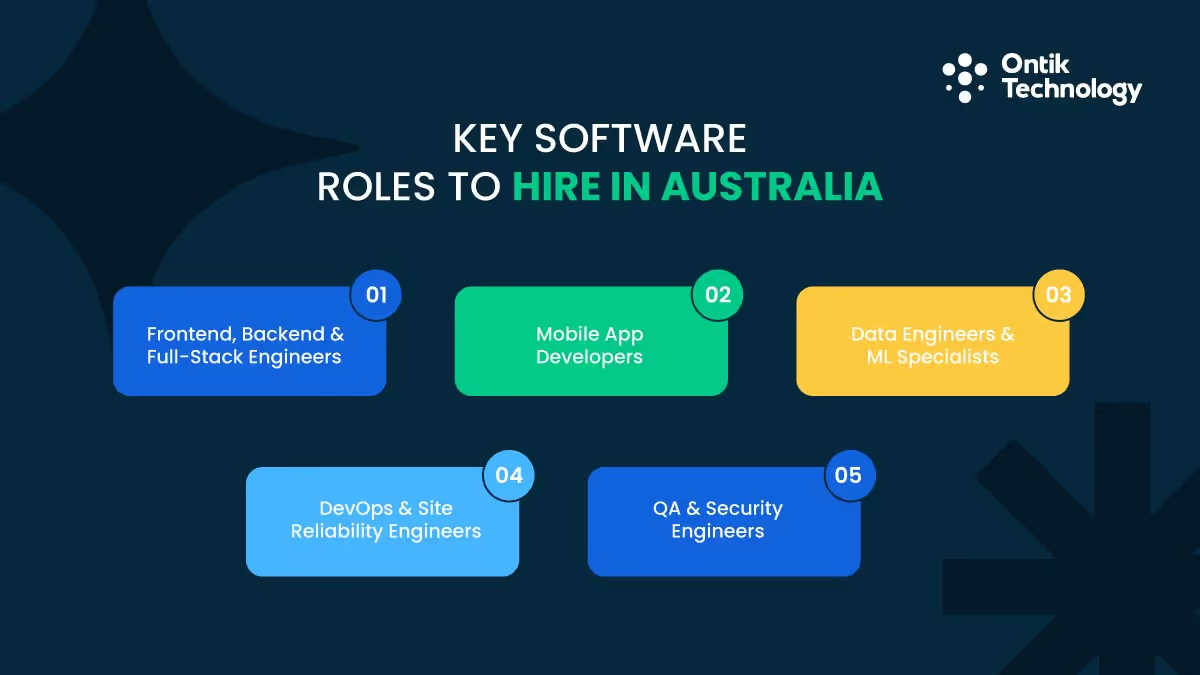
Understanding software developer roles Australia and software engineer roles prevents mismatched expectations. Each role has specific deliverables and skill requirements.
Software engineers code and maintain features. Tech leads guide small teams technically. Architects design system solutions. Engineering managers focus on people and process. SREs ensure system reliability. QA engineers automate testing to prevent regressions. Clear roles streamline interviews, ensuring evaluation against correct criteria.
Frontend, Backend, and Full-Stack Developers
Frontend developers build everything users see and interact with. They work with React, TypeScript, HTML, and CSS to create responsive interfaces. A good frontend engineer cares about accessibility, performance, and browser compatibility.
Backend developers handle server-side logic, databases, and APIs. They use Node.js, Java, .NET, or Python to build services that scale. Backend work includes authentication, data processing, and third-party integrations.
Full-stack developers handle both frontend and backend tasks. They move faster on small teams but may lack deep specialization. Full-stack roles work well for MVPs and early-stage startups where versatility beats depth.
When you hire React developer Australia candidates or hire Node.js developer Australia specialists, match their technical skills to your tech stack. A React developer may struggle with Angular projects without ramp-up time.
Mobile, Data, DevOps, Security, and QA Engineers
When you hire remote mobile app developers Australia, focus on platform specialization. Mobile developers work on iOS or Android platforms. Native apps require Swift or Kotlin knowledge. Cross-platform developers use React Native or Flutter to build for both platforms at once.
Data engineers build pipelines that move and transform data. They work with SQL, Python, Spark, and cloud data warehouses. Data roles make sense when analytics or machine learning drive your product.
When you hire DevOps engineers Australia, look for automation expertise. DevOps engineers automate deployment, monitoring, and infrastructure. They use tools like Kubernetes, Terraform, and CI/CD pipelines. DevOps roles reduce manual work and improve reliability.
Security engineers audit code, configure access controls, and respond to vulnerabilities. Security matters more in fintech, healthcare, and any product handling sensitive data.
QA engineers write automated tests and build test frameworks. They catch bugs before users do. Automation testing saves time compared to manual QA as your codebase grows.
Each role solves a specific problem. Hiring the wrong specialty delays progress.
Developer Seniority Levels in Australia
Leveling candidates correctly prevents frustration on both sides. A misleveled hire burns budget or quits within months.
Junior vs Mid-Level Software Engineers
Junior developers (1 to 3 years experience) need guidance and structure, learning quickly with mentorship and code reviews. They work best on well-defined tasks with clear acceptance criteria. Expect juniors to ask questions frequently and require code review on most changes.
Mid-level developers (3 to 6 years) work independently on defined features and make sound technical decisions within their scope. They understand the full development lifecycle and can estimate their own work accurately. Mid-level engineers mentor juniors and participate in design discussions.
Senior Software Engineers and Risk Reduction
Senior software engineers (6+ years) offer system design skills, mentorship, and handle ambiguous problems, reducing risk due to past experience. They make architectural decisions, lead technical initiatives, and unblock other engineers. Senior hires accelerate team velocity and improve code quality across the board.
Staff and Principal Engineers Explained
Staff and Principal engineers (10+ years) operate at the architecture level, influencing technical strategy across teams with deep domain expertise. They define technical standards, evaluate build vs buy decisions, and mentor senior engineers. These roles suit companies with complex systems or significant technical debt.
How to Avoid Misleveling Candidates
Leveling checklist:
Red flags include candidates who oversell experience, lack basic problem-solving skills, or cannot explain past decisions. Always calibrate interview signals to the level you are hiring for.
Australia Developer Hiring Landscape (Market Overview)
Australia's developer job market is highly competitive, with demand exceeding talent, especially in major cities like Sydney and Melbourne, which hold the largest talent pools.
Brisbane and Canberra are growing, while Perth and Adelaide have limited local talent (remote hiring helps). Australian software developers now prioritize remote flexibility, learning budgets, and career growth over salary alone.
Time-to-hire is typically 4 to 8 weeks for mid-level roles, with senior and specialist roles (like DevOps, data engineering, and security) taking longer due to skill shortages and intense competition from startups, multinationals, and remote-first companies. Slow hiring processes often result in losing candidates.
Typical Hiring Timelines by Role
Understanding realistic timelines helps set proper expectations:
Junior to Mid-Level Developers: 3 to 5 weeks from job posting to offer acceptance. Competition is moderate and candidate pools are larger.
Senior Developers: 6 to 10 weeks due to smaller talent pools and longer evaluation processes. Senior candidates often interview with multiple companies simultaneously.
Staff and Principal Engineers: 10 to 16 weeks because these candidates are rarely active job seekers. Requires executive involvement and competitive compensation packages.
Specialized Roles (DevOps, Security, Data): 8 to 12 weeks minimum. Limited supply means extended search periods and higher offer rejection rates.
Faster hiring requires pre-built talent pipelines, streamlined interview loops, and decisive offer negotiations.
Cost to Hire Software Developers in Australia
Compensation varies by role, seniority, city, and tech stack. Understanding software engineer salary Australia ranges and contractor day rate Australia pricing prevents budget surprises.
Base salary is just one piece. You also pay superannuation (11% of base salary), bonuses, equity, and benefits. Contractors charge day rates that seem high but include no super or leave.
Tech stack affects pay. Developers with expertise in Go, Rust, or Kubernetes earn premiums. Frontend React developers fall in the mid-range. Legacy stacks like PHP pay less.
City matters too. Sydney and Melbourne salaries run 10-20% higher than Brisbane or Adelaide. Remote roles let you access talent outside expensive markets.

What's Included in Employee Compensation
Australian software engineer pay includes more than base salary. Employers legally must add 11% superannuation, four weeks annual leave, and ten days sick leave.
Companies may offer performance bonuses or equity grants (good for startups). Extra benefits like learning budgets, WFH stipends, and flexible hours attract talent.
When budgeting, factor in the total employment cost: a $120k salary costs over $133k with super and leave.
Contractor Costs and Agency Margins
Australian IT contractor rates, typically charged daily or hourly, range from $600 to $1,200 per day based on expertise. Agencies add a 20-40% margin, meaning a contractor might get $650 from a $1,000 billed day, covering recruitment and admin.
Direct hiring saves these margins but requires more compliance from you. Contractors are ideal for short projects or specialized, fast expertise, while permanent hires suit long-term needs and team continuity.
Best Hiring Models for Developers in Australia
Different hiring models balance speed, control, cost, and compliance. Choose based on your priorities.
Options include: in-house recruiting (full control, requires resources), RPO (partner handles end-to-end hiring), developer recruitment agencies (quick individual role filling), and Employer of Record (EOR) services (hiring on your behalf while you are overseas).
Hiring model comparison:
Use agencies when you need someone in two weeks. Choose RPO if you are hiring five-plus engineers per quarter. EOR works when you want Australian talent but lack a local entity.
At Ontik Technology, we combine speed and quality by maintaining vetted talent pools. You get shortlists in days instead of weeks.
Permanent vs Contract vs Fixed-Term
Hiring models for Australian developers include:
Permanent: Offers long-term commitment, builds institutional knowledge, includes probation (3 to 6 months) and notice periods (2 to 4 weeks).
Contract: Provides flexibility for projects, no notice period, costs more per day, but avoids super, leave, and benefits.
Fixed-term: (6 to 12 months) Balances the two, suitable for maternity cover, project work, or testing fit before permanent conversion.
Contract vs Permanent vs Fixed-Term Comparison:
Misclassification of contractors as employees carries compliance risks, including back-pay claims and penalties.
Remote, Hybrid, and City-Based Hiring in Australia
Work location affects who you can hire and how fast you fill roles. Remote policies open access to talent across the country.
How to Hire Remote Developers in Australia
When you hire remote developers Australia, you tap developers in Brisbane while your office sits in Sydney. You avoid city salary premiums and access a wider talent pool. Remote work requires solid security controls, collaboration tools, and onboarding processes.
Remote vs Hybrid vs Onsite Comparison:
Hybrid Australian teams require developers to be onsite 1 to 3 days weekly, offering flexibility with some in-person collaboration. This requires office space.
City-based, onsite hiring restricts the talent pool but is favored by early-stage startups for faster movement and culture building where face-to-face interaction is key.
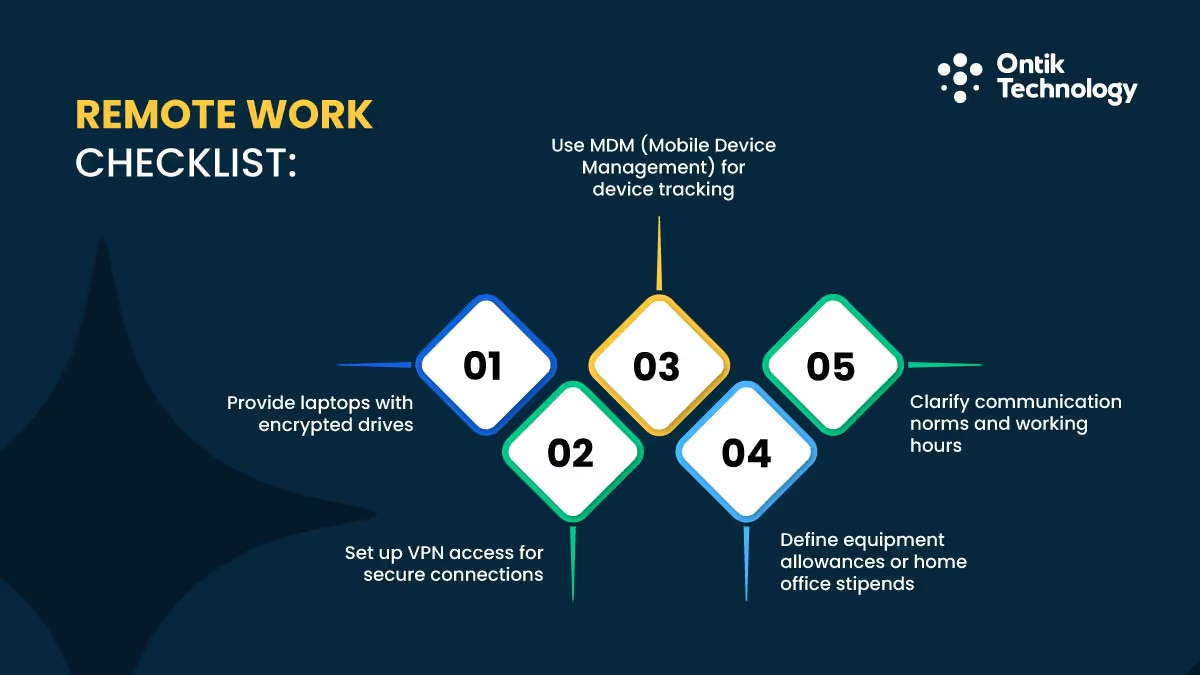
Remote work checklist:
- Provide laptops with encrypted drives
- Set up VPN access for secure connections
- Use MDM (Mobile Device Management) for device tracking
- Define equipment allowances or home office stipends
- Clarify communication norms and working hours
Security becomes critical with remote developers. Access controls, two-factor authentication, and regular security training reduce risk in software development projects.
Custom software projects and app development work especially benefit from clear remote policies. Australian teams working across time zones need structured communication protocols.
City-by-City Developer Hiring Overview
When you hire developers Sydney, you get the deepest talent pool in Australia. You will find senior engineers, specialists, and diverse tech stacks. Competition is fierce and salaries run high. Sydney suits scale-ups and enterprises needing deep expertise.
Hire developers Melbourne for rival talent density. The city has strong startup and fintech scenes. Salaries match Sydney but cost of living is slightly lower. Melbourne attracts creative developers and design-focused engineers.
Brisbane provides a smaller but growing pool. Salaries are 10% to 15% below Sydney. Remote work helps access Brisbane talent without relocating. Brisbane works well for mid-stage startups watching budget.
Canberra has niche talent in government tech and security clearances. Developers here often work on public sector projects. Canberra suits companies with government contracts or defense work.
Perth and Adelaide offer limited local pools. Remote hiring makes these cities viable. Salaries are lower but fewer specialists mean longer searches.
City-by-City Comparison:
Choose your city based on talent needs and budget. Remote-first models let you hire the best person regardless of location.
Where to Find Software Developers in Australia
When you need to find developers Australia, a multi-channel approach works best. Relying on one source limits your pipeline.
Source Australian developers via LinkedIn (use Boolean search; expect 10-20% InMail response), GitHub (search by code and contact project contributors).
Also, meetups/conferences (network for better conversion), and university partnerships (e.g., UoM, UNSW, UQ) for junior hires via internships.
Referrals remain the highest-quality source. Pay referral bonuses ($2k - $5k) to employees who bring in successful hires. Referred candidates close faster and stay longer.
At Ontik Technology, we combine these channels to build pre-vetted talent pools. You skip the sourcing grind and start interviewing day one.
30-Day Sourcing Sprint
A focused sourcing plan fills your developer pipeline Australia quickly. Here is a week-by-week breakdown.
Week 1: Set up your ATS (Applicant Tracking System) or CRM. Define pipeline stages (sourced, contacted, responded, screened, interviewed). Write your outreach templates for LinkedIn and email.
Week 2: Source 100+ profiles using LinkedIn, GitHub, and job boards. Tag candidates by role, seniority, and location. Send personalized outreach messages to your top 30 matches.
Week 3: Follow up with non-responders. Post your role to niche job boards and Slack communities. Ask your team for referrals and activate your referral bonus.
Week 4: Screen candidates who responded. Schedule intro calls with qualified profiles. Move promising candidates into technical assessment stage.
Track conversion rates at each stage. Typical drop-off is 70-80% from outreach to response. You need 100 sourced candidates to yield 5-10 qualified applicants.
How to Write a High-Converting Job Description
Your software engineer job description Australia serves as a marketing document. It should attract the right candidates and filter out bad fits using a clear developer JD template.
Focus on outcomes ("reduce page load times") over tasks ("write React components"). Use outcome-based language to show impact.
Clearly separate 3 to 5 must-have requirements from nice-to-have skills; avoid long technology lists.
Include salary or day rate for transparency, attracting suitable candidates and filtering mismatches early.
Describe the interview process (stages, timeline, take-home tasks) upfront so candidates know what to expect.
Job description template blocks:
- Hook: What makes this role exciting? (2 to 3 sentences)
- Outcomes: What will you achieve in this role? (3 to 5 bullet points)
- Must-have skills: Non-negotiable technical skills for software development (3 to 5 items)
- Nice-to-have skills: Bonus skills that help but are not required (2 to 3 items)
- Compensation: Salary range, equity, benefits
- Process: Interview stages and timeline
- About us: Quick company pitch highlighting your custom software solutions or app development focus (2 to 3 sentences)
Keep it under 500 words. Long job descriptions lose reader attention. Australian developers appreciate transparency about hourly rates or salary bands upfront.
How to Screen and Interview Developers in Australia
Structured developer screening in Australia prevents bias and improves signal. Use a scorecard to evaluate every candidate consistently on experience, tech stack fit, and communication. Before the 20 to 30 minute screening call, review portfolios for code quality. During the call, assess role alignment, salary expectations, and clarity. Red flags include candidates who cannot explain their work or lack curiosity. Shortlist the top three to five candidates for technical review.
Technical Assessments and System Design Assessments should mimic actual work. Choose between take-home tasks limited to four hours or live pair programming sessions that test collaboration. Ensure fairness by standardizing tasks and calibrating evaluation rubrics across interviewers.
For senior roles, incorporate system design interviews. Ask candidates to architect systems to evaluate their ability to manage tradeoffs, scalability, and database design. Match the assessment complexity to the actual daily responsibilities.
Designing a Fast Interview Loop Create a four stage process to balance speed and quality:

- Screening call to assess fit.
- Technical assessment via take-home or live coding.
- Technical deep dive to review decisions.
- Culture fit interview with the team.
Spread these over two weeks rather than scheduling marathon days. Interviewers must score candidates independently before debriefing to avoid groupthink. Hiring committees can help review borderline cases to maintain a high bar. Speed is critical, so aim to move from application to offer within three weeks to secure top talent.
Compliance and Legal Requirements When Hiring Developers in Australia
Compliance protects your company from legal risk. Understanding contractor vs employee Australia rules and developer contract Australia requirements is critical.
Permanent employees need written contracts that outline salary, role, probation period, notice period, and termination conditions. Probation typically lasts three to six months. Notice periods are two to four weeks for most roles.
Contractors must have an ABN and operate as independent businesses. Contractor agreements should define scope, deliverables, payment terms, and IP ownership. Misclassifying employees as contractors leads to penalties and back-pay claims.
Compliance checklist:
- Use written employment contracts for all hires
- Include IP assignment clauses in contracts
- Require NDAs for sensitive projects
- Verify contractor ABN status before engagement
- Pay superannuation on time for employees
- Track leave entitlements accurately
- Follow fair work guidelines for terminations
When in doubt, consult an employment lawyer. Compliance mistakes cost more to fix than to prevent.
Contractor Compliance (ABN, Classification, Agreements)
When you hire software contractors Australia, they need a valid ABN to invoice you. ABN contractors must be verified on the ABN Lookup website before engagement.
Classification risk happens when contractors behave like employees. Red flags include working set hours onsite, using company equipment exclusively, and having no other clients. The Australian Taxation Office (ATO) can reclassify contractors as employees and demand back super and leave.
Use clear Statements of Work (SOW) for each contractor project. SOWs define deliverables, timelines, and payment milestones. SOWs reduce scope creep and set expectations.
Contractor agreements should address IP ownership, confidentiality, and termination terms. Make sure the contractor assigns all IP to your company upon creation.
Proper contractor management reduces compliance risk.
IP, Confidentiality, and Security Basics
IP assignment software developers clauses ensure your company owns code created by employees and contractors. Include IP assignment language in every employment contract and contractor agreement.
Australia recognizes moral rights for creators. You cannot remove moral rights but can get written waivers for commercial use. This matters less for software but good to know.
NDA for developers (Non-Disclosure Agreements) protect confidential information. Use NDAs before sharing sensitive data during interviews or onboarding. Make sure NDAs define what is confidential and how long the obligation lasts.
Security onboarding includes access provisioning, equipment setup, and training. Use least-privilege access controls so new hires only access systems they need. Enable two-factor authentication on all accounts.
Open-source policies clarify what code employees can release publicly. Some companies allow contributing to open-source projects. Others restrict it. Set a policy early to avoid conflicts.
Strong IP and security practices prevent costly disputes later.
Making Offers, Onboarding and the First 90 Days
A great offer process converts candidates and reduces drop-off. Speed and clarity matter in developer onboarding Australia processes.
Offer checklist:
- Verbal offer first to gauge interest and handle counteroffers
- Written offer letter within 24 hours of verbal acceptance
- Include base salary, super, equity, bonus structure, and start date
- Clarify probation period and notice requirements
- Attach employment contract for review
Counteroffer handling is common. Candidates often receive counter-offers from current employers. Ask about their motivations early. If they are leaving for career growth or culture fit, more money will not change that.
Onboarding starts before day one. Send welcome emails, equipment, and access credentials ahead of time. Assign a buddy or mentor to answer questions.
30-60-90 plan engineer template:
- First 30 days: Learn the codebase, meet the development team, ship small fixes
- 60 days: Own a feature end-to-end with guidance
- 90 days: Work independently, contribute to planning discussions
Regular check-ins during the first 90 days catch issues early. New hires who struggle in the first month often churn within six months.
Strong onboarding reduces time-to-productivity and improves retention.
How to Retain Software Developers in Australia
Hiring is only half the battle. A strong developer retention strategy helps you retain software engineers Australia long-term and keeps your team stable and productive.
Career growth is the top retention driver. Developers want clear paths to senior, staff, or leadership roles. Create a career ladder that shows progression milestones and skill requirements.
Learning budgets signal investment in your team. Allocate $2k - $5k per year for courses, conferences, or books. Developers who learn new technical skills stay engaged.
Manager quality affects retention more than salary. Bad managers cause attrition. Train your engineering managers on one-on-ones, feedback, and conflict resolution.
Retention levers:
- Career ladders with transparent promotion criteria
- Annual learning budgets for professional development
- Regular one-on-ones focused on growth and feedback
- Mentorship programs pairing juniors with seniors
- Flexible work arrangements (remote software developers, hybrid, async)
- Competitive compensation reviews every 12-18 months
Stay interviews catch issues before they become resignations. Ask developers what they enjoy, what frustrates them, and what would make them leave. Act on feedback from your team of developers.
Burnout prevention matters. Rotate on-call duties fairly. Monitor workload and adjust timelines when teams are stretched. Burnout drives top talent and best software developers away.
Strong retention reduces hiring costs and preserves institutional knowledge. The right talent stays when you invest in their growth.
Common Mistakes When Hiring Developers in Australia
Avoid these common pitfalls that delay hiring or result in bad matches:
Mistake 1: Writing overly broad job descriptions. Listing 20+ technologies scares away qualified candidates. Focus on 3 to 5 must-have skills and clearly separate them from nice-to-haves.
Mistake 2: Moving too slowly. Top candidates receive multiple offers within days. Delays of more than 2 weeks between interview stages result in 40%+ candidate drop-off rates.
Mistake 3: Misleveling candidates. Hiring a mid-level developer into a senior role creates unrealistic expectations. They struggle, get frustrated, and leave within 6 months. Always match candidate experience to role requirements.
Mistake 4: Skipping reference checks. Reference checks reveal red flags about work style, collaboration ability, and technical claims. Skip them at your own risk.
Mistake 5: Ignoring cultural fit. Technical skills matter, but cultural misalignment causes friction. Evaluate values, communication style, and team compatibility during interviews.
Mistake 6: Underestimating total employment costs. Budgeting base salary only ignores super (11%), leave, benefits, and equipment. A $120k role actually costs $140k+ annually.
Mistake 7: Poor onboarding. Throwing new hires into the deep end without structure leads to confusion and early attrition. Invest in proper onboarding from day one. Learn from others' mistakes. Structured processes prevent most
Why Companies Choose Ontik Technology to Hire Developers
Many companies choose to work with specialized partners to reduce hiring time and risk. One such provider is Ontik Technology.
At Ontik Technology, we solve this by maintaining a vetted talent pool of skilled developers across Australia. You get access to pre-screened software engineers in Australia who match your tech stack, seniority, and timeline requirements.
Why choose Ontik Technology:
Our vetting process includes technical skills assessment, portfolio reviews, and reference checks. We only present top software developers in Australia who meet your hiring bar. This saves you from wasting time on unqualified applicants looking to hire.
We offer flexible hiring models for every business need. Need a contractor for three months? We have you covered. Want to build a dedicated development team? We can scale with you. Looking for permanent developer Australia hires? We handle the entire recruitment process.
Our speed is a key advantage, with most clients receiving shortlists in three to five days, preventing lost opportunities. We manage the full lifecycle, from defining role requirements to developer onboarding in Australia, including negotiations, contract setup, and first-week support.
How it works:
- Discovery call: We learn about your project, tech stack, and team composition needs
- Shortlist delivery: We send three to five vetted candidates within days
- Interview support: We coordinate schedules and provide interview guides
- Offer and onboarding: We handle paperwork and onboarding logistics
Who we serve:
Startups scaling fast benefit from our contractor and permanent placement services. You get access to senior engineers without building an in-house recruiting team. We understand startup time zones and rapid product development cycles.
Enterprises needing niche expertise use our staff augmentation model. We find specialists in AI and machine learning, blockchain development, and cloud solutions.
Teams launching MVPs rely on our MVP development services. We match you with full-stack developers who ship high-quality software fast.
Proof points:
Our clients reduce time-to-hire by 60% on average. We maintain a 90% candidate satisfaction rate. Our replacement guarantee means if a hire does not work out in the first 90 days, we find a replacement at no extra cost.
We have placed remote developers and onsite teams across Sydney, Melbourne, Brisbane, and remote locations throughout Australia. Our expertise spans web development, mobile app development, UI/UX design, and business intelligence.
Ready to hire developers? Book a call with our team or request a shortlist today. We make hiring simple so you can focus on building great products.
Conclusion
Hiring software developers in Australia requires clarity on roles, costs, and compliance. Start by matching your business needs to the right software developer in Australia role and seniority level. Use structured interviews and fair assessments to evaluate candidates consistently across your hiring process.
Speed matters in a competitive developer job market Australia. Streamline your process to move from application to offer in two to three weeks. Strong onboarding and retention strategies keep top software developers on your team of developers long-term.
At Ontik Technology, we help development companies hire vetted developers for hire fast. Whether you need contractors, permanent hires, or a dedicated team for custom software development, we have the right talent and best practices to support your growth.
Ready to build your team? Get started today.
FAQ's
How much does it cost to hire a software developer in Australia?
The cost to hire software developer Australia varies by level. Junior developers cost $70k to $90k annually. Mid-level roles range from $90k to $130k. Senior developers earn $130k to $180k. Staff engineers command $180k to $250k+. Add 11% superannuation plus benefits for total cost.
Contractor vs permanent: which is better?
Contractors offer flexibility for short-term projects but cost more daily. Permanent hires provide long-term commitment and cultural integration. Choose contractors for urgent or project-based needs, permanent for ongoing ownership and team continuity.
Where do I find good developers in Australia?
LinkedIn, GitHub, and referrals drive the best results. Sponsor meetups and conferences for networking. Partner with universities for junior talent. Use vetted talent pools from partners like Ontik Technology for pre-screened software developers for hire ready to interview.
How long does hiring typically take in Australia?
The hiring timeline Australia averages four to eight weeks for mid-level roles. Senior positions take longer due to limited candidate pools. Fast processes move from application to offer in two weeks. Slow processes stretch to three months with extended interview stages.
Which Australian city is best for hiring developers?
Sydney and Melbourne offer the deepest talent pools and most specialists. Brisbane provides growing talent at lower salaries. Canberra suits government and security roles. Remote hiring opens access to all cities and expands your talent pool significantly.
Why Should I hire developers?
You should hire developers because they turn your idea into a real product and help you grow faster with less risk.
- Build and launch faster so you can start getting users and feedback
- Avoid “almost working” tools that break when you scale
- Save money long-term by reducing bugs and rework
- Improve user experience with faster, smoother apps
- Protect your business with strong security and data safety
- Scale confidently as traffic, payments, and features grow
- Automate tasks to reduce manual work
- Get a tech partner who guides smart product decisions