In today’s fast-paced and ever-evolving business landscape, startups and growing companies need agility and access to the best talent. Remote staff augmentation has emerged as a game-changer, offering a flexible and cost-effective solution to build a skilled workforce without the long-term commitment of full-time employees. This strategic approach allows businesses to tap into global talent pools, bringing in specialized expertise exactly when it’s needed. Whether you’re a startup looking to scale or an established company seeking to enhance your team, remote staff augmentation is the key to unlocking greater efficiency, productivity, and growth.
In this article, we will explore how remote staff augmentation can scale your business and how hiring remote developers can help your business elevate to the next level.
What is Remote Staff Augmentation?
Remote Staff Augmentation helps businesses find talented people from all over the world. It's great for companies looking for specific skills or more affordable options.
Instead of hiring full-time employees, companies temporarily bring in remote workers (like freelancers or contractors) to boost their teams. The remote workers collaborate with the existing team, but they work from their own location, often communicating through online tools. It's a flexible and cost-effective way to get the extra help needed.
The Future of Staff Augmentation Services: Trends and Predictions
As businesses worldwide embrace digital transformation,staff augmentation has become a vital strategy for scaling and adapting to the rapidly changing tech landscape. With the rise of IT startups and software development outsourcing companies, there is a growing demand for flexible, skilled talent that can fill the gaps in development teams without the burden of long-term contracts.
Why Staff Augmentation is Growing
In recent years, the ability to hire remote developers has transformed how businesses operate. Startups and established companies alike can now access global talent pools, bringing in specialized expertise as needed. This shift is particularly beneficial for software development for startups, where rapid scaling and agility are critical. Rather than investing in full-time hires, startups can bring in temporary talent to accelerate product development, meet market demands, or handle specific projects.
The use of offshore staff augmentation is increasingly popular as it offers several advantages. It reduces the overhead costs associated with local hiring while allowing businesses to operate 24/7 by leveraging time zone differences. This model also gives access to a broader range of specialized skills that may not be available locally, making it an essential strategy for software development outsourcing companies.
Key Trends Shaping the Future of Staff Augmentation
Remote Work and Global Talent Pooling The rise of remote work has removed geographical barriers, making it easier than ever to tap into talent from around the world. As more companies adopt remote-first or hybrid models,hiring remote developers will continue to be a key part of their workforce strategy. This shift allows businesses to focus on hiring the best talent, regardless of location, ensuring they get the skills they need without compromise.
Increased Focus on Specialized Skills As technology continues to evolve, the need for niche expertise is growing. Whether it’s blockchain, AI, machine learning, or cybersecurity, companies are looking for professionals with deep knowledge in specific areas. Staff augmentation enables businesses to bring in experts with the exact skills required for particular projects, without needing to train their existing staff or hire full-time specialists.
Flexible Scaling for Startups IT startups often face unpredictable growth trajectories. One quarter, they might need 10 developers, and the next, they could need 50. Staff augmentation provides the flexibility to scale up or down based on current business needs, without the long-term commitments associated with traditional hiring. By adopting staff augmentation best practices, startups can maintain agility, conserve resources, and remain competitive in their industries.
Cost Efficiency and Time-Saving One of the biggest advantages of offshore staff augmentation is cost savings. By hiring talent from regions with lower wage expectations, businesses can significantly reduce labor costs while still accessing top-tier professionals. Additionally, the time saved in recruitment, onboarding, and training allows projects to get off the ground faster, offering a competitive edge in fast-moving markets.
Adapting to Market Fluctuations Market demands can change rapidly, and businesses need to be able to adapt. Whether due to an economic downturn, a sudden surge in demand, or the launch of a new product, staff augmentation gives companies the flexibility to scale their teams up or down as needed. This ensures they can remain agile and responsive to market conditions without overextending their workforce.
Staff Augmentation Best Practices Companies must follow staff augmentation best practices to maximize the benefits of staff augmentation. This includes setting clear goals, defining project scopes, and maintaining seamless communication between in-house and augmented teams. It’s essential to treat augmented staff as part of the core team, ensuring they have access to the necessary tools, resources, and information to perform their jobs effectively.
Predictions for the Future of Remote Staff Augmentation
Looking ahead, the future of staff augmentation will be shaped by technological advancements and the continued rise of the gig economy. Here are some key predictions:
AI and Automation Integration: As AI and automation technologies mature, they will play an increasingly significant role in staffing decisions. Companies will use AI to match candidates with projects based on their specific skill sets and past performance, making the hiring process faster and more efficient.
Hybrid Teams: The future workforce will likely consist of a mix of in-house employees and remote, augmented staff. Companies that can blend these teams seamlessly will have a distinct advantage in terms of flexibility, innovation, and speed.
Focus on Retention and Skill Development: While staff augmentation is often used for short-term projects, companies will begin to focus on retaining top talent within their augmented teams, offering training and development opportunities to foster loyalty and ensure long-term success.
Global Collaboration Tools: As teams become more distributed, the need for advanced collaboration tools will grow. Businesses will invest in platforms that facilitate communication, project management, and real-time collaboration between remote teams, ensuring that productivity remains high.
The future of staff augmentation looks incredibly promising. For IT startups and software development outsourcing companies, leveraging offshore staff augmentation and following staff augmentation best practices will remain a strategic advantage. By embracing these trends, businesses can build flexible, scalable teams that drive innovation and growth in an increasingly competitive market.
Benefits of Remote Staff Augmentation
Curious about how remote staff augmentation can benefit your startup? Read on to discover how it can help you save money, access top talent, and enhance your business efficiency.
Save Money Without Lowering Quality
With remote staff augmentation, IT startups can save money because they don't have to pay for office space or other in-house expenses. Hiring remote workers from around the world of different time zone can also mean lower costs while still getting high-quality work. This way, startups can use their budget more effectively.
Focus on Getting Results
70% of employees say they focus better when working remotely, and 50% find it easier to avoid distractions. As a result, company can get better productive results. Instead of worrying about managing full-time staff, startups can hire remote professionals who are experts in their fields and committed to completing projects successfully.
You can find the best talent from around the world. This means they aren't limited by location when looking for experts in specific areas. Whether they need IT staffing, developers, designers, or marketers, startups can hire skilled professionals who are the perfect fit for their projects.
Easier to Grow Your Business
Remote staff augmentation makes it easier for startups to grow their business. They can quickly augment or reduce team members based on what they need at the moment. This flexibility is essential for startups, which often face changing demands.
For instance, you need to develop your MVP product, and you can choose top MVP development companies to augment your staff for this project specifically.
With Remote It staffing, startups have more control over their business activities. They can directly manage their remote teams, choose the specific skills they need, and set clear expectations. This allows startups to make sure everything is in line with their business goals, leading to better performance and more successful outcomes.
Better Project Tracking
Remote staff augmentation helps startups keep a close eye on their projects. Many remote professionals are experienced with advanced project management tools, which makes it easier to track progress and stay on schedule. This means startups can meet deadlines, use resources efficiently, and keep everyone informed, leading to more successful projects and happier clients.
Continuous Improvement with Clear Goals
Remote staff augmentation encourages continuous improvement by setting clear goals for each project. augmented staff often bring new ideas, skill set, and expertise, helping startups improve their processes and adopt best practices. Startups can regularly assess their performance, make smart decisions, and keep growing and improving over time.
Top 6 Types of Hiring Models for Remote Staff Augmentation
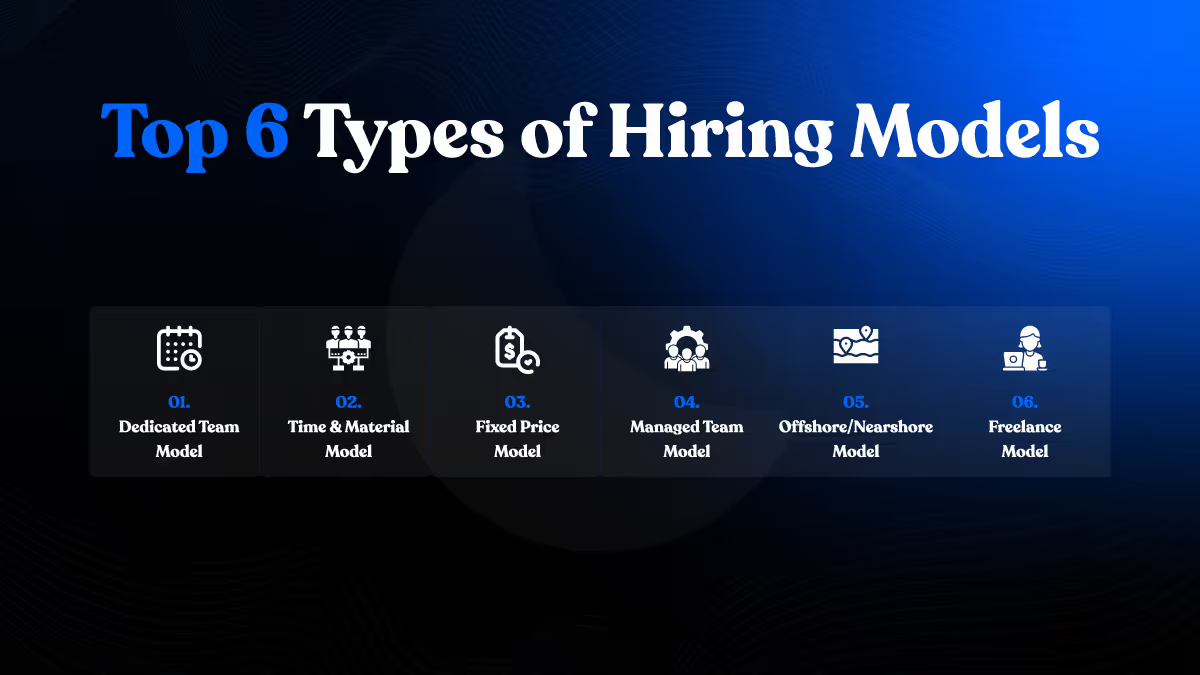
When it comes to hiring models for remote It staff augmentation, businesses typically have several options to choose from. Each model caters to different needs and project requirements. Here are the common types:
1. Dedicated Team Model
A team of remote professionals is assigned exclusively to work on your project. The team functions as an extension of your in-house staff, maintaining full focus on your project. For instance, you can hire dedicated software development team for your long term project easily.
Best For: Long-term projects with ongoing requirements, where you need full control over the team's workflow.
You pay for the time and resources used by the remote staff. This model is flexible and allows changes in project scope without significant disruptions.
Best For: Projects with evolving requirements or when the scope is not fully defined at the start.
3. Fixed Price Model
The cost is agreed upon upfront, based on a clear and defined scope of work. The remote team is responsible for delivering the project within the agreed budget and timeline.
Best For: Short-term projects with well-defined requirements and minimal expected changes.
4. Managed Team Model
A remote team is managed by a project manager, either from the service provider or your company. The project manager oversees the team’s work, ensuring alignment with project goals.
This involves hiring a remote team from a different geographical location, often to leverage cost benefits. Offshore staff augmentation refers to hiring from distant countries, while nearshore involves hiring from nearby countries.
Individual freelancers are hired for specific tasks or projects. This model is highly flexible and allows for quick hiring and scaling.
Best For: Short-term tasks or when specific expertise is needed on an ad-hoc basis. You can hire remote developers through the freelance model.
Where Can I Hire Software Developers for Remote Work?
Finding a good developer can be pivotal for your project’s success. The process can vary depending on your specific needs, budget, and preferred working arrangements. Here are some popular platforms and strategies to consider:
Selecting Ideal IT Partner: By teaming up with an IT vendor partner or IT startup, you can easily reach out to the ideal developer candidate. Yes, it’s as much easy as it sounds. What you need to do is to contact Ontik Technology.
Job Boards and Freelance Marketplaces: Platforms like Upwork, Freelancer, and Toptal are excellent places to find skilled developers. Upwork and Freelancer offer a wide range of developers with varying skills and experience levels. Toptal, on the other hand, screens its applicants rigorously, ensuring that you get top-tier talent.
LinkedIn: This professional networking site allows you to post job listings, search for candidates, and even view their recommendations and work history. Linkedin a great way to find developers with specific skills and expertise.
Tech-Specific Platforms: Websites like GitHub and Stack Overflow not only allow you to view a developer's work and contributions but also offer job boards where you can post your own job listings.
Recruitment Agencies: Specialized tech recruitment agencies can help you find qualified developers quickly. They often have a pool of pre-vetted candidates and can match you with developers who fit your specific needs.
Networking and Referrals: Sometimes, the best talent comes from personal recommendations. Network within tech communities or ask for referrals from colleagues and industry contacts.
Each of these platforms has its advantages, so the best approach depends on your project requirements and budget. Whether you’re looking for a short-term freelance developer or a long-term team member, these resources can help you find the right fit.
Conclusion
As companies continue to navigate a dynamic business environment, remote staff augmentation provides the flexibility and expertise necessary to stay competitive. By embracing this model, startups and enterprises alike can efficiently scale their teams, reduce costs, and access global talent. Whether for short-term projects or long-term growth, the benefits of remote staff augmentation are undeniable. It's not just about filling positions—it’s about driving innovation, enhancing performance, and positioning your business for success in an increasingly digital world.

Share
Ontik Technology Editorial Team
Ontik Tech Editorial Team
We’re the storytellers behind Ontik Tech crafting clear, insightful, and strategy driven content that connects with our audience and drives real results.
Blog & insight
Explore Our Latest Blogs & Industry Insights
Education
10 Min
How to Hire a Mobile App Developer in Dubai, UAE
Key Takeaways
Define clear app requirements (features, user flows, platform, MVP scope) before you shortlist any Dubai developer.
Choose the right engagement model (Dedicated, Augmentation, Fixed, T&M, Project-Based, MVP) based on scope certainty, speed, and control.
Vet developers by portfolio relevance, iOS/Android + cross-platform skills (Flutter/React Native), backend/API capability, and QA process.
Prioritize security + UAE compliance early (encryption, auth, payments, data privacy) and confirm bilingual/localization readiness.
Reduce cost without losing quality by launching an MVP first, using cross-platform builds, leveraging pre-built modules, milestone contracts, and offshore/hybrid teams.
Whether you run a startup or manage an enterprise, finding the right app developer Dubai can make or break your project. The UAE tech ecosystem thrives with innovation. Smart Dubai initiatives plus government support have created fertile ground for app development.
However, the market overflows with options. This guide walks you through everything. You will learn how to find, evaluate, and hire app developers in Dubai. We cover hiring models, cost breakdowns, and red flags to avoid.
You will also discover strategies to hire top developers without burning your budget. Dubai's tech talent pool keeps growing. Companies here understand local market needs plus global standards. From defining requirements to signing contracts, every step matters. Get ready to build something extraordinary with the right app development team.
Essential Factors to Consider While Hiring Mobile App Developers in Dubai
Your success hinges on choosing developers with the right mix of skills. Technical expertise tops the list. Look for developers skilled in both iOS app development in Dubai and Android app development Dubai. Cross-platform knowledge matters too. When evaluating mobile app development companies in Dubai, technical competence should be your first filter.
Portfolio quality reveals everything. Check their previous work carefully. Strong portfolios showcase diverse projects. You want developers who have built apps similar to yours. Real examples beat vague promises every time.
UI/UX background separates good apps from great ones. Your developer should understand user behavior patterns. They need to create interfaces that feel natural. Beautiful design without usability fails. Usability without appeal disappoints. Consider working with specialists in UI/UX design for the best results.
Security standards cannot be negotiable. Data breaches destroy reputations overnight. Your mobile app development UAE team must follow industry best practices. Ask about encryption methods, secure authentication, and compliance frameworks they use.
Dubai-specific considerations matter tremendously. Bilingual capabilities help expand your reach. Arabic plus English support opens more markets. UAE compliance knowledge saves headaches later. Your developer should understand local regulations around data privacy and digital payments.
GCC market knowledge gives you an edge. Consumer behavior varies across regions. Developers with regional experience understand these nuances. Budget requirements need clarity upfront. Different developers offer different value propositions.
Financial benefits of hiring in Dubai:
The UAE offers competitive development rates compared to Western markets while maintaining high quality standards. You save 30-40% versus hiring in the US or UK. Plus, no corporate tax on most business activities means better ROI. Free zones provide additional cost advantages through reduced operational expenses. Your investment goes further without compromising on talent quality.
Top Advantages of Hiring Mobile App Developers in Dubai
Dubai offers unique benefits you will not find elsewhere. The city's tech ecosystem combines global standards with regional expertise. Here are the key advantages:
Technical Excellence & Talent Pool:
Access to developers trained in top universities and tech companies worldwide
Deep expertise across multiple technology stacks and frameworks
Regular exposure to cutting-edge tools and methodologies
Domain-Specific Knowledge:
Strong understanding of fintech, e-commerce app development Dubai, healthcare, and logistics
Experience across diverse industries due to Dubai's varied economy
Proven track record in building solutions that work in real market conditions
Strategic Market Positioning:
Gateway to Middle East, North Africa, and South Asia markets
Local insights for tailoring features to regional user preferences
Understanding of GCC consumer behavior and cultural nuances
Regulatory & Compliance Advantages:
Current knowledge of UAE digital service laws and regulations
Built-in compliance with data privacy and digital payment standards
Familiarity with Smart Dubai initiatives and government tech standards
Operational Benefits:
Timezone alignment with Europe, Africa, and Asia for real-time collaboration
Strong IT infrastructure with reliable internet and modern facilities
Access to cloud services, payment gateways, and API integrations
Communication & Localization:
Multilingual capabilities (Arabic, English, plus other languages)
Experience in building apps that respect local customs while maintaining global appeal
Support for international user testing and localized customer service
These advantages combine to create an environment where your mobile app development benefits from both technical excellence and market understanding.
3 Flexible Model To Hire Mobile App Developer In Dubai
Choosing the right hiring model determines your project's success. Each model offers distinct advantages based on your specific needs.
1. Dedicated Development Team Model
You get a full squad working exclusively on your project. The team becomes an extension of your company, learning your business inside out. Learn more about how dedicated development teams can transform your project. Cross-functional teams with designers, developers, and QA specialists work together using Agile methodology for continuous delivery.
You expand your existing team with skilled developers who integrate seamlessly. They work under your management and follow your processes. This model fills skill gaps without long-term commitments. Pre-vetted developers can join your team within 2 weeks through staff augmentation services.
Best for: Temporary skill gaps, scaling during peak periods, specialized expertise needs
3. Fixed Price Model
You agree on scope, deliverables, and price upfront. The developer delivers the complete project for that fixed cost. Changes after agreement typically cost extra. A detailed discovery phase prevents scope misunderstandings and ensures predictable costs with clear milestones.
Best for: MVPs, apps with clear requirements, one-time projects with fixed scope
4. Time & Material Model
You pay based on actual hours worked plus materials used. This flexible approach adapts as requirements evolve. Perfect for projects where specifications might change. Transparent time tracking and Agile sprints deliver working features every two weeks.
Best for: Projects with uncertain scope, evolving requirements, exploratory development phases
5. Project-Based Model
You define the entire project scope upfront. The team handles everything from design to deployment as a complete package. Payment happens in pre-defined milestones. End-to-end custom software development covers every phase without coordinating multiple vendors.
Best for: Complete app builds, business automation projects, digital transformation initiatives
6. MVP Partnership Model
You validate your concept quickly with a minimum viable product. This model focuses on core features to test market fit before full investment. MVP development services can launch products in 8-12 weeks, helping identify must-have features efficiently.
Best for: Startups, new product launches, testing business concepts, securing investor funding
Model
Best For
Budget Type
Flexibility
Timeline
Dedicated Team
Long-term development
Monthly Retainer
High
3+ months
Staff Augmentation
Skill gaps
Hourly/Monthly
Very High
2 weeks+
Fixed Price
Clear scope
Fixed Cost
Low
2–6 months
Time & Material
Evolving needs
Variable
Very High
Flexible
Project-Based
Complete solutions
Milestone-based
Moderate
3–8 months
MVP Partnership
Quick validation
Fixed/Milestone
Moderate
2–3 months
Modern Tools & Technologies of Mobile App Development
Technology choices shape your app's future. The right stack ensures scalability, performance, and maintainability. At Ontik Technology, deep expertise across modern tools transforms ideas into robust applications using their proven process.
Agile & Scrum Methodology
Modern development thrives on Agile principles combined with Scrum framework. This keeps projects responsive and delivery-focused. Work happens in two-week sprints, each delivering functional features you can test immediately. You get faster time to market, continuous feedback integration, transparent progress tracking, and flexibility to adjust based on real user needs.
Frontend Frameworks Expertise
Flutter Development: Build cross-platform apps with a single codebase. You launch on iOS and Android simultaneously, cutting development time by 40%. The framework delivers native-like performance with beautiful, customizable UI components.
React Native Solutions: JavaScript-powered mobile experiences enable faster iterations and code reusability. The vast component library accelerates development while maintaining quality standards.
Native Development: When performance matters most, Swift and Kotlin deliver apps that fully utilize platform-specific features. You get the best user experience with optimized performance for demanding applications.
Backend Technologies & Architecture
Node.js Implementation: Event-driven architecture handles real-time features flawlessly, supporting thousands of concurrent users. Perfect for chat applications, live dashboards, and collaborative tools.
Laravel Development: PHP framework builds secure, scalable APIs with elegant structure that speeds development. Business logic implementation becomes straightforward and maintainable.
Firebase Integration: Complete backend solutions provide authentication, real-time databases, and cloud storage pre-configured. You launch MVPs in weeks instead of months.
Database Solutions & Data Management
MongoDB Expertise: NoSQL document-based storage adapts to changing requirements without complex migrations. Flexible data structures evolve with your needs.
MySQL Implementation: Relational systems handle complex queries, transactions, and data integrity expertly. Rock-solid for transactional applications requiring data relationships.
DevOps & CI/CD Pipeline
Continuous integration and deployment using Jenkins, GitHub Actions, and GitLab CI ensure code flows smoothly from development to production. Automated testing catches issues before they reach users. Infrastructure as Code provisions consistent environments, making deployments repeatable and error-free. Real-time monitoring detects performance issues instantly while comprehensive logging helps troubleshoot problems quickly.
Cloud Solutions & Scalability
AWS Implementation: Enterprise-grade infrastructure with auto-scaling handles traffic spikes smoothly. You pay only for resources actually used.
Google Cloud Platform: Powerful AI/ML integration, BigQuery analytics, and Firebase services work perfectly for data-intensive applications.
Azure Solutions: Seamless Microsoft ecosystem integration delivers enterprise-ready solutions with familiar tools.
Testing & Quality Assurance
Automated testing runs throughout development using Selenium, Appium, and XCTest. Test-driven development ensures code quality from day one. You get bug-free releases, faster time to market, and apps that work flawlessly across devices and operating systems.
Step-by-Step Guide to Hiring Mobile App Developers in Dubai
Finding the right developer requires a systematic approach. Follow these steps to hire top developers in Dubai who match your needs perfectly.
1. Define Your App Requirements
Start with crystal-clear requirements. Write down every feature your app needs. Include user flows, screens, and interactions. The more detailed your brief, the better the estimates you receive. Create your feature list separating must-haves from nice-to-haves. This helps prioritize when budget gets tight. Your minimum viable product (MVP) might skip advanced features initially.
Know your target users deeply. Build user personas to understand who uses your app, what problems they face, and how your app solves these. Understanding users shapes design decisions and helps developers build something people actually want.
Choose your platforms carefully. Will you target iOS, Android, or both? Each choice affects development time and cost. Cross-platform frameworks save money but might limit some native features.
2. Set Your Budget & Timeline
Budget planning prevents unpleasant surprises. Research typical costs for similar apps. Complexity drives price more than anything. Factor in Dubai market rates where developer experience affects hourly rates significantly. The app development cost UAE varies based on expertise level and project scope.
Plan your timeline realistically. Simple apps take 2-3 months while complex applications need 6-12 months or more. Factor in time for design revisions, testing, and App Store approvals. Buffer for unexpected challenges. Include post-launch costs for ongoing maintenance, bug fixes, updates, and new features.
3. Choose a Hiring Model
Your hiring model affects everything from cost to control. Fixed price suits defined projects when scope is clear and unlikely to change. Hourly works for evolving projects where flexibility matters. Dedicated teams serve long-term needs when you require ongoing development.
4. Find and Shortlist Developers
Dubai offers many ways to find developers. Use multiple channels to build a solid shortlist. Online platforms like Clutch, GoodFirms, and Upwork list app developers in Dubai. Read reviews carefully looking for consistent patterns in feedback.
Local directories help too. Dubai Chamber of Commerce maintains business listings. Technology parks like Dubai Internet City house many development firms. Ask for referrals from other business owners who provide honest opinions. LinkedIn works great for this. Attend tech events where Dubai hosts regular meetups and conferences.
5. Evaluate Technical Skills
Technical assessment separates claims from reality. Request code samples from developers who maintain GitHub profiles or portfolios. Review their code quality for cleanliness and documentation. Test their platform knowledge by asking specific questions about iOS mobile app development Dubai or Android application development Dubai.
Assess cross-platform skills if considering React Native or Flutter. Ask about challenges they faced and how they solved platform-specific issues. Check backend capabilities since mobile apps need backend systems. Evaluate their QA process to understand how they test apps and what tools they use.
6. Check Client Reviews & References
Past client experiences predict future performance. Read online reviews thoroughly on Clutch and Google Reviews. Look beyond star ratings to understand what clients actually say. Request recent references and talk to three recent clients minimum. Ask specific questions about deadline adherence, change handling, and whether they would hire again.
Check LinkedIn endorsements focusing on detailed recommendations that mention specific projects. Verify completed projects by downloading live apps they built and checking user ratings on App Stores.
7. Discuss Development Approach
Development methodology affects your entire experience. Agile delivers features iteratively with constant progress visibility and adjustment capability. Most modern developers in the UAE use Agile since it fits mobile development better. Communication workflows need clarity regarding meeting frequency, tools used, and update schedules. Sprint planning in Agile creates accountability through two-week cycles delivering working features.
8. Negotiate Pricing & Contract Terms
Contract negotiations protect both parties. Understand UAE contract norms which follow specific legal frameworks. Include clear payment terms and milestones. IP rights deserve attention to clarify code ownership. Usually, you should own everything upon final payment. Confidentiality protects your idea through NDAs before sharing detailed plans.
Milestone structure reduces risk. Never pay everything upfront. Break payments into milestones with typical structure being 30% to start, 40% at mid-point, and 30% upon completion. Tie each payment to deliverables.
9. Start with a Trial or MVP
Testing the relationship reduces risk dramatically. Build an MVP first to prove both concept and partnership. You get a working version with core features where user feedback guides next steps. Try a small paid project if MVPs seem too big. Maybe a prototype or single feature to show their skills and work style. Set clear success criteria defining what success looks like for the trial.
10. Monitor Development & Provide Feedback
Active involvement keeps projects on track. Schedule weekly updates to review completed work, discuss upcoming features, and address blockers immediately. Sprint reviews at each sprint end let developers demonstrate working features you can test yourself. Use shared dashboards with tools like Jira, Trello, or Linear showing real-time progress.
11. Test and Launch Your App
Thorough testing separates good launches from disasters. Multiple testing types catch different issues including unit testing, integration testing, user acceptance testing, and performance testing. Real device testing matters since simulators miss real-world issues. Test on actual iPhones and Android devices with different screen sizes and OS versions.
Follow app store guidelines for Apple App Store and Google Play Store which have strict requirements. Plan a soft launch by releasing to a limited audience first to catch issues before going public.
12. Plan for Post-Launch Support
Your app journey starts at launch. Maintenance covers bug fixes, OS updates, security patches, and server maintenance. Regular updates add value through new features, performance improvements, and design refreshes. Support contracts provide security with agreed response times for different issue severities. Analytics monitoring tracks user interactions to guide future decisions and prioritize development resources.
How Much Does It Cost To Hire An App Developer In UAE?
Costs vary widely based on multiple factors. Understanding price ranges helps set realistic expectations.
Hourly rates span a broad spectrum. Junior developers charge AED 100-150 per hour. Mid-level developers command AED 150-250 hourly. Senior developers and specialists cost AED 250-400+ per hour. Your project complexity determines which level you need.
Monthly rates for dedicated developers. Full-time dedicated developers cost AED 15,000-25,000 monthly for mid-level talent. Senior developers run AED 25,000-40,000 per month. This covers their time exclusively on your project.
Project-based pricing depends on complexity. Simple apps with basic features start around AED 50,000-80,000. Medium complexity apps with custom features cost AED 80,000-200,000. Complex applications with advanced features exceed AED 200,000 easily. E-commerce app development Dubai with payment integration falls in the medium to high range.
The Smart Alternative: Quality Meets Value
While Dubai-based developers deliver excellent work, offshore partnerships offer substantial savings without quality compromise. Ontik Technology demonstrates this value proposition clearly through their transparent pricing model.
Ontik Technology vs. UAE Market Pricing Comparison:
Service Type
UAE Market Rate
Ontik Technology Rate
Your Savings
Junior Developer (Hourly)
AED 100–150
AED 55–75
50%
Mid-Level Developer (Hourly)
AED 150–250
AED 75–110
56%
Senior Developer (Hourly)
AED 250–400+
AED 110–180
60%
Dedicated Developer (Monthly)
AED 15,000–25,000
AED 4,400–8,800
65%
Simple App Project
AED 50,000–80,000
AED 18,000–36,000
64%
Medium Complexity App
AED 80,000–200,000
AED 36,000–90,000
55–62%
Complex Enterprise App
AED 200,000+
AED 90,000+
55%
These savings add up significantly over project lifecycles. A medium complexity app that costs AED 150,000 locally runs approximately AED 60,000 through Ontik Technology. That is AED 90,000 saved while maintaining enterprise-grade quality standards.
Their pricing includes transparent terms with no hidden fees. Setup costs, management overhead, and exit fees stay minimal or nonexistent. You get exactly what you pay for without surprise charges appearing mid-project.
The offshore advantage comes from operational efficiencies, not corner-cutting. Ontik maintains rigorous quality standards while operating from a cost-effective location. Their developers undergo strict vetting with only 6% acceptance rates. This ensures you access top-tier talent at competitive rates.
Location within UAE affects prices. Dubai rates typically run 10-15% higher than Abu Dhabi or Sharjah. Dubai Internet City developers charge premium rates. Free zone companies sometimes offer better value.
App complexity drives cost more than anything. A simple information app with static content costs least. Apps needing user accounts, payments, and backend systems cost more. Real-time features, AI integration, or complex algorithms multiply costs significantly.
Strategies to Reduce Mobile App Development Hiring Costs
Smart planning cuts costs without sacrificing quality. These seven strategies help you maximize value.
1. Outsource Instead of Hiring In-House
Building an internal team costs significantly more. You pay salaries, benefits, office space, and equipment. Turnover creates additional hiring and training costs.
Outsourcing eliminates these overheads. You pay only for development work. No benefits or office costs. When the project completes, costs stop. This flexibility suits most businesses better.
2. Choosing the Right Engagement Model
Wrong engagement models waste money. Fixed price works only when requirements never change. Otherwise, change requests add up. Time and material suits evolving projects better.
Match the model to your certainty level. Clear requirements? Fixed price. Uncertain scope? Time and material. Long-term needs? Hire a dedicated team. This alignment saves thousands.
3. Hire Cross-Platform Developers
Building separate iOS and Android apps doubles development cost. Cross-platform frameworks like Flutter or React Native slash this expense. One codebase serves both platforms.
The tradeoff is minimal for most apps. Performance difference rarely matters. You launch faster and maintain easier. Your hire app developers in Dubai with cross-platform skills deliver better value.
4. Leverage Offshore Development Teams
Dubai developers offer quality but at premium rates. Consider hybrid teams. Keep project management and key decisions in Dubai. Offshore routine development work to lower-cost regions.
This requires good project management. Communication becomes more important. Time zone differences need handling. But savings can reach 40-50% without quality loss.
5. Optimize Project Scope and Features
Feature creep kills budgets. Every feature costs money to build, test, and maintain. Start with MVP. Launch with minimum features that prove your concept.
Add features based on user feedback. This prevents building things nobody wants. You spend money only on features that matter. Users tell you what to build next.
6. Use Pre-Built Solutions and Templates
Many features exist as ready-made solutions. Payment processing, user authentication, push notifications. Use established services instead of building from scratch.
UI templates speed up design work. While customization matters, starting from templates saves weeks. Your app development team can focus on unique features that differentiate you.
7. Negotiate Developer Rates
Rates are not fixed. Volume gives leverage. Longer engagements justify lower rates. Developers value steady work. A six-month contract might get 10-15% discount over month-by-month.
Flexible payment terms help too. Some developers offer better rates for upfront payment. Others accept milestone payments. Find arrangements that work for both sides.
Why Hire Top Application Developers From Ontik Technology?
Ontik Technology brings proven expertise to mobile app development. Their track record speaks through 500+ successful projects delivered globally. When you hire mobile app developers from them, you access a team that understands both technical excellence and business needs.
UAE Market Experience Sets Them Apart
Ontik operates with deep understanding of the UAE business landscape. They have delivered projects for companies across Dubai, Abu Dhabi, and the wider GCC region. This local knowledge ensures your app meets regional compliance requirements and cultural expectations.
Their portfolio showcases diverse industry experience. From fintech to e-commerce, healthcare to logistics. They have built solutions that work in real market conditions. Check their portfolio to see projects similar to yours.
Domain Specialization Drives Results
Ontik's developers are not generalists trying everything. They specialize in specific domains. Their mobile app development expertise covers both native and cross-platform solutions. Flutter, React Native, iOS, and Android development all receive equal attention.
The team understands modern architecture patterns. They build scalable solutions that grow with your business. Microservices, cloud integration, and API development form their technical foundation.
Proven Process Ensures Quality
Their development process combines Agile methodologies with DevOps practices. This approach delivers working software quickly while maintaining quality standards. Continuous integration and automated testing catch issues early.
Regular sprint reviews keep you involved throughout development. You see progress constantly. Feedback gets incorporated immediately. Nothing gets built in isolation from your needs.
Flexible Hiring Models Match Your Needs
Ontik offers all three engagement models we discussed. Need a dedicated team for ongoing development? They provide that. Prefer fixed-price for a defined project? Available. Want time and material flexibility? No problem.
Their team augmentation services let you scale up or down as needed. Add developers during busy periods. Reduce team size when maintenance phases arrive. This flexibility prevents wasted resources.
Technology Stack Stays Current
Ontik invests in keeping their team updated. Latest frameworks, tools, and best practices get adopted quickly. Your app benefits from modern solutions rather than outdated approaches.
They work across the full technology spectrum. Frontend frameworks like Flutter and React Native. Backend technologies including Node.js and Laravel. Cloud platforms like AWS and Google Cloud. This breadth ensures they choose the right tool for each job.
Communication Never Becomes a Barrier
Working across time zones requires excellent communication. Ontik structures their workflow for seamless collaboration. Regular updates, clear documentation, and responsive support define their approach.
Their team speaks multiple languages. English communication runs smoothly. Technical concepts get explained clearly. Non-technical stakeholders understand progress without jargon confusion.
Post-Launch Support Continues
Ontik does not disappear after launch. Their maintenance packages keep your app running smoothly. Bug fixes happen quickly. Performance monitoring catches issues before users notice. Regular updates maintain compatibility with new OS versions.
They also offer scaling support as your user base grows. Infrastructure optimization prevents performance degradation. Feature additions follow the same quality standards as initial development.
Real Results From Real Projects
Fitmate: From Concept to $2M+ Revenue in 4 Months
Ontik turned Fitmate's gym aggregator idea into a complete MVP in four months, handling UI/UX, mobile app development, and the web admin portal. The platform allows users access to hundreds of gyms under a single subscription. The result?
Fitmate generated over $2M in revenue post-launch and cut their development costs by 50% compared to local alternatives. Daniel Wight, Co-founder of Fitmate, notes their idea became complete software ready for market in record time.
Chippit: 2-Week Team Setup, Top Trending App
Chippit, a fintech platform for pooled savings goals, needed a full development team fast. Ontik onboarded full-stack and ML developers in two weeks, five times faster than competitors. This rapid deployment helped Chippit reach trending status on Google Play Australia. Founder Eli Muse confirms the team was operational and productive within days, not months.
Homerun: Gamified Real Estate at Scale
Homerun required a complex platform merging real estate auctions with live betting features. Ontik built both cross-platform mobile and web applications supporting multi-tier subscriptions, real-time auction participation, and admin analytics. The platform now handles multiple simultaneous auctions while maintaining performance, enabling new revenue streams through subscription models and in-app currency systems.
Ontik's case studies show its ability to deliver scalable solutions with measurable business results across fitness tech, fintech, and proptech.
Final Thoughts
Hiring mobile app developers in Dubai requires careful planning and execution. The right developer transforms your vision into reality. Start with crystal-clear requirements. Know exactly what you want to build. Understand your users deeply.
Choose the right hiring model and engagement approach. Dubai offers incredible talent but also many options. Use the evaluation criteria we covered. Check portfolios thoroughly. Test technical skills. Verify references. Budget wisely but do not choose based solely on price. Quality developers cost more for good reasons. Consider strategic partners who understand your industry.
The UAE's tech ecosystem continues growing. Your mobile app can tap into this momentum. Take your time with this decision. The right app development team becomes a valuable business partner. Ready to start? Review your requirements one more time. Research potential developers thoroughly. The mobile app market waits for no one. Make your move now with confidence.
FAQ
For how long can I hire a dedicated development company?
Hire dedicated developers from three months to several years based on your needs. Many start with 2 to 3 month trials then extend. Longer commitments often secure better rates with flexible scaling options.
Can I hire app developers for a short-term or one-time project?
Yes, many app developers in Dubai accept short-term projects. Fixed-price models work well for defined scope. Expect 2 to 4 months for MVPs. Minimum values typically start around AED 30,000 to 50,000.
What Qualifications Should I Look for as a Mobile App Developer?
Look for computer science degrees or equivalent practical experience. Platform-specific skills like Swift for iOS or Kotlin for Android matter. Check UI/UX understanding, API knowledge, and communication abilities. Strong portfolios prove capability better than certificates.
What industries do your app developers in Dubai serve?
Top developers work across e-commerce, healthcare, fintech, real estate, and logistics. Education technology and hospitality also see strong activity. Most experienced developers bring multi-industry exposure producing better, more innovative solutions for clients.
Will the developer provide ongoing support and maintenance?
Reputable developers offer post-launch support packages. These cover bug fixes, OS updates, security patches, and minor feature adjustments. Maintenance typically costs 15% to 20% of original fees annually. Clear SLAs define response times and coverage.
Education
7
Top 25 Software Companies in Bangladesh (2026)
In 2026, these are the top software development companies in Bangladesh. Explore the present and future prospects of the outsourcing software industry. The list of the world's largest companies has remained unchanged for decades. The biggest players dominate the tech sector. It would help if you could hold your position in your current occupation even in the global crisis. Tech titans are looking for alternatives to bridge that gap.
Bangladesh is a country of around 163 million inhabitants. 65% are young talent with a good literacy rate. These young resources attract and make it a software development outsourcing destination for global businesses.
In the rest of the article, we are going to explore the top 25 best software companies that are ruling this sector in Bangladesh as well as the global software industry. Plus, we will discuss their prospects, how to select the best leading companies and the condition of the IT industry in Bangladesh. Just for clarity, we kept the list limited to those companies who are focused on outsourcing their software engineering resources in the global market.
Present Condition of the Software Industry in Bangladesh
The post-covid new normal and economic recession have impacted the countries of the world. Although the West is suffering, this new situation has eased barriers and created opportunities for the globally leading software companies of Bangladesh.
But how? Forbes stated that more than 75% of businesses in the USA are service-oriented right after the pandemic. Cloud computing and software as a service subscription model have given Bangladesh's growing top IT companies an edge.
Due to the activism of student organizations, non-profit organizations, and government policies and incentives on building the industry and building a self-earning workforce to reduce unemployment, many talented resources have been created over the last 15 years. During the early years of outsourcing, the resources have been involved in less technical or clerical jobs.
The market later has demanded us to develop seasoned professionals for the global market. The developers of Bangladesh are now as experienced in programming languages and frameworks as developers from anywhere around the world.
Recently, organizations and tech teams worldwide have been hiring expensive tech talents such as Data scientists, ML engineers, and Blockchain developers from Bangladesh. Bangladesh's best software companies are proficient at catering to the latest technology.
Top 25 Software Development Companies in Bangladesh
1. Ontik Technology
Ontik Technology provides software development outsourcing services in various engagement models such as team augmentation, MVP partnership, and dedicated tech team. They are the future of the software industry. For reliable software solutions, they are praised by clients in Bangladesh as well as international clients. Ontik Technology also provides business automation services which make them one of the leading IT companies.
Ontik Technology At A Glance
Founded
Engineers
Clients
Global Clientele
2016
100+
350+
USA, Australia, Canada, Norway, Finland, Sweden
Ontik Technology has several services - Team Augmentation Ontik Technology provides seamless integration with your in-house developers. No matter the skill set you’re looking for. Whether you need -
Expertise in a specific area
Immediate skill gap
Developers with particular skills
Additional support
Scale up
Team augmentation is a wonderful option if you need a certain skill set that you don't have in your development team. Team augmentation meets that gap. You also hire a range of developers specializing in a specific programming language or framework. Whether you need a QA specialist, ReactJS web developer, android developer, or IOs developer, you will get them here.
Custom Software Development
Developers at Ontik Technology have the experience to build custom software from scratch, whether you need a web or mobile application. Having an expert team of professionals in Bangladesh, they provide customized software solutions for businesses.
MVP Partnership
Our experienced product team helps startups to build their product from the ground up. Our team provides the consultancy required to ideate, innovate, build, and execute a product. Ontik implements RAD and agile SCRUM methodology through continuous integration and development.
Dedicated Tech Team
With Ontik, you can build a dedicated tech team. A dedicated tech team specializes in specific skill sets to meet the project requirements. It will work as your team under your project manager. You will have full control over the project.
Working Hours: Sunday to Friday - 09:00 AM - 23:00 PM
Weekend: Saturday
Brainstation 23 has been leading and revolutionizing enterprise and customized web applications. Since its humble beginning, it has been under the supervision of CEO - Raisul Kabir. As of 2020, Brain Station 23 is recognized as CMMI Maturity Level 3 certified. The highest-paying software companies in Bangladesh that attract youth. With the industry reputation, it has become the best software company in Bangladesh.
Vivasoft is the fastest-growing custom software company in Bangladesh. It provides team augmentation and custom software development services. It has quickly become one of the top IT companies in Bangladesh. It has developed an HR and payroll software called PiHR.
Working Hours: Sunday to Thursday - 08:00 AM - 17:00 PM
Weekend: Friday and Saturday
BJIT, a global company, is known for providing offshore services. They have offices in eight countries worldwide. They are known as one of the top custom software development companies. A joint venture company between Japan and Bangladesh. Notably, it is one of the best companies in Bangladesh. It comes first in terms of performance and experience among other best software companies in Bangladesh. Recently, BJIT has partnered up with Odoo to provide comprehensive software solutions. Odoo is known for its global ERP solutions. Over the two decades of serving global enterprises, it has become CMMI level 3 certified. One of the oldest highest paying software companies in Bangladesh.
Enosis is the best leading software company in Bangladesh. It provides Mobile App Development and Web Development services to information technology. With its proven track record, CMMI Level 3 and ISO 9001 is achieved. It provides software solutions to clients across North America and Europe. For anyone needing a more specific skill set, Enosis supports skilled professionals such as CTOs, product owners, and development managers of a technology company.
Norwegian software development company located in Bangladesh. A global software company provides offshore development teams with in-house developers. The client base is mostly from Norway. Now this company is growing very fastly in Bangladesh and getting positioned as one of the top best software companies in Bangladesh.
7. LeadSoft
Founded: 2004
Engineers: 300+
Projects: 400+
Clients: H&M Bangladesh, Novo Nordisk, MONEY SPACE, BUREAU VERITAS
Website: leadsoft.com.bd
Email: info@leadsoft.com.bd
Working Hours: Sunday to Thursday - 09:00 AM - 18:00 PM
Leadsoft creates mobile applications and outsources resources to other countries. They use emerging technologies like blockchain, the Internet of Things, artificial intelligence, and machine learning. CMMI LEVEL 5 and ISO 9001:2015 certified, enlisted in the best companies in Bangladesh.
8. REVE Systems
Founded: 2003
Engineers: 150+
Projects: 400+
Clients: H&M Bangladesh, Novo Nordisk, MONEY SPACE, BUREAU VERITAS
REVE Systems operates differently and embarks remarkably. It provides software solutions in Mobile OTT, SMS Gateway, Session Border Controllers, VoIP Softswitch, & Telecom Billing solutions. The best software company works mostly in the telecommunication sector.
9. South Tech
Founded:1996
Engineers: 90+
Projects: 45+ (Global)
Clients: Aviation ERP for Bangladesh government, SANOFI, BRAC, PACT
Website: https://www.southtechgroup.com/
Email: info@southtechgroup.com
Working Hours: Sunday to Thursday - 09:00 AM - 18:00 PM
Weekend: Friday and Saturday
Southtech specializes in providing banking solutions. It has developed a product named Bankultimus for the banking and finance sector. The solution is being used globally with a proven repeat client of 95%. The first company in Bangladesh to achieve CMMI Level 5 – V 2.0. The oldest and best software companies in Bangladesh.
Working Hours: Sunday to Friday - 09:00 AM - 22:00 PM
Weekend: Saturday
Riseup Labs is said to be a next-generation, top-notch software and Information Technology solutions provider in Bangladesh. ISO 9001 & 27001 compliant. It has been using the latest technological infrastructure.
They provide solutions to emerging technologies such as Web 3.0, automation, analytics, IoT, cloud, and blockchain. It is one of the diversified software companies in Bangladesh, serving multiple sectors—the best software companies in Bangladesh for next-generation solutions. They are also award-winning custom software developers in Bangladesh. Soft BD specializes in Agile PHP & JavaScript. It ensures high-quality software solutions and products for mid to large enterprises. They are a corporate-oriented software solution provider. They proudly served 100+ clients. HR Management software, Education Management, and Kiosk Management software products are innovative solutions.
11. Soft BD Limited
Founded: 2006
Engineers: 30+
Projects: 710+ (Global)
Clients: Standard Chartered, Kpapa, UNDP, Lakeshore Hotel
Website: softbdltd.com
Email: info@soft-bd.com
Soft BD specializes in Agile PHP & JavaScript. This organization is a certified software development company. It ensures high-quality software solutions and products for mid to large enterprises. They are a corporate-oriented software solution provider. They proudly served 100+ clients. HR Management, Education Management, and Kiosk Management are innovative solutions.
12. Dream 71 Bangladesh
Founded: 2014
Engineers: 250+
Projects: 200+
Clients: Integrated digital service delivery platform for Ministry of Chittagong hill tracts affair (Mochta), Educational Game for the Ministry of Education Timor-Leste, Dhaka was
Website: dream71.com
Email: info@dream71.com
Working Hours: Sunday to Friday - 09:00 AM - 22:00 PM
Weekend: Saturday
This company has been a changemaker in educational game development. Dream71 Bangladesh Ltd is one of the best software developers. Notable milestones have been passed over the several years by developing customized software solutions. It helps them develop numerous global NGO and ed-tech platforms.
13. Kaz Software
Founded: 2004
Engineers: 150+
Projects: 200+
Clients - THE WORLD BANK, UNICEF, BRITISH RED CROSS, OXFAM, Swiss contact
Email - info@kaz.com.bd
Website - kaz.com.bd
Working Hours - Monday To Friday - 10:00 AM - 19:00 PM
Weekend: Saturday
Delivering top-notch software solutions, Kaz Software is one of the top and global software company in Bangladesh. They are specializing in custom software development and web development for overseas clients. They also offer talent outsourcing. Rather than developing a new project, they work with the existing IT professionals of clients. Tech professionals adopt Agile methodology in the software development lifecycle (SDCL).
Working Hours - Sunday To Thursday - 10:00 AM - 18:00 PM;
Weekend: Friday and Saturday
The local software solution provider in Bangladesh. When you are looking for one of the best custom software development companies in Bangladesh in 2024, I have to mention this evolving organization. They are the market lead in providing IoT services, helping businesses integrate with connected technology, and leveraging operational efficiency.
15. 6senseHQ
Founded: 2016
Engineers: 40+
Headquarters: Dhaka, Bangladesh
Specialties - Artificial Intelligence, IOS, ERP, Design Thinking, Prototyping, Web, User Experience, and Android
They focus on building reliable offshore teams for companies that want to ship faster without hiring a full in-house squad. As an Offshore software development company, their strength is in dedicated teams and staff augmentation so clients get skilled engineers, clear delivery, and steady support without the usual offshore hassle.
16. Pridesys IT
Founded: 2013
Engineers: 150+
Projects: 30+
Website - pridesys.com
Working Hours - Sunday To Thursday and Monday To Friday
Clientele - Online database software for BFFWT, Ananta Group, Nassa group
Email - mark@nascenia.com
Working Hours - Monday To Friday - 09:00 AM - 19:00 PM;
Weekend: Friday and Saturday
Email - info@southtechgroup.com
ERP solution provider in Bangladesh. Designed and developed custom ERP software for RMG, government, and a group of companies. A local ERP system in Bangladesh. Recognized with ISO:9001, 2015, ISO 27001 international standards for the best software development practices. Experience IT professionals make it the best software company in Bangladesh.
17. Selise
Founded: 2013
Engineers: 150+
Projects: 30+
Website - selisegroup.com
Working Hours - Monday To Friday
Swiss-based consulting and software development company registered in Bangladesh. Exceptional track record in consulting, process engineering, platform development, and application management. In Bangladesh, Keeron, an e-learning platform, has built a custom website from Selise. The renowned CRM platform Hubspot has partnered with Selise to develop strategic solutions.
18. Bdtask
Founded: 2012
Engineers: 200+
Projects -Hospital Management Systems, Doctor Appointment and prescription Systems, ERP Software, Pharmacy Software, Wholesale Software, Online News Portal Systems, Human Resource (HR) Software, Newspaper WordPress Theme, Admin Panel, Online Ticketing Software, Online Quiz System, Travel and Tour WordPress Theme, Material Design Admin Panel, Development - IOs
Website - bdtask.com
Email - business@bdtask.com
Bdtask has taken a different route from other software companies in Bangladesh. They developed ready software in multiple sectors. Apart from developing software, they expanded into the global software market. The ready-made software is exported to Europe, North America, and South East Asia. A proud partner of Envato for creating HTML templates and design materials. It has become on the list of top software companies in Bangladesh.
Working Hours: Sunday to Thursday - 10:00 AM - 18:00 PM
Weekend: Friday and Saturday
DSI provides web-enabled e-commerce and ERP systems as well as wireless systems across a broad range of industries. It has offices in the USA and Bangladesh. They have clients in Asia, England, Finland, and the United States. ISO/IEC 27001:2013 and ISO 9001:2015 certified. These industry standards got them affiliated with many international clients. CMMI appraised.
Orange IT Ltd., is a trusted provider of network infrastructure implementation and cybersecurity services. It offers customized solutions for network design, security assessments, and incident response. With its proven industry reputation, it has become the best software firm in Bangladesh.
21. Workspace Infotech
Founded: 2004
Engineers: 200+
Website - workspaceit.com
Email - info@workspaceit.com
A leading software firm in Bangladesh and Australia. The finest thing is that they provide convenient resource outsourcing for global businesses. It provides various services, from software development to digital products. They are specialized in virtual assistance to get the job done daily, such as data entry, HR work, call center, and operation.
22. Daffodil Software
Founded: 2001
Engineers: 200+
Technology - Java, Microsoft .Net, PHP & My SQL, and Android & IOS (Mobile Apps)
Working Hours - Sunday To Thursday
Email - cloud. daffodil.computer
Working Hours - Sunday To Thursday
Weekend: Friday and Saturday
A local service provider with an enriched portfolio. The leading local ERP system in Bangladesh. It has services like Odoo ERP customization services, eCommerce development, software testing, and cloud services. It has several SaaS products for general task management in businesses and corporates. Such as smart business24, smart hospital, and school management. These products give solutions to multiple business sectors and are positioned as the top software companies in Bangladesh.
Working Hours - Sunday to Friday from 09:00 AM to 23:00 PM
ICraftsmen Ltd., positioned as a top-growing IT company in Bangladesh, has been at the forefront of driving innovation in enterprise and bespoke web applications. Under the astute leadership of CEO Raisul Kabir, Craftsmen Ltd. has continually evolved since its inception. Notably, in 2020, Craftsmen Ltd. achieved CMMI Maturity Level 3 certification, a testament to its commitment to excellence and adherence to industry standards. Renowned as one of the highest paying software companies in Bangladesh, Craftsmen Ltd. has become a magnet for talented youth seeking rewarding career opportunities in the IT sector. Its stellar reputation within the industry solidifies Craftsmen Ltd.'s position as the premier software company in Bangladesh.
24. Astha IT
Founded: 2022 Technology - Java, Laravel, NodeJs, Vue, React Working Hours - Sunday To Thursday
Projects: BizzyB, an educational app in the US; The Pantry an e-commerce setting in Hawaii
Website: https://www.asthait.com
Working Hours - Sunday To Thursday
Weekend: Friday and Saturday
The top-rated and vetted coding talent specializing in scalable solution development. It brings coding talent, DevOps, and cloud experts from Bangladesh's software company list. ISO 9001:2015 (QMS) certified from Bangladesh software company list. It excels in providing exceptional quality software for large enterprises in Bangladesh.
25. Tiger IT
Founded: 2000
Engineers: 200+
Projects: Suspect Identification and Verification System (SIVS), Myanmar National’s Biometric Registration System, Voter Registration System Software Development and Services for Nepal
Website: www.tigerit.com
Email: info@tigerit.com
Working Hours: Sunday to Thursday - 10:00 AM - 18:00 PM
Weekend: Friday and Saturday
Tiger IT provides end-to-end solutions for government and state agencies. It is said that the IT company has taken the position of the best software company in Bangladesh. The South Asia sub-continent has delivered numerous government projects. It is the hub for software development. The company is renowned for its commitment to delivering high-quality software products dealing with sensitive data. For serving in government and state agencies it has become the leading software company in Bangladesh.
How To Select The Top Software & IT Companies?
Selecting a software company seems complicated, but it doesn't have to be. Industry standards and outsourcing country's technological trends are a must for Bangladeshi software companies. To help you the right way, you'll be given the honor of selecting the best software companies in Bangladesh.
(1) Software Industry Standards
The software industry is experiencing diverse requirements from global businesses. The International Organization for Standardization (ISO) has established several standards for the IT industry.
The ISO/IEC 27000 keeps all sizes of organizations ' business policies under best practices. ISO 9001 is a common achievement for the top IT companies.
(2) Industry Experience
How long has the software company been in the industry? Go for a fact-check.
Companies that have been established from 1950 to 1999 seem professional.
The world has undergone massive technological changes, and those companies had hands-on experience during that time.
(3) Enriched Portfolio
Have they developed similar software according to your requirements?
- Have they developed MVP? If so, what were their initial challenges?
- How do they look and perform?
- Can you see some examples or demos of their projects?
Future Prospects of the Software Industry in Bangladesh
It is estimated that the software industry in Bangladesh will be worth $5b in 2026. The number itself is huge. Bangladesh has been a promising destination for offshore and talent outsourcing in South East Asia. Cost-effective rates and equivalent talent sharing make easy access to capture the attention of leading global software companies. Bangladesh is also home to experienced IT professionals and the best growing software companies in the country.
Final Thoughts
Finding the best software company takes time and effort. Wrong hiring can result in substantial loss of the company. Whether you hire NodeJS or Python, Ontik is your best partner and go-to service provider for several engagement models, such as team augmentation, MVP partnership, and a dedicated tech team.
As of now, these are the best It companies in Bangladesh. It depends on transparent communication, comprehensive screening, developers' experience and individual profiles, team collaboration, realistic timetables, flexibility, and performance monitoring. Whenever you hire a software company in Bangladesh, have a checklist of these terms for the project. All the best software companies in Dhaka are listed above.
Education
15 Min
AI SaaS Product Guide: Definition, How to Build, Development Costs, and Real Examples
Key Takeaways
2026 is the breakout year for AI SaaS market leadership.
AI SaaS combines SaaS delivery with learning, predictive, and generative intelligence.
A structured 8-stage process de-risks AI SaaS product development.
AI SaaS costs $40K–$400K+, with APIs and outsourcing cutting spend.
Winners focus on narrow pains, workflow integration, and ROI-driven automation.
The AI SaaS market is exploding from $71 billion in 2024 to $775 billion by 2031, a 38.28% annual growth rate. This makes 2025 the pivotal year where early movers building AI SaaS products capture market share.
Success stories like Grammarly serving 30 million daily users, Salesforce Einstein transforming CRM, and ChatGPT reaching 100 million users faster than any software as a service example prove the opportunity. These companies understood the fundamental shift in AI SaaS product development.
Modern customers demand intelligent tools, making manual-workflow SaaS obsolete. This guide defines AI SaaS, details the build process from discovery to scaling, provides development costs, explores generative AI infrastructure options, and shares insights from successful AI-powered SaaS companies.
Whether you are exploring AI machine learning solutions or planning your product strategy, understanding AI SaaS development is essential.
What Is an AI SaaS Product? Understanding the Definition and Core Concepts
An AI SaaS product combines subscription-based software delivery with artificial intelligence capabilities. Unlike traditional software that follows programmed rules, AI powered SaaS platforms make decisions based on data patterns, learning and adapting from every interaction.
To define saas model clearly, traditional software follows programmed rules. AI powered SaaS platforms make decisions based on data patterns. This core difference changes everything about AI SaaS product development, particularly when you are planning custom software development services for your business.
The Building Blocks of AI SaaS Architecture
Every successful AI SaaS platform has four essential components. Your SaaS foundation provides multi-tenant architecture and cloud infrastructure for user management. Your AI layer powers intelligence through machine learning models, natural language processing, and predictive analytics. Data pipelines enable real-time processing and vector databases. Your user interface delivers conversational elements and personalized dashboards that make AI accessible.
AI SaaS Product Ideas Across Industries
Healthcare: Diagnostic assistants analyze data/images for treatment paths.
Finance: Fraud detection and personalized investment advisors.
Marketing: Content generation (blogs, social, ads) tailored to brand voice.
Customer Support: AI chatbots handle tier-1 inquiries, routing complex issues.
Sales: AI CRMs predict deal closure and suggest outreach times.
HR: Resume screening and employee engagement platforms predicting retention risks.
Legal Tech: Contract analysis for risk identification and compliance.
Supply Chain: Inventory forecasting and logistics optimization.
EdTech: Personalized learning and automated, detailed grading systems.
These examples show how AI transforms traditional SaaS into intelligent, high-value systems.
Traditional SaaS vs AI-Powered SaaS
A traditional CRM stores contacts and tracks interactions manually. An AI SaaS platform like Salesforce Einstein analyzes thousands of deals simultaneously, predicts conversion probability, and suggests optimal timing for outreach. This fundamental difference shows how AI solutions for SaaS providers deliver measurable business outcomes rather than just data storage.
The Business Value of Intelligent Automation
AI SaaS products deliver measurable advantages. Automation reduces manual tasks by 40 to 60 percent while personalization drives usage up by 20 to 35 percent. Predictive accuracy exceeds 80 percent in well-trained systems, and scalability becomes exponential as AI handles ten times the workload without proportional support staff increases.
Why Build an AI SaaS Product in 2026? Market Opportunity and Business Case
The AI SaaS market explosion from $71.54 billion in 2024 to $775.44 billion by 2031 represents a once-in-a-generation wealth creation opportunity. McKinsey reports 78 percent of companies already use AI, and 40 percent are aggressively increasing budgets. The window to capture market leadership is closing fast.
Three Unstoppable Forces Creating Historic Opportunity
The technology breakthrough is complete. Foundation models like GPT-4, Claude, and Gemini power billion-dollar companies today. Inference costs plummeted 90 percent since 2020, making AI economically viable for startups. Small teams now build what required research labs three years ago.
Customer demand shifted from interest to expectation. Seventy-three percent of buyers prioritize AI capabilities when evaluating software. After experiencing ChatGPT and Grammarly, customers will not settle for manual workflows anymore.
Competitive dynamics reward speed over perfection. Traditional SaaS companies scramble to retrofit AI into decade-old architectures while burning millions. New entrants build AI-first, capturing frustrated customers. The companies moving now define categories. The companies waiting become footnotes.
The Economics Are Dramatically Better
AI SaaS commands 15 to 30 percent premium pricing and achieves 95 percent retention versus 85 percent for traditional products. AI handles 60 to 80 percent of support inquiries, cutting costs by 40 percent. Automated onboarding improves activation by 25 to 35 percent. Lean teams serve enterprise-scale customer bases.
The 2025 Window Is Everything
Market leaders emerge within 18 to 24 months. By late 2026, markets commoditize and competition shifts to price. Every delay lets competitors build data moats while their AI improves from usage. This opportunity rivals the mobile revolution and cloud migration. The only question is whether you will capture it.
How to Build an AI SaaS Product: Complete 8-Stage Development Process
Learning how to build a saas with ai differs from traditional development. You validate both problem and solution fit. This framework provides a proven AI SaaS product development path with validation gates preventing expensive mistakes in AI SaaS projects. Following our proven development process ensures you stay on track from concept to launch.
Stage 1: Problem Discovery and Validation (2 to 3 weeks)
Conduct 20 to 30 customer interviews before coding your AI SaaS platform. Ask about workflows, pain points, and previous attempts. Run competitive analysis of existing AI SaaS tools.
Define success metrics for AI SaaS development. Your deliverable is a problem statement plus user personas. Red flags include starting with technology instead of problems in AI SaaS projects.
Stage 2: Define AI Value and MVP Scope (2 to 3 weeks)
Decide what AI does in your solution. Understanding AI SaaS product classification criteria helps specify whether it predicts, generates, classifies, or recommends.
Define your minimum viable product ruthlessly for AI SaaS projects. Choose one core AI feature plus minimal interface. Here is a SaaS example. Your customer support MVP includes email integration, AI responses, and human review. No multi-channel support or analytics yet in initial AI SaaS development.
If you lack the technical resources to build your MVP internally, consider partnering with experienced development teams. Ontik Technology offers MVP development services that can accelerate your launch timeline.
Their expertise in AI and machine learning, combined with web development and UI/UX design, helps transform your idea into a working product. You can also explore their dedicated development team option for ongoing support, or their custom software development services for more specialized needs.
Stage 3: Data Strategy and Preparation (3 to 4 weeks)
Data determines AI SaaS product development success more than algorithms. Choose pre-trained APIs for general tasks, small datasets under 10,000 samples, or budgets under $100,000.
Build custom models for specialized domains, datasets over 100,000 samples, or when privacy is paramount for your AI SaaS platform. Most early AI SaaS products start with APIs, transitioning to custom models with revenue.
Budget 20 to 30 percent of timeline for data work. Underestimating requirements is why AI SaaS projects fail. If data preparation feels overwhelming, development partners with AI and machine learning expertise can help structure your data strategy from the start.
Stage 4: Choose Your Tech Stack (1 to 2 weeks)
Selecting the best options for generative AI infrastructure affects speed and scalability. Consider OpenAI GPT-4, Anthropic Claude, or Google Gemini for AI SaaS development. Evaluate Meta Llama 3 or Mistral AI for more control.
Vector databases like Pinecone, Weaviate, or Pgvector power semantic search in AI powered SaaS. LangChain or LlamaIndex simplify workflows in AI SaaS projects.
Python dominates AI SaaS development. FastAPI delivers performance while Django offers complete features. JavaScript works for unified codebases when building AI SaaS products. Choose Python for heavy machine learning or JavaScript for real-time features in AI powered SaaS. Many teams leverage web development expertise to build robust frontend interfaces. For Web3 integrations or blockchain features, specialized Web 3.0 development partners can add decentralized capabilities to your stack.
Stage 5: Build Your MVP (8 to 12 weeks)
Your AI team integrates models and engineers prompts for the AI SaaS platform. Application teams create user flows and authentication. Integration connects AI to frontend for complete AI powered SaaS experience.
For founders without technical teams, this stage often requires outside help. A dedicated development team can handle the entire build process while you focus on customer discovery and business development. This approach works especially well for non-technical founders with strong domain expertise.
Your MVP succeeds demonstrating value, completing user journeys, handling load, and collecting feedback for AI SaaS tools. Ship imperfect working products rather than waiting for perfection in AI SaaS product development.
Stage 6: Testing and Validation (2 to 3 weeks)
Testing AI SaaS products requires validating AI-specific dimensions. Functional testing covers user flows. AI testing examines output quality, bias evaluation, and latency for your AI SaaS platform.
Security testing verifies encryption and access controls for AI powered SaaS. User acceptance with 10 to 20 beta users provides feedback. Your deliverable is test reports and launch decisions for AI SaaS projects.
Stage 7: Launch and Initial Marketing (2 to 4 weeks)
Soft launch to waitlists reduces risk for AI SaaS projects. Consider Product Hunt for buzz. Create content demonstrating AI SaaS development expertise.
Monitor metrics daily for AI powered SaaS. Track signups, activation, and usage. Conduct weekly interviews. Focus on first 10 to 50 customers confirming fit for your AI SaaS platform.
Stage 8: Iterate and Scale (Ongoing)
AI SaaS product development continues post-launch. Improve core AI, reduce onboarding friction, and optimize costs in AI SaaS projects. Monitor cost per user for opportunities reducing API calls.
Your scaling checklist ensures sustainable economics at 10x usage, auto-scaling infrastructure, systematized support, metrics dashboards, and validated pricing for AI SaaS platforms. Implementing cloud solutions helps manage infrastructure complexity as you grow. Business intelligence and analytics tools provide insights into user behavior and system performance as your product matures.
Common Pitfalls to Avoid
Overengineering before proving value wastes resources in AI SaaS development. Underestimating data needs hurts AI performance. Ignoring inference costs threatens AI powered saas economics. Neglecting user experience kills AI SaaS products. Skipping validation and treating compliance as afterthoughts create risks in AI SaaS projects.
AI SaaS Development Cost: Complete Budget Breakdown
Understanding saas development costs is critical. Building an AI SaaS product costs $40,000 to $400,000 plus depending on complexity, team location, and technology choices in AI SaaS development.
Three Tiers of AI SaaS Development
Basic AI SaaS MVP costs $40,000 to $80,000 taking 3 to 4 months with outsourced developers. You integrate pre-trained APIs for one feature. Examples include content tools or chatbots for initial AI SaaS projects.
Intermediate AI SaaS Product costs $80,000 to $200,000 taking 4 to 6 months with mixed developers. You use fine-tuned models for 2 to 3 features with polished experience. Examples include support platforms or CRM assistants as AI SaaS tools.
Enterprise AI SaaS Platform costs $200,000 to $400,000 plus taking 6 to 12 months with specialists. You build custom models with compliance and white-label options meeting b2b saas ai startup investment criteria.
Detailed Cost Components
Development team costs consume 50 to 60 percent of saas development costs:
AI engineers cost $100 to $200 per hour for 200 to 400 hours totaling $20,000 to $80,000
Backend developers cost $70 to $150 per hour for 300 to 500 hours totaling $21,000 to $75,000
North American developers charge $100 to $200 per hour
Eastern European developers cost $40 to $80 per hour
Data acquisition takes 5 to 15 percent at $5,000 to $50,000
Compliance requires 5 to 10 percent at $15,000 to $50,000
Design consumes 5 to 10 percent at $10,000 to $45,000
Smart Ways to Optimize Costs
Reduce saas development costs by 40 to 60 percent with strategic choices. Start with APIs saving $20,000 to $80,000 initially in AI SaaS development.
Strategic outsourcing saves 40 to 60 percent when executed properly. The challenge most companies face is finding developers who understand both AI architecture and SaaS economics. Working with experienced technology partners who have shipped multiple AI products eliminates trial-and-error costs and accelerates time to market by months.
Leverage open-source tools saving $10,000 to $30,000. Roll out features in phases validating core functionality before building advanced AI SaaS tools. Serverless architecture reduces costs by 30 to 50 percent for AI powered saas. Consider team augmentation to scale your development capacity cost-effectively while maintaining control over your product vision and roadmap.
Understanding Your Return on Investment
AI SaaS products achieve payback within 18 to 36 months. Example for AI SaaS development: invest $120,000, charge $100 monthly, $300 acquisition cost. Break-even at 1,200 customers for your AI SaaS product takes 15 to 18 months. AI powered saas commands 15 to 30 percent premium pricing.
Essential Technology Stack for AI SaaS Development
Selecting the best options for generative ai infrastructure determines shipping speed, AI SaaS platform scalability, and ownership costs. Let's examine modern AI SaaS product development architecture layers.
AI and Machine Learning Layer
Foundation models power your AI SaaS product. OpenAI GPT-4, Anthropic Claude, and Google Gemini handle natural language for AI SaaS development. Meta Llama 3 or Mistral AI provide control for AI SaaS tools.
Selection criteria include cost at $0.03 per 1,000 tokens, privacy requirements, and specific capabilities for AI SaaS platforms. Vector databases like Pinecone, Weaviate, or Pgvector enable semantic search in AI powered saas. LangChain or LlamaIndex simplify workflows in AI SaaS projects.
Application Backend and Frontend
Python dominates AI SaaS development. FastAPI delivers performance while Django offers complete features for AI SaaS platforms. JavaScript works for unified codebases with NestJS or Next.js when building AI SaaS products.
Choose Python for heavy machine learning in your AI SaaS product. Pick JavaScript for unified codebases or real-time features in AI powered saas. React plus Next.js is recommended for most AI SaaS development projects. Tailwind CSS enables rapid styling while Shadcn/ui provides components for AI SaaS tools. Professional UI/UX design consulting can dramatically improve user adoption rates.
Data and Infrastructure Layer
PostgreSQL is best for AI SaaS product development, handling relational data plus vector storage through pgvector. MongoDB works for flexible schemas. Redis provides caching for AI SaaS platforms.
AWS offers most services for AI SaaS development while Google Cloud provides excellent AI tools. Docker plus Kubernetes ensures consistent environments for AI SaaS products. Datadog, Sentry, or Prometheus catch issues in AI powered saas. Implementing business intelligence and analytics helps you monitor performance and make data-driven decisions.
Real-World AI SaaS Success Stories: Examples and Case Studies
Examining successful AI SaaS products reveals patterns in positioning and implementation that work for AI SaaS development.
LazyChat: Ontik Technology's AI-Powered Customer Support Platform
LazyChat demonstrates how focused AI SaaS product development solves specific market pain points. Built by Ontik Technology, LazyChat is an AI sales agent that handles customer conversations across Facebook Messenger, WhatsApp, and Instagram automatically.
The platform addresses a critical problem for growing e-commerce businesses where message volume overwhelms small teams. LazyChat's AI responds instantly to customer inquiries, answers product questions, takes orders, and resolves common support issues without human intervention. The system speaks naturally in different languages, adapting to how customers actually communicate.
Key success factors include deep vertical specialization for e-commerce workflows, multilingual AI trained on local market patterns, and seamless integration with platforms businesses already use. LazyChat achieved 30 percent sales increases for clients by eliminating missed conversations and late replies. The pricing model scales with message volume at $39 to $199 monthly, making AI accessible to businesses of all sizes.
This AI SaaS platform shows how understanding specific market needs and building AI that solves real workflow problems creates immediate value. Rather than general-purpose AI requiring extensive configuration, LazyChat works out of the box for its target market. The lesson for AI SaaS development is clear: narrow focus with deep execution beats broad capabilities with shallow implementation.
Grammarly and Salesforce Einstein: Proven Patterns
Grammarly serves 30 million users with AI-powered writing assistance, starting narrow with grammar checking before expanding. Freemium pricing lets users experience AI value before paying. Salesforce Einstein embedded AI into existing CRM workflows, adding predictive scoring and automation to familiar interfaces. Both demonstrate that AI adds most value when integrated into existing workflows rather than requiring new tool adoption.
Common Patterns Across Winners
Successful AI SaaS products begin focused, then expand. Freemium/trials allow users to experience AI value first. Continuous feedback-driven improvement is key. Easy integration via extensions, APIs, or existing tools reduces friction. Vertical specialization outperforms horizontal approaches. Premium pricing is justified when automation value is clear.
Common Challenges in AI SaaS Development and How to Overcome Them
AI SaaS product development introduces unique obstacles that separate successful launches from expensive failures. At Ontik Technology, we have navigated these challenges across dozens of AI implementations, developing proven frameworks that anticipate problems before they derail timelines.
Data Quality and Availability Problems
Most companies lack datasets AI SaaS platforms require. Poor training data leads to inaccurate predictions eroding trust in AI powered saas.
Our approach starts with realistic expectations for AI SaaS development. We use synthetic or public datasets for MVPs and design AI SaaS products that collect training data with clear consent. We establish partnerships with providers like Scale AI and budget 20 to 30 percent timeline for data work, ensuring quality foundations rather than rebuilding later.
Model Cost and Performance at Scale
AI inference costs explode as AI SaaS platforms grow. Token pricing seems cheap but adds up for AI powered saas.
We focus on optimization from day one. Our implementations include caching that reduces API calls by 40 to 60 percent, intelligent model routing that uses smaller models for simple tasks, and fine-tuned open-source models for high-volume operations. We monitor cost per user weekly, catching economic problems before they threaten viability.
AI Output Reliability Issues
AI models hallucinate in AI SaaS platforms. Outputs prove inconsistent across AI powered saas implementations. Bias appears from training data.
We build comprehensive guardrails into every AI SaaS product. Our validation layers check responses before reaching users. We implement human-in-the-loop workflows for critical decisions and run regular bias audits. We communicate AI limitations transparently and define acceptable accuracy thresholds before launching AI SaaS projects.
Compliance and Privacy Complications
AI amplifies privacy concerns in AI SaaS development. Regulations impose strict requirements. Enterprise customers demand certifications meeting b2b saas ai startup investment criteria for AI SaaS platforms.
Our compliance-first approach minimizes data collection, encrypts everything, and implements opt-in mechanisms from the start. We work with legal experts and budget $15,000 to $50,000 for compliance, treating it as investment rather than overhead. This prevents costly retrofits when enterprise customers request certifications.
Product-Market Fit with AI Features
Impressive technology means nothing without solving real problems in AI SaaS projects. Many AI SaaS products have sophisticated AI but poor engagement.
We prioritize problem validation throughout development. Our process measures feature usage, not just accuracy, and includes weekly customer interviews. We focus on outcomes rather than algorithms and define success metrics beyond AI performance, ensuring products deliver business value customers will pay for.
Future-Proofing Your AI SaaS: Scaling and Growth Strategies
Launching MVPs begins AI SaaS product development journeys. Sustainable growth requires strategic scaling across dimensions for AI SaaS platforms. At Ontik Technology, we have guided dozens of AI SaaS products through this scaling journey, understanding exactly where bottlenecks emerge and how to architect for growth from day one through our custom software development services.
Technical Scaling Path
Infrastructure needs evolve as AI SaaS products grow. Stage 1 serves 0 to 100 users with simple monoliths on managed services. Stage 2 supports 100 to 1,000 users separating frontend from backend plus adding caching for AI powered saas.
Stage 3 handles 1,000 to 10,000 users with microservices and horizontal scaling in AI SaaS development. Stage 4 scales beyond 10,000 users with multi-region deployment for AI SaaS platforms. Our cloud solutions team architects this progression, anticipating scaling needs before they become problems.
Model strategies evolve with scale in AI SaaS projects. Start with external APIs, move to fine-tuned models when API costs exceed hosting, then build custom models with competitive advantages in AI SaaS tools. We help clients make these transitions smoothly, avoiding the common pitfall of premature optimization or delayed migration that bleeds budget.
Team Scaling and Business Model Evolution
First 10 customers get served by founding teams plus contractors for AI SaaS development. Growing to 100 customers requires first AI hire plus customer success for AI SaaS products.
Scaling to 1,000 customers adds data engineer and DevOps supporting AI powered saas. Beyond 1,000 customers needs specialized AI teams for AI SaaS platforms. Our dedicated development team model accelerates this scaling by embedding experienced engineers who understand AI SaaS economics. Unlike traditional hiring that takes months, we assemble specialized teams in weeks, maintaining quality standards while you focus on customers.
At launch of AI SaaS projects, use simple tier pricing. During growth, add usage-based components aligning pricing with value for AI SaaS tools. At scale, introduce enterprise custom pricing meeting b2b saas ai startup investment criteria. We have helped clients navigate these pricing evolutions, testing models that maximize revenue without triggering churn.
Metrics That Matter Most
Track Net Revenue Retention targeting 110 percent for AI SaaS products. Monitor Gross Margin targeting 75 percent in AI SaaS development. Watch Customer Acquisition Cost Payback under 12 months for AI powered saas.
Measure AI Feature Adoption ensuring users value intelligence in AI SaaS platforms. Our business intelligence and analytics solutions provide real-time dashboards tracking these metrics, helping teams make data-driven scaling decisions rather than guessing. These strategies provide frameworks for sustainable scaling of AI SaaS projects.
Conclusion
The AI SaaS market offers generational opportunity. With 38 percent plus annual growth through 2031, early movers in AI SaaS product development define categories for decades.
Accessible AI technology, customer demand, and proven business models create ideal conditions for transformative AI SaaS products. Success in AI SaaS development requires solving real problems with appropriate technical architecture using the best options for generative ai infrastructure while scaling sustainably through monitoring and iteration in AI SaaS projects.
Winners will make AI invisible in AI SaaS platforms, focusing on outcomes rather than algorithms in AI powered saas. Start problem discovery this week for AI SaaS development. Conduct 10 interviews validating pain points. Choose technical approaches matching capabilities when you hire saas developer talent. Budget realistically using frameworks covering saas development costs.
AI SaaS products are marathons requiring continuous improvement in AI SaaS platforms. Learn how to create a saas product properly understanding what saas means. The question is not whether to build AI into SaaS but whether to lead or follow in AI SaaS product development. 2025 is the year to lead with AI powered saas. Partner with experienced technology providers to accelerate your AI SaaS journey and turn your vision into reality.