How to Hire a Mobile App Developer in Dubai, UAE
Key Takeaways
- Define clear app requirements (features, user flows, platform, MVP scope) before you shortlist any Dubai developer.
- Choose the right engagement model (Dedicated, Augmentation, Fixed, T&M, Project-Based, MVP) based on scope certainty, speed, and control.
- Vet developers by portfolio relevance, iOS/Android + cross-platform skills (Flutter/React Native), backend/API capability, and QA process.
- Prioritize security + UAE compliance early (encryption, auth, payments, data privacy) and confirm bilingual/localization readiness.
- Reduce cost without losing quality by launching an MVP first, using cross-platform builds, leveraging pre-built modules, milestone contracts, and offshore/hybrid teams.
Whether you run a startup or manage an enterprise, finding the right app developer Dubai can make or break your project. The UAE tech ecosystem thrives with innovation. Smart Dubai initiatives plus government support have created fertile ground for app development.
However, the market overflows with options. This guide walks you through everything. You will learn how to find, evaluate, and hire app developers in Dubai. We cover hiring models, cost breakdowns, and red flags to avoid.
You will also discover strategies to hire top developers without burning your budget. Dubai's tech talent pool keeps growing. Companies here understand local market needs plus global standards. From defining requirements to signing contracts, every step matters. Get ready to build something extraordinary with the right app development team.
Essential Factors to Consider While Hiring Mobile App Developers in Dubai
Your success hinges on choosing developers with the right mix of skills. Technical expertise tops the list. Look for developers skilled in both iOS app development in Dubai and Android app development Dubai. Cross-platform knowledge matters too. When evaluating mobile app development companies in Dubai, technical competence should be your first filter.
Portfolio quality reveals everything. Check their previous work carefully. Strong portfolios showcase diverse projects. You want developers who have built apps similar to yours. Real examples beat vague promises every time.
UI/UX background separates good apps from great ones. Your developer should understand user behavior patterns. They need to create interfaces that feel natural. Beautiful design without usability fails. Usability without appeal disappoints. Consider working with specialists in UI/UX design for the best results.
Key technical requirements to verify:
- iOS and Android development expertise
- Cross-platform framework knowledge (Flutter, React Native)
- API integration and backend connectivity
- Security protocols and data encryption
- Cloud services implementation
Security standards cannot be negotiable. Data breaches destroy reputations overnight. Your mobile app development UAE team must follow industry best practices. Ask about encryption methods, secure authentication, and compliance frameworks they use.
Dubai-specific considerations matter tremendously. Bilingual capabilities help expand your reach. Arabic plus English support opens more markets. UAE compliance knowledge saves headaches later. Your developer should understand local regulations around data privacy and digital payments.
GCC market knowledge gives you an edge. Consumer behavior varies across regions. Developers with regional experience understand these nuances. Budget requirements need clarity upfront. Different developers offer different value propositions.
Financial benefits of hiring in Dubai:
The UAE offers competitive development rates compared to Western markets while maintaining high quality standards. You save 30-40% versus hiring in the US or UK. Plus, no corporate tax on most business activities means better ROI. Free zones provide additional cost advantages through reduced operational expenses. Your investment goes further without compromising on talent quality.
Top Advantages of Hiring Mobile App Developers in Dubai
Dubai offers unique benefits you will not find elsewhere. The city's tech ecosystem combines global standards with regional expertise. Here are the key advantages:
Technical Excellence & Talent Pool:
- Access to developers trained in top universities and tech companies worldwide
- Deep expertise across multiple technology stacks and frameworks
- Regular exposure to cutting-edge tools and methodologies
Domain-Specific Knowledge:
- Strong understanding of fintech, e-commerce app development Dubai, healthcare, and logistics
- Experience across diverse industries due to Dubai's varied economy
- Proven track record in building solutions that work in real market conditions
Strategic Market Positioning:
- Gateway to Middle East, North Africa, and South Asia markets
- Local insights for tailoring features to regional user preferences
- Understanding of GCC consumer behavior and cultural nuances
Regulatory & Compliance Advantages:
- Current knowledge of UAE digital service laws and regulations
- Built-in compliance with data privacy and digital payment standards
- Familiarity with Smart Dubai initiatives and government tech standards
Operational Benefits:
- Timezone alignment with Europe, Africa, and Asia for real-time collaboration
- Strong IT infrastructure with reliable internet and modern facilities
- Access to cloud services, payment gateways, and API integrations
Communication & Localization:
- Multilingual capabilities (Arabic, English, plus other languages)
- Experience in building apps that respect local customs while maintaining global appeal
- Support for international user testing and localized customer service
These advantages combine to create an environment where your mobile app development benefits from both technical excellence and market understanding.

3 Flexible Model To Hire Mobile App Developer In Dubai
Choosing the right hiring model determines your project's success. Each model offers distinct advantages based on your specific needs.
1. Dedicated Development Team Model
You get a full squad working exclusively on your project. The team becomes an extension of your company, learning your business inside out. Learn more about how dedicated development teams can transform your project. Cross-functional teams with designers, developers, and QA specialists work together using Agile methodology for continuous delivery.
Best for: Enterprise applications, ongoing product development, companies needing continuous updates
2. Staff Augmentation Model
You expand your existing team with skilled developers who integrate seamlessly. They work under your management and follow your processes. This model fills skill gaps without long-term commitments. Pre-vetted developers can join your team within 2 weeks through staff augmentation services.
Best for: Temporary skill gaps, scaling during peak periods, specialized expertise needs
3. Fixed Price Model
You agree on scope, deliverables, and price upfront. The developer delivers the complete project for that fixed cost. Changes after agreement typically cost extra. A detailed discovery phase prevents scope misunderstandings and ensures predictable costs with clear milestones.
Best for: MVPs, apps with clear requirements, one-time projects with fixed scope
4. Time & Material Model
You pay based on actual hours worked plus materials used. This flexible approach adapts as requirements evolve. Perfect for projects where specifications might change. Transparent time tracking and Agile sprints deliver working features every two weeks.
Best for: Projects with uncertain scope, evolving requirements, exploratory development phases
5. Project-Based Model
You define the entire project scope upfront. The team handles everything from design to deployment as a complete package. Payment happens in pre-defined milestones. End-to-end custom software development covers every phase without coordinating multiple vendors.
Best for: Complete app builds, business automation projects, digital transformation initiatives
6. MVP Partnership Model
You validate your concept quickly with a minimum viable product. This model focuses on core features to test market fit before full investment. MVP development services can launch products in 8-12 weeks, helping identify must-have features efficiently.
Best for: Startups, new product launches, testing business concepts, securing investor funding
Modern Tools & Technologies of Mobile App Development
Technology choices shape your app's future. The right stack ensures scalability, performance, and maintainability. At Ontik Technology, deep expertise across modern tools transforms ideas into robust applications using their proven process.
Agile & Scrum Methodology
Modern development thrives on Agile principles combined with Scrum framework. This keeps projects responsive and delivery-focused. Work happens in two-week sprints, each delivering functional features you can test immediately. You get faster time to market, continuous feedback integration, transparent progress tracking, and flexibility to adjust based on real user needs.
Frontend Frameworks Expertise
Flutter Development: Build cross-platform apps with a single codebase. You launch on iOS and Android simultaneously, cutting development time by 40%. The framework delivers native-like performance with beautiful, customizable UI components.
React Native Solutions: JavaScript-powered mobile experiences enable faster iterations and code reusability. The vast component library accelerates development while maintaining quality standards.
Native Development: When performance matters most, Swift and Kotlin deliver apps that fully utilize platform-specific features. You get the best user experience with optimized performance for demanding applications.
Backend Technologies & Architecture
Node.js Implementation: Event-driven architecture handles real-time features flawlessly, supporting thousands of concurrent users. Perfect for chat applications, live dashboards, and collaborative tools.
Laravel Development: PHP framework builds secure, scalable APIs with elegant structure that speeds development. Business logic implementation becomes straightforward and maintainable.
Firebase Integration: Complete backend solutions provide authentication, real-time databases, and cloud storage pre-configured. You launch MVPs in weeks instead of months.
Database Solutions & Data Management
MongoDB Expertise: NoSQL document-based storage adapts to changing requirements without complex migrations. Flexible data structures evolve with your needs.
MySQL Implementation: Relational systems handle complex queries, transactions, and data integrity expertly. Rock-solid for transactional applications requiring data relationships.
DevOps & CI/CD Pipeline
Continuous integration and deployment using Jenkins, GitHub Actions, and GitLab CI ensure code flows smoothly from development to production. Automated testing catches issues before they reach users. Infrastructure as Code provisions consistent environments, making deployments repeatable and error-free. Real-time monitoring detects performance issues instantly while comprehensive logging helps troubleshoot problems quickly.
Cloud Solutions & Scalability
AWS Implementation: Enterprise-grade infrastructure with auto-scaling handles traffic spikes smoothly. You pay only for resources actually used.
Google Cloud Platform: Powerful AI/ML integration, BigQuery analytics, and Firebase services work perfectly for data-intensive applications.
Azure Solutions: Seamless Microsoft ecosystem integration delivers enterprise-ready solutions with familiar tools.
Testing & Quality Assurance
Automated testing runs throughout development using Selenium, Appium, and XCTest. Test-driven development ensures code quality from day one. You get bug-free releases, faster time to market, and apps that work flawlessly across devices and operating systems.
Step-by-Step Guide to Hiring Mobile App Developers in Dubai
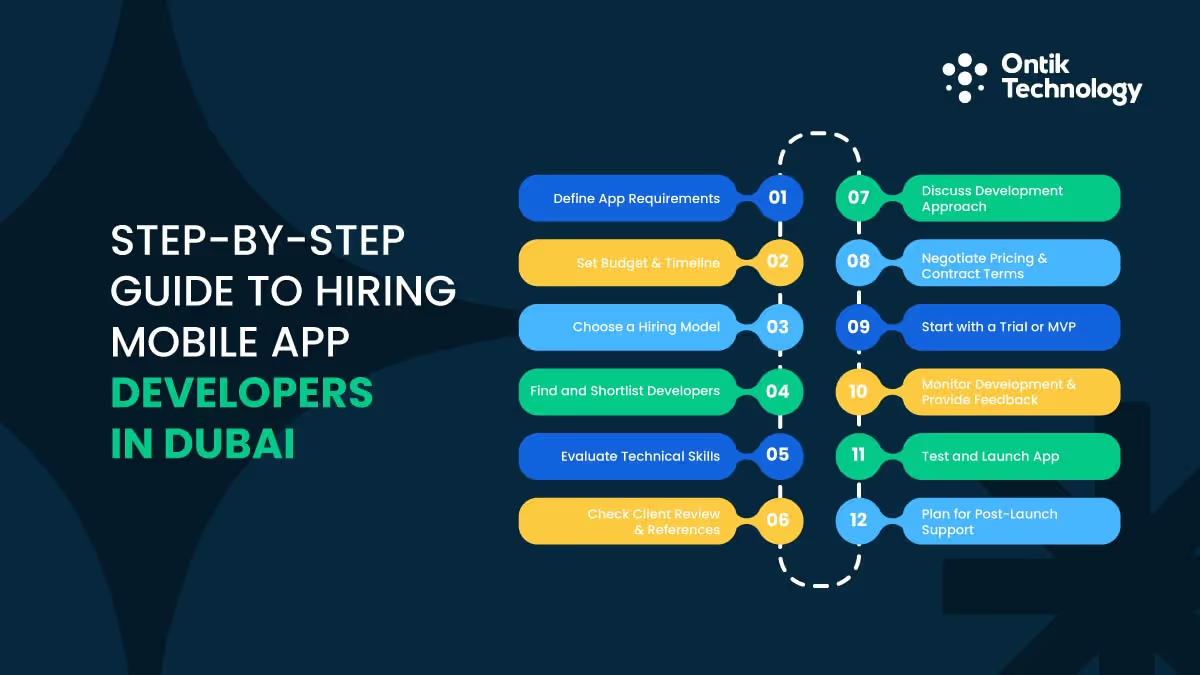
Finding the right developer requires a systematic approach. Follow these steps to hire top developers in Dubai who match your needs perfectly.
1. Define Your App Requirements
Start with crystal-clear requirements. Write down every feature your app needs. Include user flows, screens, and interactions. The more detailed your brief, the better the estimates you receive. Create your feature list separating must-haves from nice-to-haves. This helps prioritize when budget gets tight. Your minimum viable product (MVP) might skip advanced features initially.
Know your target users deeply. Build user personas to understand who uses your app, what problems they face, and how your app solves these. Understanding users shapes design decisions and helps developers build something people actually want.
Choose your platforms carefully. Will you target iOS, Android, or both? Each choice affects development time and cost. Cross-platform frameworks save money but might limit some native features.
2. Set Your Budget & Timeline
Budget planning prevents unpleasant surprises. Research typical costs for similar apps. Complexity drives price more than anything. Factor in Dubai market rates where developer experience affects hourly rates significantly. The app development cost UAE varies based on expertise level and project scope.
Plan your timeline realistically. Simple apps take 2-3 months while complex applications need 6-12 months or more. Factor in time for design revisions, testing, and App Store approvals. Buffer for unexpected challenges. Include post-launch costs for ongoing maintenance, bug fixes, updates, and new features.
3. Choose a Hiring Model
Your hiring model affects everything from cost to control. Fixed price suits defined projects when scope is clear and unlikely to change. Hourly works for evolving projects where flexibility matters. Dedicated teams serve long-term needs when you require ongoing development.
4. Find and Shortlist Developers
Dubai offers many ways to find developers. Use multiple channels to build a solid shortlist. Online platforms like Clutch, GoodFirms, and Upwork list app developers in Dubai. Read reviews carefully looking for consistent patterns in feedback.
Local directories help too. Dubai Chamber of Commerce maintains business listings. Technology parks like Dubai Internet City house many development firms. Ask for referrals from other business owners who provide honest opinions. LinkedIn works great for this. Attend tech events where Dubai hosts regular meetups and conferences.
5. Evaluate Technical Skills
Technical assessment separates claims from reality. Request code samples from developers who maintain GitHub profiles or portfolios. Review their code quality for cleanliness and documentation. Test their platform knowledge by asking specific questions about iOS mobile app development Dubai or Android application development Dubai.
Assess cross-platform skills if considering React Native or Flutter. Ask about challenges they faced and how they solved platform-specific issues. Check backend capabilities since mobile apps need backend systems. Evaluate their QA process to understand how they test apps and what tools they use.
6. Check Client Reviews & References
Past client experiences predict future performance. Read online reviews thoroughly on Clutch and Google Reviews. Look beyond star ratings to understand what clients actually say. Request recent references and talk to three recent clients minimum. Ask specific questions about deadline adherence, change handling, and whether they would hire again.
Check LinkedIn endorsements focusing on detailed recommendations that mention specific projects. Verify completed projects by downloading live apps they built and checking user ratings on App Stores.
7. Discuss Development Approach
Development methodology affects your entire experience. Agile delivers features iteratively with constant progress visibility and adjustment capability. Most modern developers in the UAE use Agile since it fits mobile development better. Communication workflows need clarity regarding meeting frequency, tools used, and update schedules. Sprint planning in Agile creates accountability through two-week cycles delivering working features.
8. Negotiate Pricing & Contract Terms
Contract negotiations protect both parties. Understand UAE contract norms which follow specific legal frameworks. Include clear payment terms and milestones. IP rights deserve attention to clarify code ownership. Usually, you should own everything upon final payment. Confidentiality protects your idea through NDAs before sharing detailed plans.
Milestone structure reduces risk. Never pay everything upfront. Break payments into milestones with typical structure being 30% to start, 40% at mid-point, and 30% upon completion. Tie each payment to deliverables.
9. Start with a Trial or MVP
Testing the relationship reduces risk dramatically. Build an MVP first to prove both concept and partnership. You get a working version with core features where user feedback guides next steps. Try a small paid project if MVPs seem too big. Maybe a prototype or single feature to show their skills and work style. Set clear success criteria defining what success looks like for the trial.
10. Monitor Development & Provide Feedback
Active involvement keeps projects on track. Schedule weekly updates to review completed work, discuss upcoming features, and address blockers immediately. Sprint reviews at each sprint end let developers demonstrate working features you can test yourself. Use shared dashboards with tools like Jira, Trello, or Linear showing real-time progress.
11. Test and Launch Your App
Thorough testing separates good launches from disasters. Multiple testing types catch different issues including unit testing, integration testing, user acceptance testing, and performance testing. Real device testing matters since simulators miss real-world issues. Test on actual iPhones and Android devices with different screen sizes and OS versions.
Follow app store guidelines for Apple App Store and Google Play Store which have strict requirements. Plan a soft launch by releasing to a limited audience first to catch issues before going public.
12. Plan for Post-Launch Support
Your app journey starts at launch. Maintenance covers bug fixes, OS updates, security patches, and server maintenance. Regular updates add value through new features, performance improvements, and design refreshes. Support contracts provide security with agreed response times for different issue severities. Analytics monitoring tracks user interactions to guide future decisions and prioritize development resources.
How Much Does It Cost To Hire An App Developer In UAE?
Costs vary widely based on multiple factors. Understanding price ranges helps set realistic expectations.
Hourly rates span a broad spectrum. Junior developers charge AED 100-150 per hour. Mid-level developers command AED 150-250 hourly. Senior developers and specialists cost AED 250-400+ per hour. Your project complexity determines which level you need.
Monthly rates for dedicated developers. Full-time dedicated developers cost AED 15,000-25,000 monthly for mid-level talent. Senior developers run AED 25,000-40,000 per month. This covers their time exclusively on your project.
Project-based pricing depends on complexity. Simple apps with basic features start around AED 50,000-80,000. Medium complexity apps with custom features cost AED 80,000-200,000. Complex applications with advanced features exceed AED 200,000 easily. E-commerce app development Dubai with payment integration falls in the medium to high range.
The Smart Alternative: Quality Meets Value
While Dubai-based developers deliver excellent work, offshore partnerships offer substantial savings without quality compromise. Ontik Technology demonstrates this value proposition clearly through their transparent pricing model.
Ontik Technology vs. UAE Market Pricing Comparison:
These savings add up significantly over project lifecycles. A medium complexity app that costs AED 150,000 locally runs approximately AED 60,000 through Ontik Technology. That is AED 90,000 saved while maintaining enterprise-grade quality standards.
Their pricing includes transparent terms with no hidden fees. Setup costs, management overhead, and exit fees stay minimal or nonexistent. You get exactly what you pay for without surprise charges appearing mid-project.
The offshore advantage comes from operational efficiencies, not corner-cutting. Ontik maintains rigorous quality standards while operating from a cost-effective location. Their developers undergo strict vetting with only 6% acceptance rates. This ensures you access top-tier talent at competitive rates.
Location within UAE affects prices. Dubai rates typically run 10-15% higher than Abu Dhabi or Sharjah. Dubai Internet City developers charge premium rates. Free zone companies sometimes offer better value.
App complexity drives cost more than anything. A simple information app with static content costs least. Apps needing user accounts, payments, and backend systems cost more. Real-time features, AI integration, or complex algorithms multiply costs significantly.
Strategies to Reduce Mobile App Development Hiring Costs
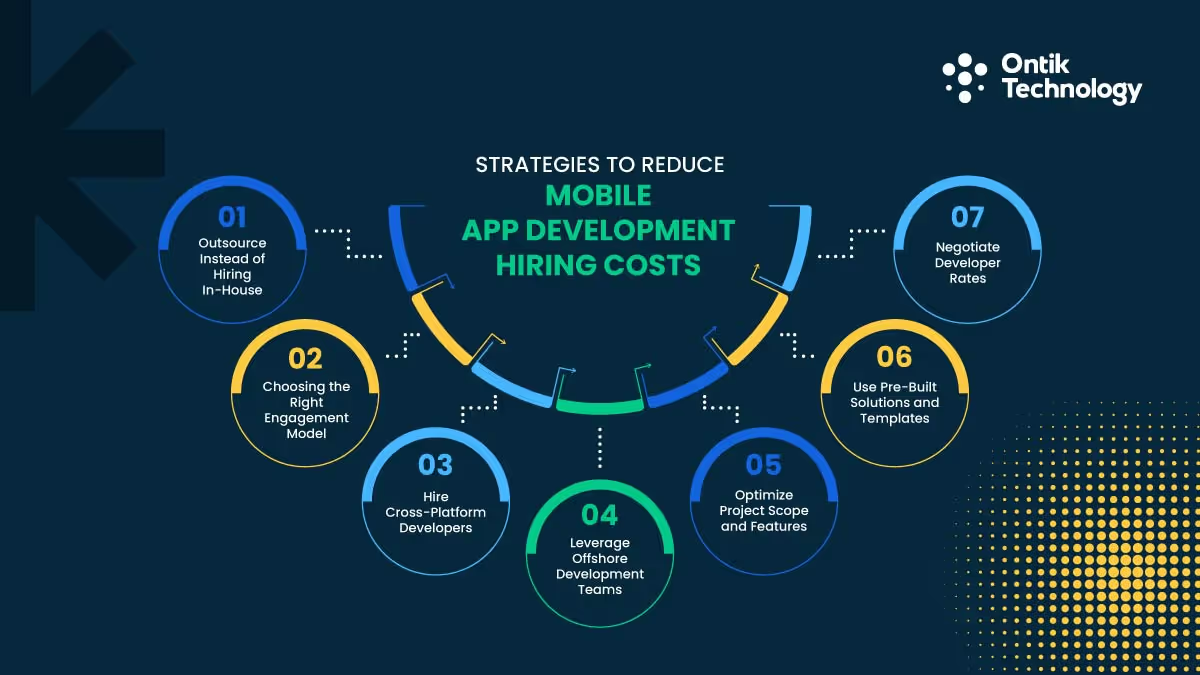
Smart planning cuts costs without sacrificing quality. These seven strategies help you maximize value.
1. Outsource Instead of Hiring In-House
Building an internal team costs significantly more. You pay salaries, benefits, office space, and equipment. Turnover creates additional hiring and training costs.
Outsourcing eliminates these overheads. You pay only for development work. No benefits or office costs. When the project completes, costs stop. This flexibility suits most businesses better.
2. Choosing the Right Engagement Model
Wrong engagement models waste money. Fixed price works only when requirements never change. Otherwise, change requests add up. Time and material suits evolving projects better.
Match the model to your certainty level. Clear requirements? Fixed price. Uncertain scope? Time and material. Long-term needs? Hire a dedicated team. This alignment saves thousands.
3. Hire Cross-Platform Developers
Building separate iOS and Android apps doubles development cost. Cross-platform frameworks like Flutter or React Native slash this expense. One codebase serves both platforms.
The tradeoff is minimal for most apps. Performance difference rarely matters. You launch faster and maintain easier. Your hire app developers in Dubai with cross-platform skills deliver better value.
4. Leverage Offshore Development Teams
Dubai developers offer quality but at premium rates. Consider hybrid teams. Keep project management and key decisions in Dubai. Offshore routine development work to lower-cost regions.
This requires good project management. Communication becomes more important. Time zone differences need handling. But savings can reach 40-50% without quality loss.
5. Optimize Project Scope and Features
Feature creep kills budgets. Every feature costs money to build, test, and maintain. Start with MVP. Launch with minimum features that prove your concept.
Add features based on user feedback. This prevents building things nobody wants. You spend money only on features that matter. Users tell you what to build next.
6. Use Pre-Built Solutions and Templates
Many features exist as ready-made solutions. Payment processing, user authentication, push notifications. Use established services instead of building from scratch.
UI templates speed up design work. While customization matters, starting from templates saves weeks. Your app development team can focus on unique features that differentiate you.
7. Negotiate Developer Rates
Rates are not fixed. Volume gives leverage. Longer engagements justify lower rates. Developers value steady work. A six-month contract might get 10-15% discount over month-by-month.
Flexible payment terms help too. Some developers offer better rates for upfront payment. Others accept milestone payments. Find arrangements that work for both sides.
Why Hire Top Application Developers From Ontik Technology?
Ontik Technology brings proven expertise to mobile app development. Their track record speaks through 500+ successful projects delivered globally. When you hire mobile app developers from them, you access a team that understands both technical excellence and business needs.
UAE Market Experience Sets Them Apart
Ontik operates with deep understanding of the UAE business landscape. They have delivered projects for companies across Dubai, Abu Dhabi, and the wider GCC region. This local knowledge ensures your app meets regional compliance requirements and cultural expectations.
Their portfolio showcases diverse industry experience. From fintech to e-commerce, healthcare to logistics. They have built solutions that work in real market conditions. Check their portfolio to see projects similar to yours.
Domain Specialization Drives Results
Ontik's developers are not generalists trying everything. They specialize in specific domains. Their mobile app development expertise covers both native and cross-platform solutions. Flutter, React Native, iOS, and Android development all receive equal attention.
The team understands modern architecture patterns. They build scalable solutions that grow with your business. Microservices, cloud integration, and API development form their technical foundation.
Proven Process Ensures Quality
Their development process combines Agile methodologies with DevOps practices. This approach delivers working software quickly while maintaining quality standards. Continuous integration and automated testing catch issues early.
Regular sprint reviews keep you involved throughout development. You see progress constantly. Feedback gets incorporated immediately. Nothing gets built in isolation from your needs.
Flexible Hiring Models Match Your Needs
Ontik offers all three engagement models we discussed. Need a dedicated team for ongoing development? They provide that. Prefer fixed-price for a defined project? Available. Want time and material flexibility? No problem.
Their team augmentation services let you scale up or down as needed. Add developers during busy periods. Reduce team size when maintenance phases arrive. This flexibility prevents wasted resources.
Technology Stack Stays Current
Ontik invests in keeping their team updated. Latest frameworks, tools, and best practices get adopted quickly. Your app benefits from modern solutions rather than outdated approaches.
They work across the full technology spectrum. Frontend frameworks like Flutter and React Native. Backend technologies including Node.js and Laravel. Cloud platforms like AWS and Google Cloud. This breadth ensures they choose the right tool for each job.
Communication Never Becomes a Barrier
Working across time zones requires excellent communication. Ontik structures their workflow for seamless collaboration. Regular updates, clear documentation, and responsive support define their approach.
Their team speaks multiple languages. English communication runs smoothly. Technical concepts get explained clearly. Non-technical stakeholders understand progress without jargon confusion.
Post-Launch Support Continues
Ontik does not disappear after launch. Their maintenance packages keep your app running smoothly. Bug fixes happen quickly. Performance monitoring catches issues before users notice. Regular updates maintain compatibility with new OS versions.
They also offer scaling support as your user base grows. Infrastructure optimization prevents performance degradation. Feature additions follow the same quality standards as initial development.

Real Results From Real Projects
Fitmate: From Concept to $2M+ Revenue in 4 Months
Ontik turned Fitmate's gym aggregator idea into a complete MVP in four months, handling UI/UX, mobile app development, and the web admin portal. The platform allows users access to hundreds of gyms under a single subscription. The result?
Fitmate generated over $2M in revenue post-launch and cut their development costs by 50% compared to local alternatives. Daniel Wight, Co-founder of Fitmate, notes their idea became complete software ready for market in record time.
Chippit: 2-Week Team Setup, Top Trending App
Chippit, a fintech platform for pooled savings goals, needed a full development team fast. Ontik onboarded full-stack and ML developers in two weeks, five times faster than competitors. This rapid deployment helped Chippit reach trending status on Google Play Australia. Founder Eli Muse confirms the team was operational and productive within days, not months.
Homerun: Gamified Real Estate at Scale
Homerun required a complex platform merging real estate auctions with live betting features. Ontik built both cross-platform mobile and web applications supporting multi-tier subscriptions, real-time auction participation, and admin analytics. The platform now handles multiple simultaneous auctions while maintaining performance, enabling new revenue streams through subscription models and in-app currency systems.
Ontik's case studies show its ability to deliver scalable solutions with measurable business results across fitness tech, fintech, and proptech.
Final Thoughts
Hiring mobile app developers in Dubai requires careful planning and execution. The right developer transforms your vision into reality. Start with crystal-clear requirements. Know exactly what you want to build. Understand your users deeply.
Choose the right hiring model and engagement approach. Dubai offers incredible talent but also many options. Use the evaluation criteria we covered. Check portfolios thoroughly. Test technical skills. Verify references. Budget wisely but do not choose based solely on price. Quality developers cost more for good reasons. Consider strategic partners who understand your industry.
The UAE's tech ecosystem continues growing. Your mobile app can tap into this momentum. Take your time with this decision. The right app development team becomes a valuable business partner. Ready to start? Review your requirements one more time. Research potential developers thoroughly. The mobile app market waits for no one. Make your move now with confidence.
FAQ
For how long can I hire a dedicated development company?
Hire dedicated developers from three months to several years based on your needs. Many start with 2 to 3 month trials then extend. Longer commitments often secure better rates with flexible scaling options.
Can I hire app developers for a short-term or one-time project?
Yes, many app developers in Dubai accept short-term projects. Fixed-price models work well for defined scope. Expect 2 to 4 months for MVPs. Minimum values typically start around AED 30,000 to 50,000.
What Qualifications Should I Look for as a Mobile App Developer?
Look for computer science degrees or equivalent practical experience. Platform-specific skills like Swift for iOS or Kotlin for Android matter. Check UI/UX understanding, API knowledge, and communication abilities. Strong portfolios prove capability better than certificates.
What industries do your app developers in Dubai serve?
Top developers work across e-commerce, healthcare, fintech, real estate, and logistics. Education technology and hospitality also see strong activity. Most experienced developers bring multi-industry exposure producing better, more innovative solutions for clients.
Will the developer provide ongoing support and maintenance?
Reputable developers offer post-launch support packages. These cover bug fixes, OS updates, security patches, and minor feature adjustments. Maintenance typically costs 15% to 20% of original fees annually. Clear SLAs define response times and coverage.